. 2013;8(3):e59666.
doi: 10.1371/journal.pone.0059666. Epub 2013 Mar 19.

Detailed molecular epidemiologic characterization of HIV-1 infection in Bulgaria reveals broad diversity and evolving phylodynamics

Affiliations

Detailed molecular epidemiologic characterization of HIV-1 infection in Bulgaria reveals broad diversity and evolving phylodynamics

Ivailo Alexiev Ivanov et al. PLoS One. 2013.

Abstract

Limited information is available to describe the molecular epidemiology of HIV-1 in Bulgaria. To better understand the genetic diversity and the epidemiologic dynamics of HIV-1 we analyzed 125 new polymerase (pol) sequences from Bulgarians diagnosed through 2009 and 77 pol sequences available from our previous study from persons infected prior to 2007. Epidemiologic and demographic information was obtained from each participant and phylogenetic analysis was used to infer HIV-1 evolutionary histories. 120 (59.5%) persons were infected with one of five different HIV-1 subtypes (A1, B, C, F1 and H) and 63 (31.2%) persons were infected with one of six different circulating recombinant forms (CRFs; 01_AE, 02_AG, 04_cpx, 05_DF, 14_BG, and 36_cpx). We also for the first time identified infection with two different clusters of unique A-like and F-like sub-subtype variants in 12 persons (5.9%) and seven unique recombinant forms (3.5%), including a novel J/C recombinant. While subtype B was the major genotype identified and was more prevalent in MSM and increased between 2000-2005, most non-B subtypes were present in persons ≥45 years old. CRF01_AE was the most common non-B subtype and was higher in women and IDUs relative to other risk groups combined. Our results show that HIV-1 infection in Bulgaria reflects the shifting distribution of genotypes coincident with the changing epidemiology of the HIV-1 epidemic among different risk groups. Our data support increased public health interventions targeting IDUs and MSM. Furthermore, the substantial and increasing HIV-1 genetic heterogeneity, combined with fluctuating infection dynamics, highlights the importance of sustained and expanded surveillance to prevent and control HIV-1 infection in Bulgaria.


Conflict of interest statement

Competing Interests: The authors have declared that no competing interests exist.

Figures

Figure 1
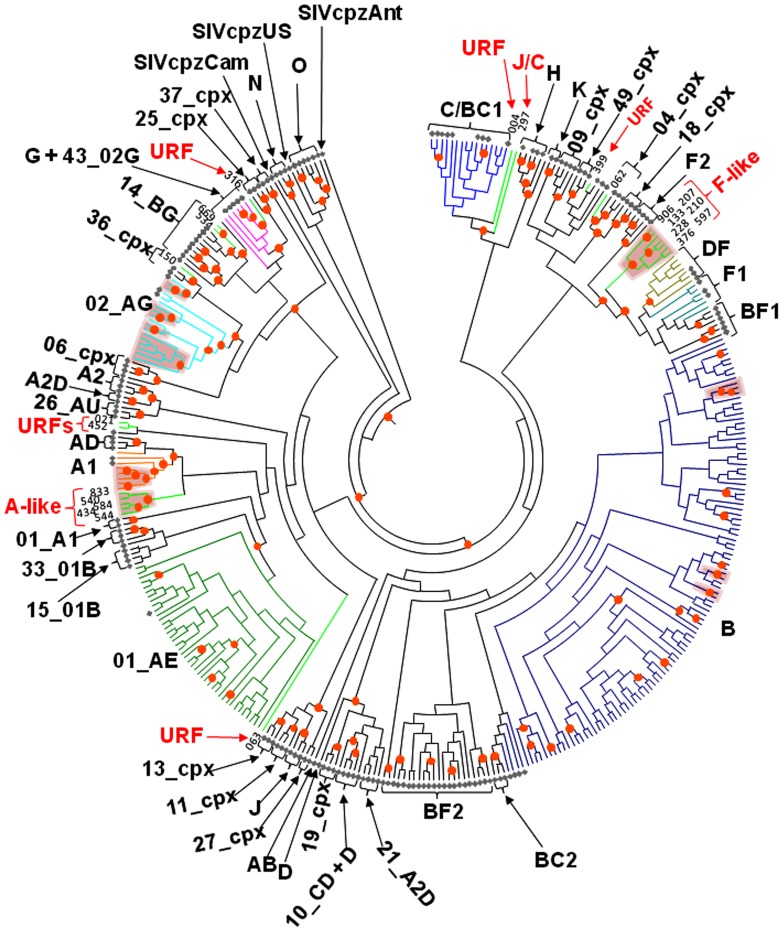
Figure 1. Inferred genetic relationships of 202 HIV-1 polymerase (pol) sequences from persons in Bulgaria.
Bayesian inference performed using the BEAST software package and a relaxed molecular clock and constant population size tree prior. 170 HIV-1 reference pol sequences were used for genetic comparison. Reference sequences are indicated with a grey diamond. The maximum clade credibility tree is shown. Final alignment length is 804 nucleotides. Posterior probabilities greater than 0.97 at nodes are shown with orange dots. Clades shaded with rose-colored trapezoids indicate possible epidemiologically-linked sequences supported with posterior probabilities ≥0.97, maximum likelihood bootstrap support ≥97%, and having <10% divergence per sampling period. Genotype classification of the Bulgarian sequences is shown with respect to the reference sequences. URFs and rare CRF lineages in Bulgaria are shown with bright green branches. Branches of major subtypes and CRF are highlighted with random colors. All other branches are black.
Figure 2
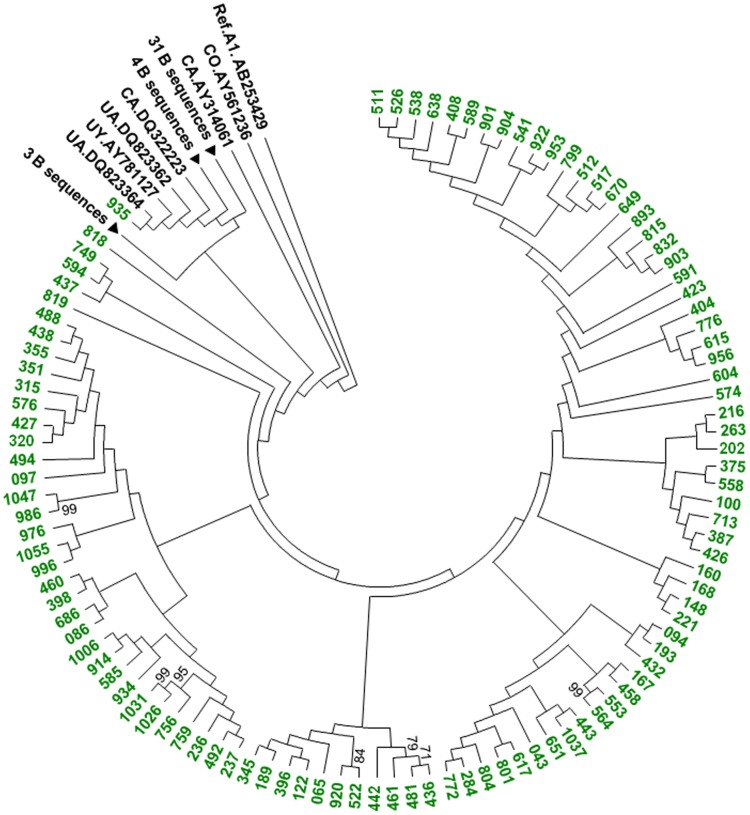
Figure 2. Phylogenetic relationship of Bulgarian HIV-1 subtype B polymerase sequences.
The 691-bp alignment was composed of 104 Bulgarian HIV-1 B strains and 45 subtype B reference sequences from the Los Alamos HIV database. Antiretroviral resistance-associated mutations were stripped from the alignment. The tree was rooted by using an HIV-1 subtype A1 strain as the outgroup. Tree topology was inferred using maximum likelihood analysis implemented in MEGA5. Support for each node was determined using 1,000 bootstrap replications with only values ≥70 shown. Scale bar indicates the number of nucleotide substitutions per site. Nearly identical tree topologies were also obtained with Bayesian analysis. Bulgarian sequences are shown using green branches and taxon names.
Figure 3
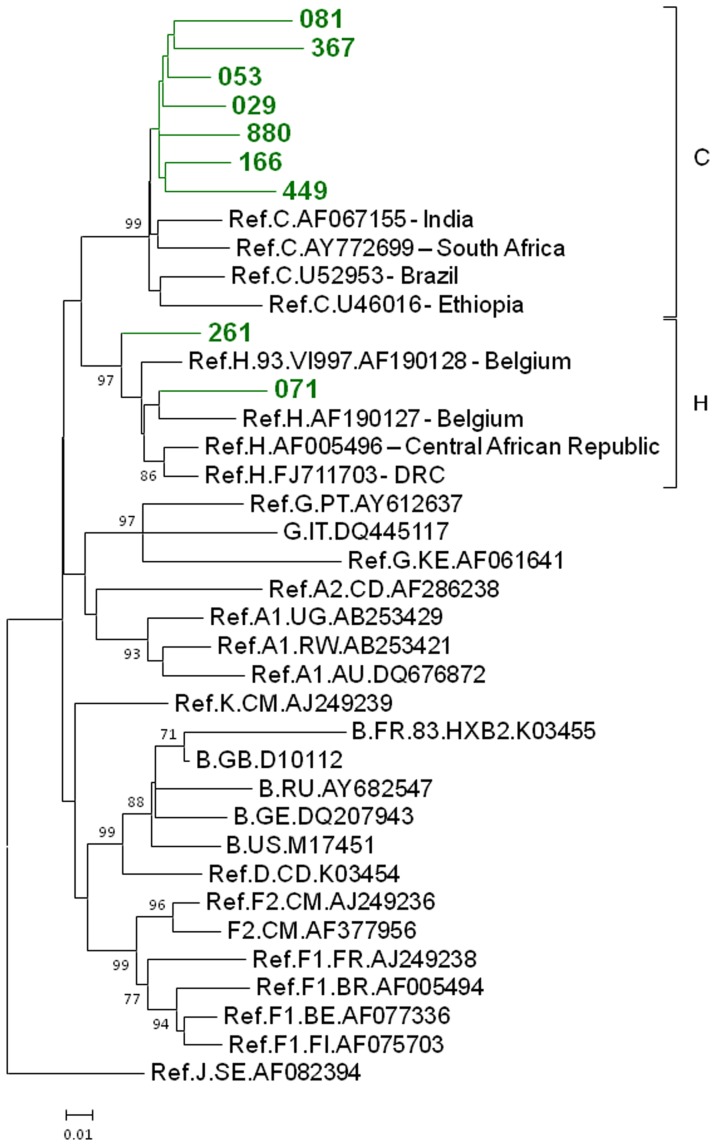
Figure 3. Inferred phylogenetic relationships of Bulgarian HIV-1 subtypes C and H.
Tree structure was inferred using maximum likelihood analysis of polymerase sequences implemented in MEGA5. Support for each node was determined using 1,000 bootstrap replications with only values ≥70 shown. Scale bar indicates the number of nucleotide substitutions per site. Antiretroviral resistance-associated mutations were stripped from the alignments. Nearly identical tree topologies were also obtained with Bayesian analysis. The 690-bp alignment consisted of 9 HIV-1 C and H strains from Bulgaria and 29 Group M reference sequences from the Los Alamos HIV database. The tree was rooted by using an HIV-1 subtype J strain as the outgroup. Bulgarian sequences are shown using green branches and taxon names.
Figure 4
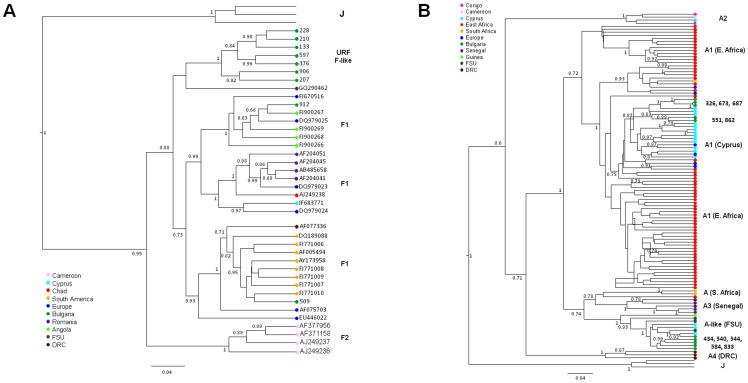
Figure 4. Identification of novel HIV-1 in Bulgaria.
Phylogenetic relationships were inferred using Bayesian methods implemented in the program BEAST using a relaxed molecular clock and constant population size tree prior. Antiretroviral resistance-associated mutations were stripped from the alignment. Posterior probabilities >0.6 are provided at the nodes. The scale bar indicates relative units of time. Nearly identical tree topologies were also obtained with maximum likelihood analysis. (A) F-like sub-subtypes. The 758-bp alignment was composed of 9 subtype F and F-like sub-subtype polymerase sequences from Bulgaria and 43 subtype F reference sequences from the Los Alamos HIV database and highly related sequences identified using BLAST. The tree was rooted by using three HIV-1 subtype J strains as the outgroup. (B) A-like sub-subtypes. The 754-bp alignment consisted of 10 subtype A and A-like sub-subtype polymerase sequences from Bulgaria and 121 subtype A reference sequences from the Los Alamos HIV database and highly related sequences identified using BLAST. Antiretroviral resistance-associated mutations were stripped from the alignment. The tree was rooted by using three HIV-1 J strains as the outgroup.
Figure 5
Figure 5. Inferred phylogenetic relationships of Bulgarian HIV-1 subtypes.
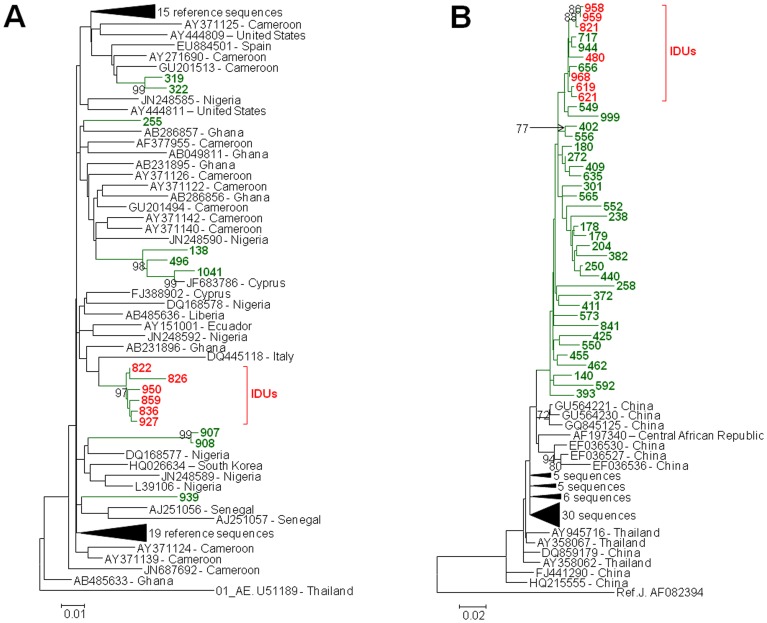
Tree structure was inferred using maximum likelihood analysis of polymerase sequences implemented in MEGA5. Support for each node was determined using 1,000 bootstrap replications with only values ≥70 shown. Scale bar indicates the number of nucleotide substitutions per site. Antiretroviral resistance-associated mutations were stripped from the alignments. Nearly identical tree topologies were also obtained with Bayesian analysis. (A) Subtype 02_AG. The 777-bp alignment was composed of 15 HIV-1 02_AG strains from Bulgaria and 71 02_AG reference sequences from the Los Alamos HIV database. The tree was rooted by using HIV-1 01_AE strain as the outgroup. Bulgarian sequences are shown using green branches and taxon names. Taxon names in red represent Bulgarian IDUs. (B) Circulating recombinant form (CRF) 01_AE. The 689-bp alignment was composed of 40 HIV-1 CRF 01_AE strains from Bulgaria and 60 subtype CRF 01_AE reference sequences from the Los Alamos HIV database. The tree was rooted by using HIV-1 subtype J as the outgroup. Bulgarian sequences are shown using green branches and taxon names. Taxon names in red represent Bulgarian IDUs.
Figure 6
Figure 6. Inferred phylogenetic relationships of Bulgarian HIV-1 subtypes.
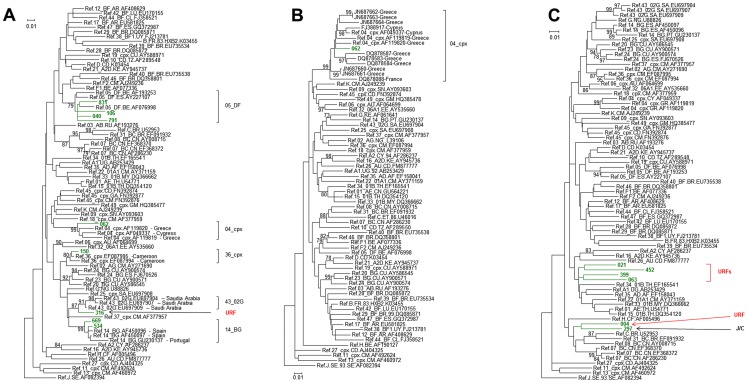
Tree structure was inferred using maximum likelihood analysis of polymerase sequences implemented in MEGA5. Support for each node was determined using 1,000 bootstrap replications with only values ≥70 shown. Scale bar indicates the number of nucleotide substitutions per site. Antiretroviral resistance-associated mutations were stripped from the alignments. Nearly identical tree topologies were also obtained with Bayesian analysis. (A) Multiple Circulating and unique recombinant forms (CRF and URF, respectively). The 696-bp alignment was composed of one CRF04_cpx, four CRF05_DF, two CRF14_BG, and one CRF36_cpx strains and one CRF43_02G-like strain from Bulgaria and 71 related reference sequences from the Los Alamos HIV database. The tree was rooted by using an HIV-1 subtype J strain as the outgroup. Bulgarian sequences are shown using green branches and taxon names. (B) CRF04_cpx. The 1043-bp alignment was composed of one HIV-1 CRF04_cpx1 strain from Bulgaria and 69 reference sequences from the Los Alamos HIV database and related sequences identified by BLAST. The tree was rooted by using an HIV-1 subtype J sequence as the outgroup. Bulgarian sequence is depicted using a green branch and taxon name. (C) Identification of novel HIV-1 URFs in Bulgaria. The 696-bp alignment was composed of six HIV-1 URF strains from Bulgaria and 68 reference sequences from the Los Alamos HIV database. The tree was rooted by using an HIV-1 subtype J strain as the outgroup. Bulgarian sequences are shown using green branches and taxon names. Bulgarian sequence #297 was shown by SimPlot analysis to be a novel recombinant of subtype J and C sequences.
Figure 7
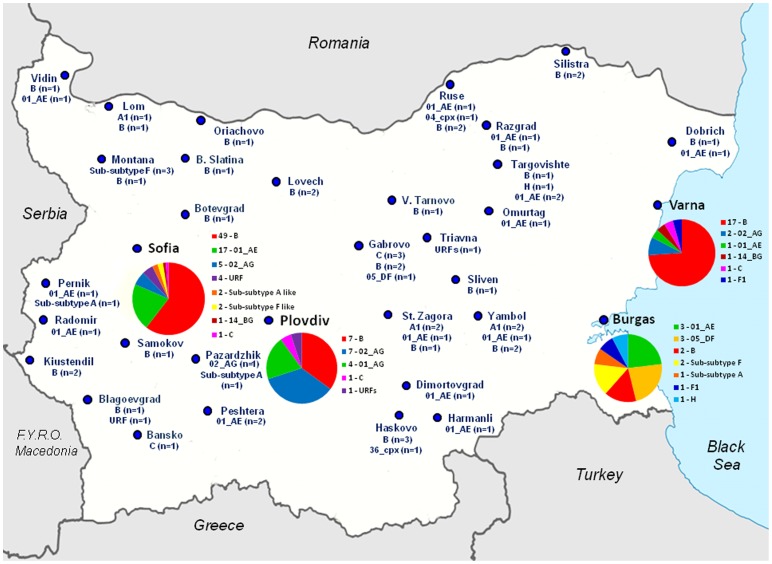
Figure 7. Geographic distribution of HIV-1 subtypes within Bulgaria.
Pie charts show genotype distribution within the most populous cities of Sofia, Plovdiv, Burgas, and Varna. Numbers of each subtype are in parentheses for the smaller towns.
Figure 8
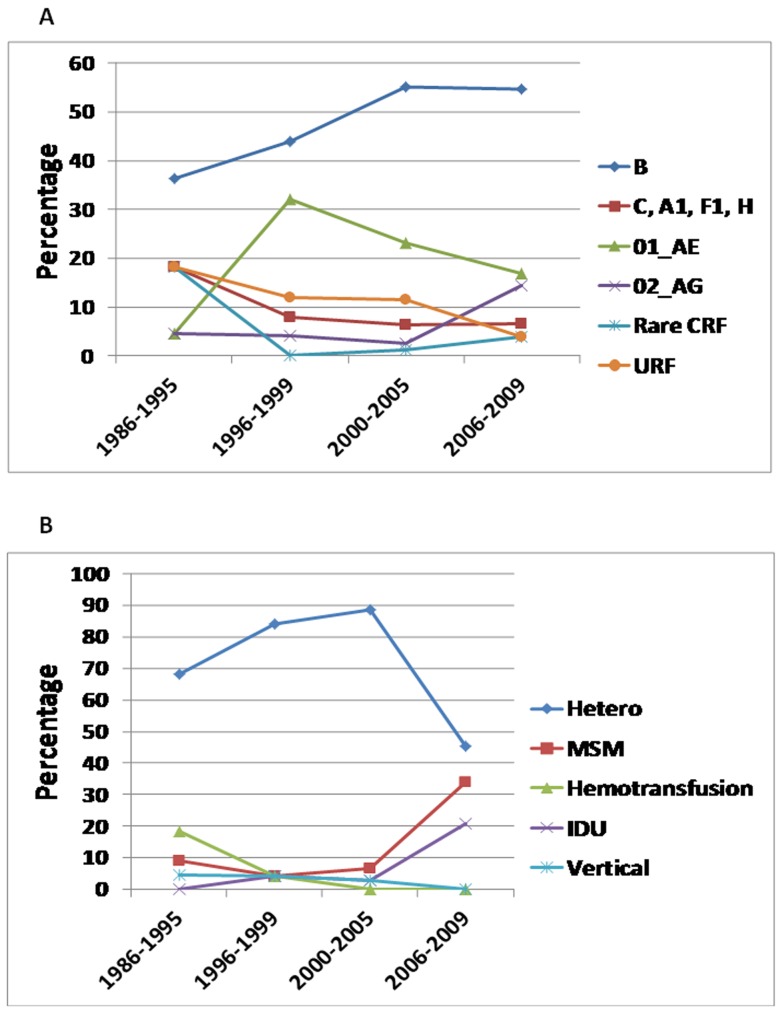
Figure 8. Trends in Bulgarian HIV-1 subtype (A) prevalence and (B) transmission route.
HIV-1 genotypes were stratified into four time periods of the epidemic consisting of early (1986–1995), late 1990s (1996–1999), and the first (2000–2005) and second halves (2006–2009) of the last decade.

References

    1. Plantier JC, Leoz M, Dickerson JE, De Oliveira F, Cordonnier F, et al. (2009) A new human immunodeficiency virus derived from gorillas. Nat Med 15: 871–872. - PubMed
    1. Hemelaar J (2012) The origin and diversity of the HIV-1 pandemic. Trends in Molecular Medicine 18: 182–192. - PubMed
    1. Louwagie J, McCutchan FE, Peeters M, Brennan TP, Sanders-Buell E, et al. (1993) Phylogenetic analysis of gag genes from 70 international HIV-1 isolates provides evidence for multiple genotypes. AIDS 7: 769–780. - PubMed
    1. Olsen GJ, Matsuda H, Hagstrom R, Overbeek R (2012) fastDNAml: A tool for construction of phylogenetic trees of DNA sequences using maximum likelihood. Comput Appl Biosci 10: 41–8. - PubMed
    1. Alaeus A (2000) Significance of HIV-1 genetic subtypes. Scand J Infect Dis 32: 455–463. - PubMed

Publication types

MeSH terms

Substances

Associated data