Review
doi: 10.1590/1414-431x20132703.
Epub 2013 Mar 15.
Impact of HPV infection on the development of head and neck cancer
Affiliations
- PMID: 23532264
- PMCID: PMC3854371
- DOI: 10.1590/1414-431x20132703
Item in Clipboard
Review
Impact of HPV infection on the development of head and neck cancer
Braz J Med Biol Res.
2013 Mar.
Abstract
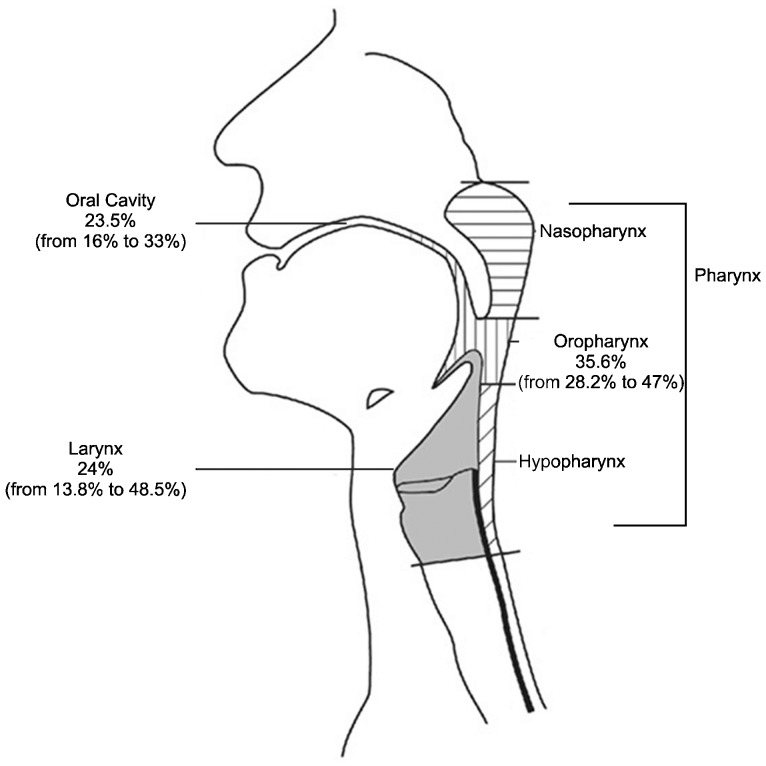
Human papillomavirus (HPV)-related head and neck squamous cell carcinoma (HNSCC) is considered to be a distinct clinical entity with better prognosis than the classical tobacco- and alcohol-associated tumors. The increasing incidence of this neoplasia during the last decades highlights the need to better understand the role of HPV in the development of these cancers. Although the proportion of HNSCC attributed to HPV varies considerably according to anatomical site, overall approximately 25% of all HNSCC are HPV-DNA positive, and HPV-16 is by far the most prevalent type. In this review we discuss the existing evidence for a causal association between HPV infection and HNSCC at diverse anatomical head and neck subsites.
Figures
References
-
- Burk RD, Chen Z, Harari A, Smith BC, Kocjan BJ, Maver PJ, et al. Classification and nomenclature system for human Alphapapillomavirus variants: general features, nucleotide landmarks and assignment of HPV6 and HPV11 isolates to variant lineages. Acta Dermatovenerol Alp Panonica Adriat. 2011;20:113–123. - PMC - PubMed
Publication types
MeSH terms
LinkOut - more resources
Full Text Sources
Other Literature Sources
Medical