


Focal energy deprivation underlies arrhythmia susceptibility in mice with calcium-sensitized myofilaments
- PMID: 23532597
- PMCID: PMC3850761
- DOI: 10.1161/CIRCRESAHA.113.301055
Focal energy deprivation underlies arrhythmia susceptibility in mice with calcium-sensitized myofilaments
Abstract
Rationale: The Ca(2+) sensitivity of the myofilaments is increased in hypertrophic cardiomyopathy and other heart diseases and may contribute to a higher risk for sudden cardiac death. Ca(2+) sensitization increases susceptibility to reentrant ventricular tachycardia in animal models, but the underlying mechanism is unknown.
Objective: To investigate how myofilament Ca(2+) sensitization creates reentrant arrhythmia susceptibility.
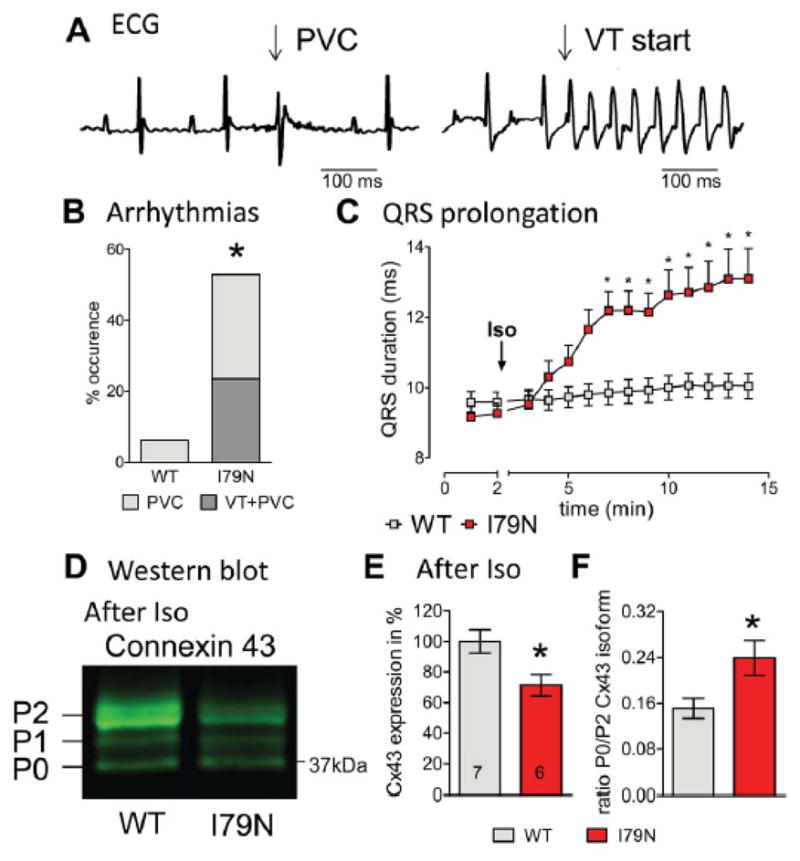
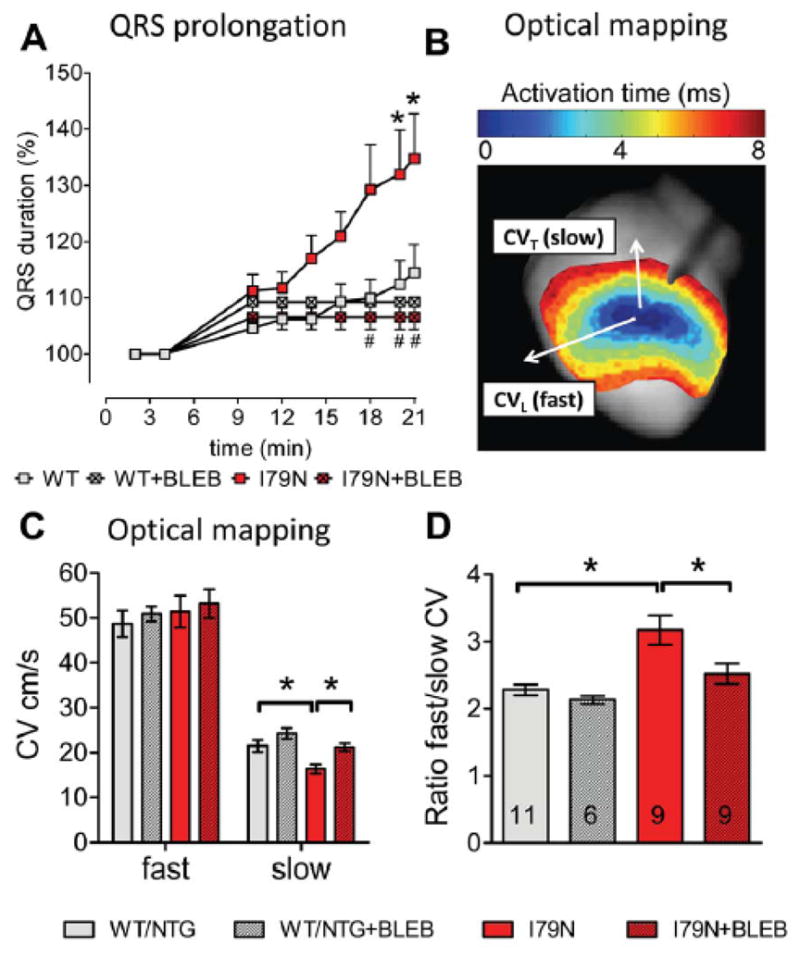
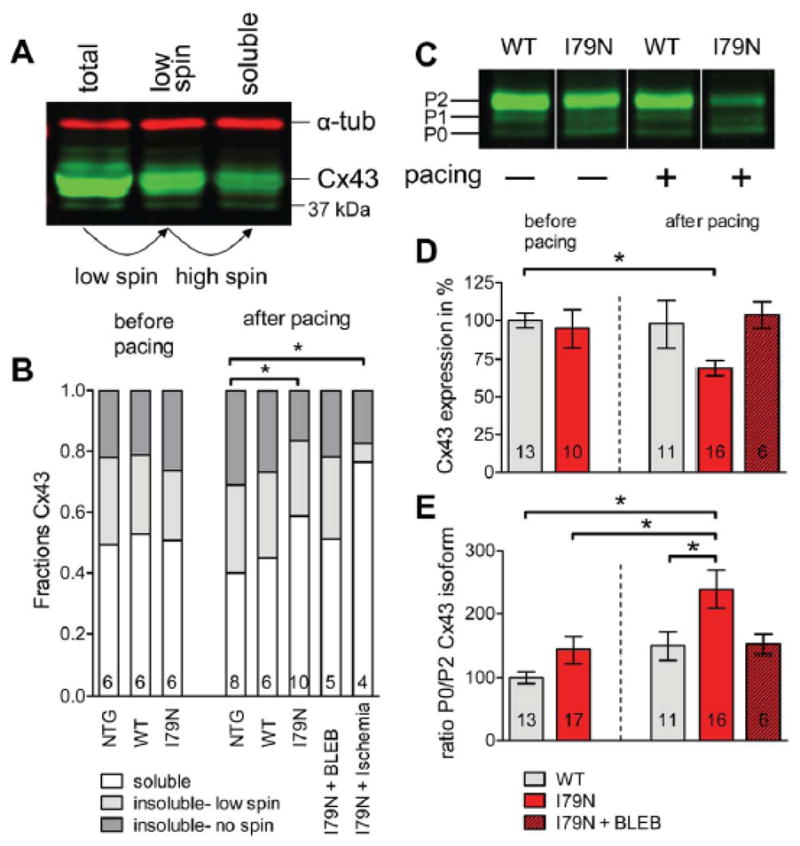
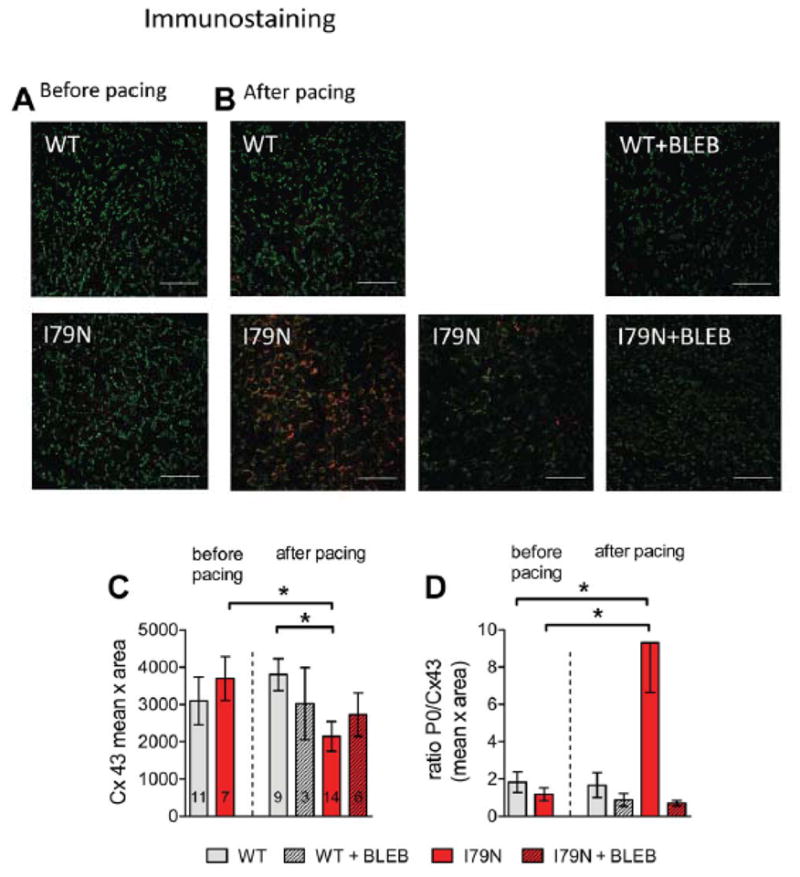
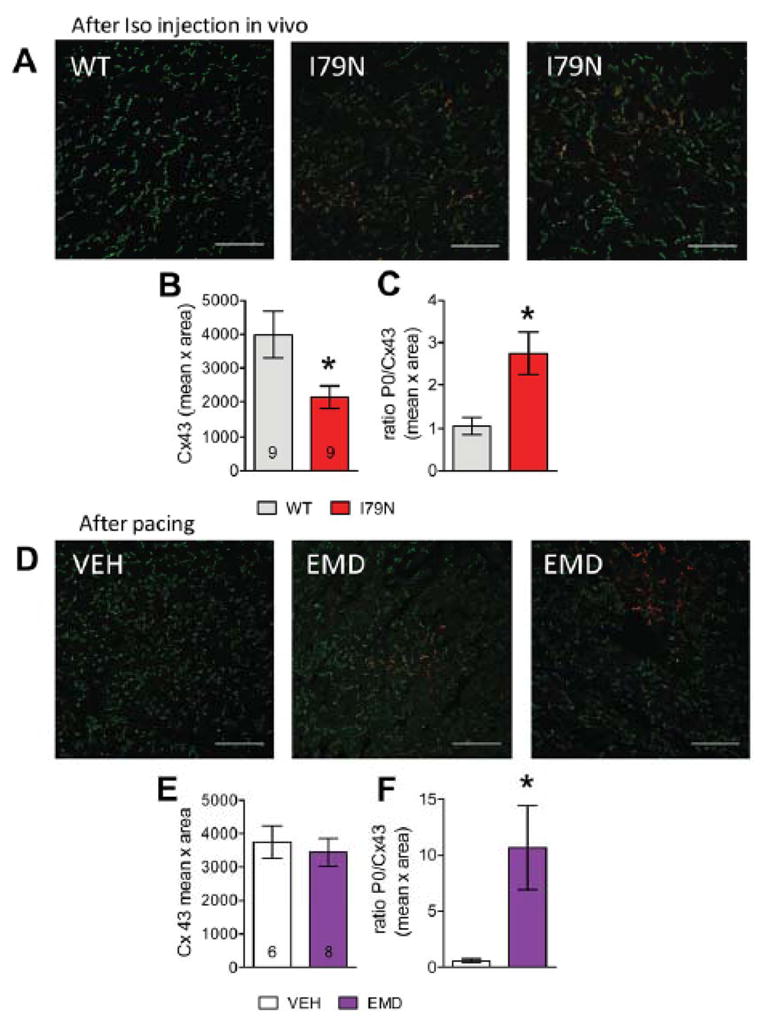
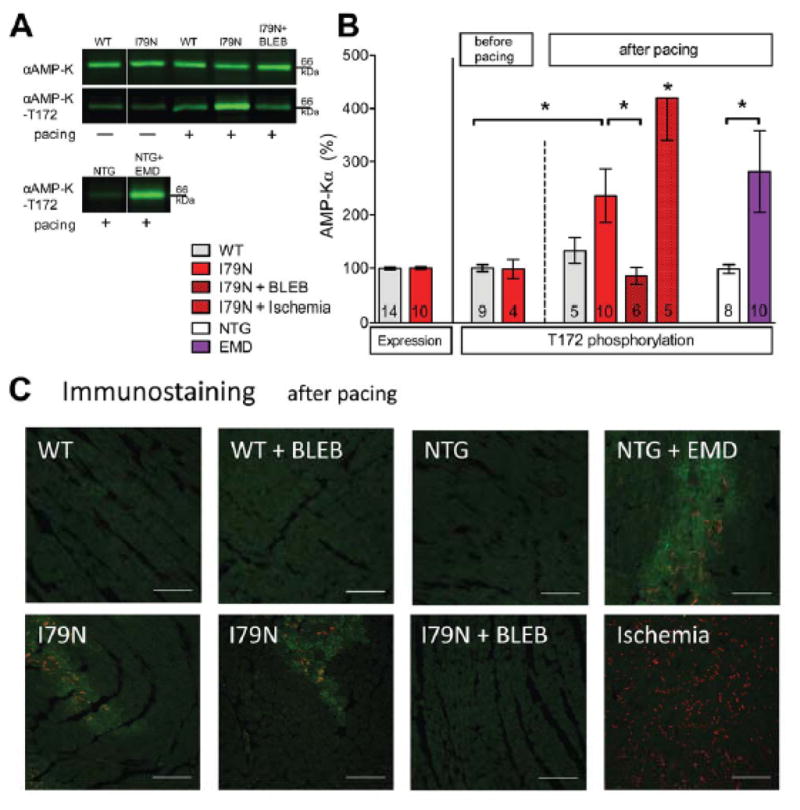
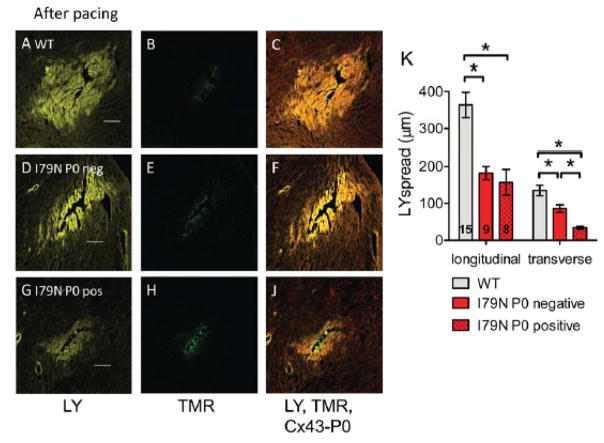
Methods and results: Using hypertrophic cardiomyopathy mouse models (troponinT-I79N) and a Ca(2+) sensitizing drug (EMD57033), here we identify focal energy deprivation as a direct consequence of myofilament Ca(2+) sensitization. To detect ATP depletion and thus energy deprivation, we measured accumulation of dephosphorylated Connexin 43 (Cx43) isoform P0 and AMP kinase activation by Western blotting and immunostaining. No differences were detected between groups at baseline, but regional accumulation of Connexin 43 isoform P0 occurred within minutes in all Ca(2+)-sensitized hearts, in vivo after isoproterenol challenge and in isolated hearts after rapid pacing. Lucifer yellow dye spread demonstrated reduced gap junctional coupling in areas with Connexin 43 isoform P0 accumulation. Optical mapping revealed that selectively the transverse conduction velocity was slowed and anisotropy increased. Myofilament Ca(2+) desensitization with blebbistatin prevented focal energy deprivation, transverse conduction velocity slowing, and the reentrant ventricular arrhythmias.
Conclusions: Myofilament Ca(2+) sensitization rapidly leads to focal energy deprivation and reduced intercellular coupling during conditions that raise arrhythmia susceptibility. This is a novel proarrhythmic mechanism that can increase arrhythmia susceptibility in structurally normal hearts within minutes and may, therefore, contribute to sudden cardiac death in diseases with increased myofilament Ca(2+) sensitivity.
Keywords: Connexin 43; conduction velocity dispersion; familial hypertrophic cardiomyopathy; myofilament Ca2+ sensitivity; sudden cardiac death; ventricular arrhythmias.
Figures
References
-
- Maron BJ, Gardin JM, Flack JM, Gidding SS, Kurosaki TT, Bild DE. Prevalence of hypertrophic cardiomyopathy in a general population of young adults. Echocardiographic analysis of 4111 subjects in the CARDIA Study. Coronary Artery Risk Development in (Young) Adults. Circulation. 1995;92:785–789. - PubMed
-
- Keren A, Syrris P, McKenna WJ. Hypertrophic cardiomyopathy: the genetic determinants of clinical disease expression. Nat Clin Pract Cardiovasc Med. 2008;5:158–168. - PubMed
-
- Maron BJ, Olivotto I, Spirito P, Casey SA, Bellone P, Gohman TE, Graham KJ, Burton DA, Cecchi F. Epidemiology of hypertrophic cardiomyopathy-related death: revisited in a large non-referral-based patient population. Circulation. 2000;102:858–864. - PubMed
-
- Shirani J, Pick R, Roberts WC, Maron BJ. Morphology and significance of the left ventricular collagen network in young patients with hypertrophic cardiomyopathy and sudden cardiac death. J Am Coll Cardiol. 2000;35:36–44. - PubMed
-
- Elliott P, Spirito P. Prevention of hypertrophic cardiomyopathy-related deaths: theory and practice. Heart. 2008;94:1269–1275. - PubMed
Publication types
MeSH terms
Substances
Grants and funding
- P60 DK020593/DK/NIDDK NIH HHS/United States
- HL71670/HL/NHLBI NIH HHS/United States
- DK58404/DK/NIDDK NIH HHS/United States
- P30 DK058404/DK/NIDDK NIH HHS/United States
- P30 HD015052/HD/NICHD NIH HHS/United States
- EY08126/EY/NEI NIH HHS/United States
- R01 HL088635/HL/NHLBI NIH HHS/United States
- P30 EY008126/EY/NEI NIH HHS/United States
- P30 CA068485/CA/NCI NIH HHS/United States
- CA68485/CA/NCI NIH HHS/United States
- HD15052/HD/NICHD NIH HHS/United States
- DK20593/DK/NIDDK NIH HHS/United States
- R01 HL071670/HL/NHLBI NIH HHS/United States
- DK59637/DK/NIDDK NIH HHS/United States
- P30 DK020593/DK/NIDDK NIH HHS/United States
- HL88635/HL/NHLBI NIH HHS/United States
- U24 DK059637/DK/NIDDK NIH HHS/United States
LinkOut - more resources
Full Text Sources
Other Literature Sources
Medical
Molecular Biology Databases
Miscellaneous
