


Clinical outcomes and molecular profile of differentiated thyroid cancers with radioiodine-avid distant metastases
- PMID: 23533233
- PMCID: PMC3644606
- DOI: 10.1210/jc.2012-3933
Clinical outcomes and molecular profile of differentiated thyroid cancers with radioiodine-avid distant metastases
Abstract
Background: Radioiodine (RAI) remains the mainstay of therapy for RAI-avid (RAIA) distant metastatic thyroid carcinoma. We previously demonstrated that RAI-refractory distant metastatic thyroid cancers commonly harbor BRAF mutations. However, the molecular profile of RAIA metastatic thyroid cancer is unknown. Here we describe the mutational profile of thyroid tumors from follicular cell-derived cancer (FCDTC) patients presenting with RAIA distant metastases. In addition, we aimed to correlate clinical outcomes of RAI therapy with clinicopathological factors and tumor mutational status.
Methods: We retrospectively identified 43 patients with FCDTC who had RAI uptake in the lungs and/or bones on their initial ¹³¹I postablation scan. Primary tumors were genotyped for known mutations in thyroid cancer genes. Structural response to RAI was assessed 6-18 months after each administered RAI activity and at the end of follow-up.
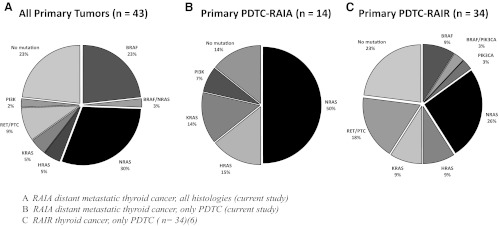
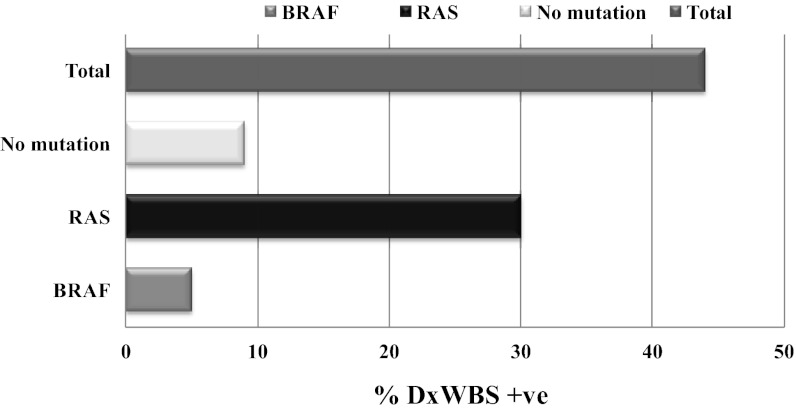
Results: RAS, BRAF, RET/PTC, and PIK3CA mutations were found in 42, 23, 10, and 2% of tumors, respectively, and the remaining 23% were wild type. None of these patients achieved cure after repeat RAI therapies, and most patients (54%) experienced disease progression despite repeated RAI administration. There was an increased prevalence of RAS mutations in these RAIA tumors. RAS-mutant cancers were more likely to concentrate iodine on diagnostic whole body scans. Despite this, structural response to RAI was not influenced by tumor genotype.
Conclusions: RAIA metastatic FCDTC are overrepresented with RAS mutations, whereas RAI refractory metastatic thyroid cancers are enriched with BRAF mutations. Despite a seemingly preserved ability to concentrate iodine, RAI therapy is ineffective in achieving cure in most patients with RAIA metastatic FCDTC, even in RAS-mutant disease. These poor outcomes may be improved based on recent evidence that pretreatment with MAPK kinase 1/2 inhibitors enhances responses to RAI, particularly in patients with RAS-mutant tumors.
Figures
References
-
- Hay ID, Thompson GB, Grant CS, et al. Papillary thyroid carcinoma managed at the Mayo Clinic during six decades (1940–1999): temporal trends in initial therapy and long-term outcome in 2444 consecutively treated patients. World J Surg. 2002;26:879–885 - PubMed
-
- Aschebrook-Kilfoy B, Grogan R, Ward M, Kaplan E, Devesa S. Follicular thyroid cancer incidence patterns in the United States, 1980–2009 [published online ahead of print January 29, 2013]. Thyroid. doi:10.1089/thy.2012.0356 - DOI - PMC - PubMed
-
- Shaha AR, Shah JP, Loree TR. Patterns of nodal and distant metastasis based on histologic varieties in differentiated carcinoma of the thyroid. Am J Surg. 1996;172:692–694 - PubMed
-
- Durante C, Haddy N, Baudin E, et al. Long-term outcome of 444 patients with distant metastases from papillary and follicular thyroid carcinoma: benefits and limits of radioiodine therapy. J Clin Endocrinol Metab. 2006;91:2892–2899 - PubMed
-
- Schlumberger M, Tubiana M, De Vathaire F, et al. Long-term results of treatment of 283 patients with lung and bone metastases from differentiated thyroid carcinoma. J Clin Endocrinol Metab. 1986;63:960–967 - PubMed
Publication types
MeSH terms
Substances
Supplementary concepts
Grants and funding
LinkOut - more resources
Full Text Sources
Other Literature Sources
Medical
Research Materials
Miscellaneous
