


Recent trends in multifunctional liposomal nanocarriers for enhanced tumor targeting
- PMID: 23533772
- PMCID: PMC3606784
- DOI: 10.1155/2013/705265
Recent trends in multifunctional liposomal nanocarriers for enhanced tumor targeting
Abstract
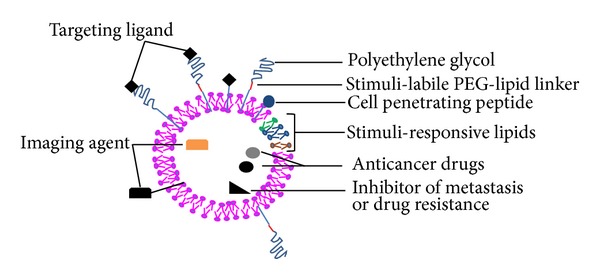
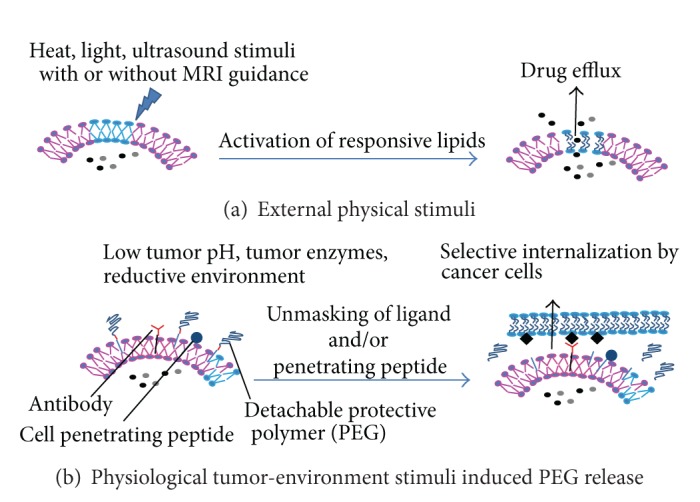
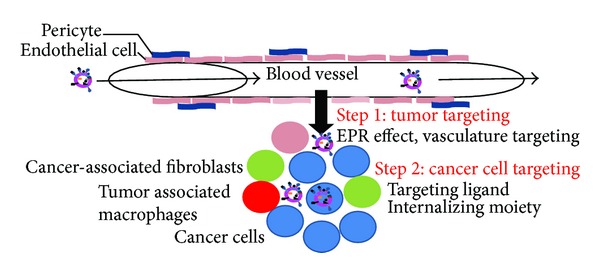
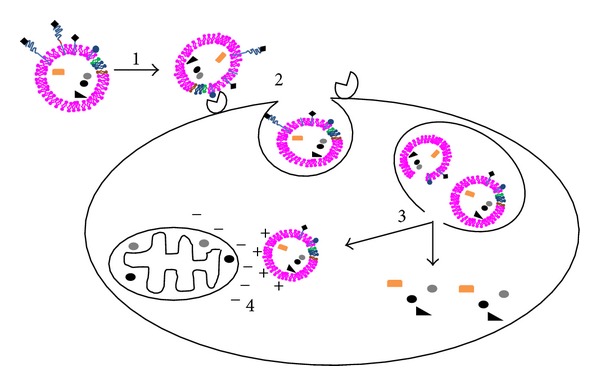
Liposomes are delivery systems that have been used to formulate a vast variety of therapeutic and imaging agents for the past several decades. They have significant advantages over their free forms in terms of pharmacokinetics, sensitivity for cancer diagnosis and therapeutic efficacy. The multifactorial nature of cancer and the complex physiology of the tumor microenvironment require the development of multifunctional nanocarriers. Multifunctional liposomal nanocarriers should combine long blood circulation to improve pharmacokinetics of the loaded agent and selective distribution to the tumor lesion relative to healthy tissues, remote-controlled or tumor stimuli-sensitive extravasation from blood at the tumor's vicinity, internalization motifs to move from tumor bounds and/or tumor intercellular space to the cytoplasm of cancer cells for effective tumor cell killing. This review will focus on current strategies used for cancer detection and therapy using liposomes with special attention to combination therapies.
Figures
References
-
- Bangham AD, Standish MM, Watkins JC. Diffusion of univalent ions across the lamellae of swollen phospholipids. Journal of Molecular Biology. 1965;13(1):238–252. - PubMed
-
- Gregoriadis G. Liposome research in drug delivery: the early days. Journal of Drug Targeting. 2008;16(7-8):520–524. - PubMed
-
- Porteous DJ, Dorin JR, McLachlan G, et al. Evidence for safety and efficacy of DOTAP cationic liposome mediated CFTR gene transfer to the nasal epithelium of patients with cystic fibrosis. Gene Therapy. 1997;4(3):210–218. - PubMed
-
- James ND, Coker RJ, Tomlinson D, et al. Liposomal doxorubicin (Doxil): an effective new treatment for Kaposi’s sarcoma in AIDS. Clinical Oncology. 1994;6(5):294–296. - PubMed
Grants and funding
LinkOut - more resources
Full Text Sources
Other Literature Sources
Miscellaneous
