


Slow Down and Concentrate: Time for a Paradigm Shift in Fall Prevention among People with Parkinson's Disease?
- PMID: 23533952
- PMCID: PMC3596919
- DOI: 10.1155/2013/704237
Slow Down and Concentrate: Time for a Paradigm Shift in Fall Prevention among People with Parkinson's Disease?
Abstract
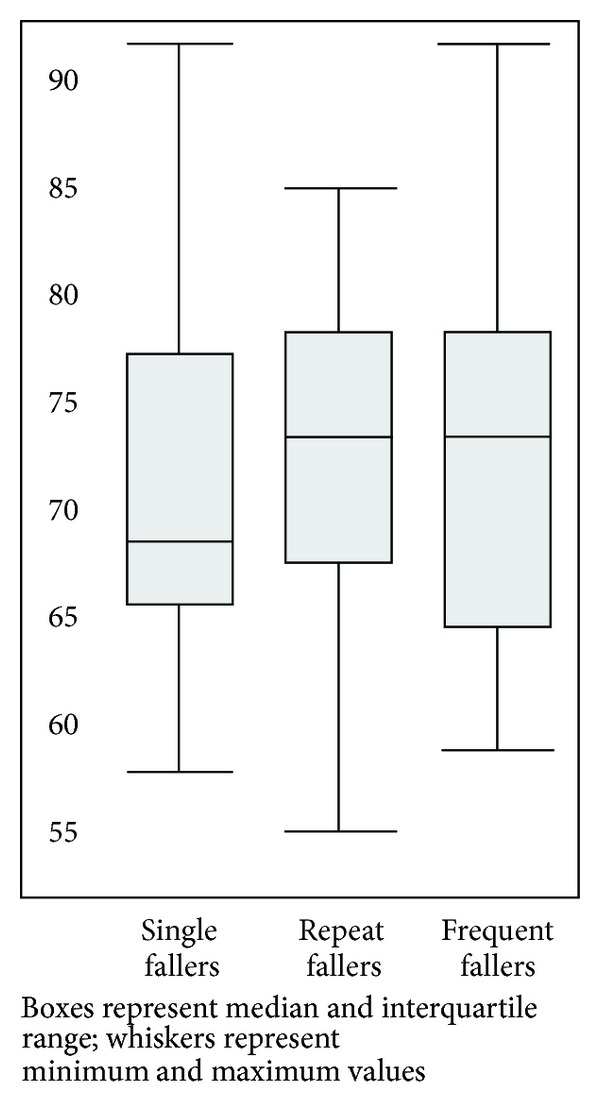
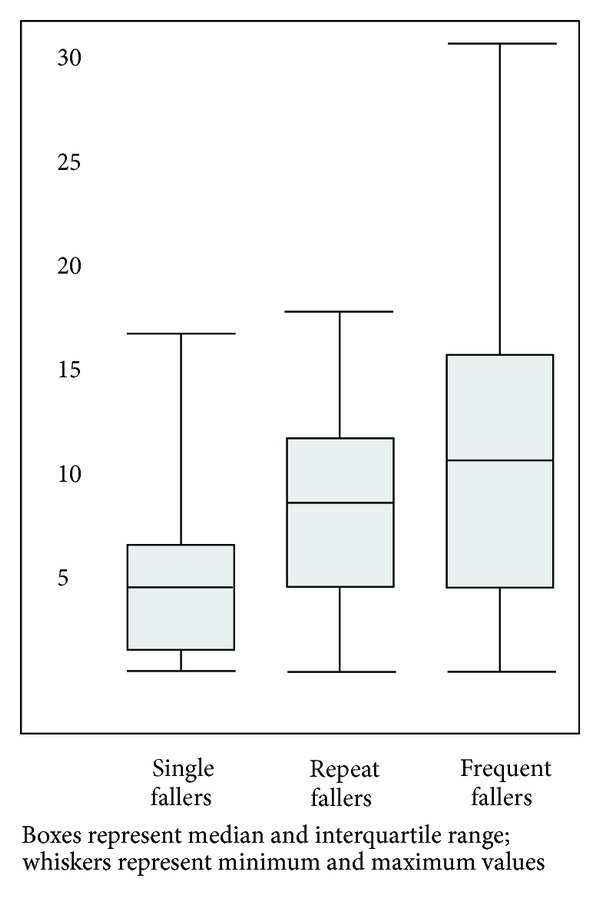
Introduction. We know little about how environmental challenges beyond home exacerbate difficulty moving, leading to falls among people with Parkinson's (PwP). Aims. To survey falls beyond home, identifying challenges amenable to behaviour change. Methods. We distributed 380 questionnaires to PwP in Southern England, asking participants to count and describe falls beyond home in the previous 12 months. Results. Among 255 responses, 136 PwP (diagnosed a median 8 years) reported falling beyond home. They described 249 falls in detail, commonly falling forward after tripping in streets. Single fallers (one fall in 12 months) commonly missed their footing, walking, or changing position and recovered to standing alone or with unfamiliar help. Repeat fallers (median falls, two) commonly felt shaken or embarrassed and sought medical advice. Very frequent fallers (falling at least monthly; median falls beyond home, six) commonly fell backward, in shops and after collapse but often recovered to standing alone. Conclusion. Even independently active PwP who do not fall at home may fall beyond home, often after tripping. Falling beyond home may result in psychological and/or physical trauma (embarrassment if observed by strangers and/or injury if falling backwards onto a hard surface). Prevention requires vigilance and preparedness: slowing down and concentrating on a single task might effectively prevent falling.
Figures
References
-
- Wenning GK, Ebersbach G, Verny M, et al. Progression of falls in postmortem-confirmed Parkinsonian disorders. Movement Disorders. 1999;14(6):947–950. - PubMed
-
- Ashburn A, Stack E, Ballinger C, Fazakarley L, Fitton C. The circumstances of falls among people with Parkinson’s disease and the use of Falls Diaries to facilitate reporting. Disability and Rehabilitation. 2008;30(16):1205–1212. - PubMed
-
- Jones D, Playfer J. Parkinson’s Disease. In: Stokes M, Stack E, editors. Physical Management for Neurological Conditions. 3rd edition. Chapter 6. Oxford, UK: Elsevier; 2011.
-
- Kamsma YPT, Brouwer WH, Lakke JPWF. Training of compensational strategies for impaired gross motor skills in Parkinson’s disease. Physiotherapy Theory and Practice. 1995;11(4):209–229.
LinkOut - more resources
Full Text Sources
Other Literature Sources
