


Physical and mental health of transgender older adults: an at-risk and underserved population
- PMID: 23535500
- PMCID: PMC4013724
- DOI: 10.1093/geront/gnt021
Physical and mental health of transgender older adults: an at-risk and underserved population
Abstract
Purpose: This study is one of the first to examine the physical and mental health of transgender older adults and to identify modifiable factors that account for health risks in this underserved population.
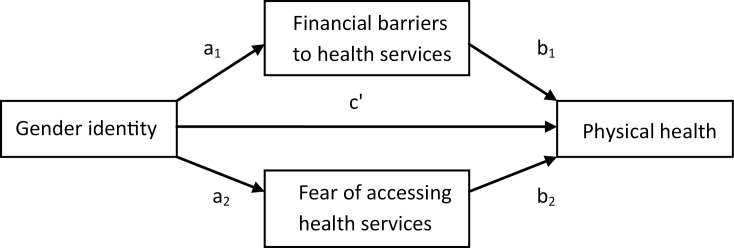
Design and methods: Utilizing data from a cross-sectional survey of lesbian, gay, bisexual, and transgender older adults aged 50 and older (N = 2,560), we assessed direct and indirect effects of gender identity on 4 health outcomes (physical health, disability, depressive symptomatology, and perceived stress) based on a resilience conceptual framework.
Results: Transgender older adults were at significantly higher risk of poor physical health, disability, depressive symptomatology, and perceived stress compared with nontransgender participants. We found significant indirect effects of gender identity on the health outcomes via fear of accessing health services, lack of physical activity, internalized stigma, victimization, and lack of social support; other mediators included obesity for physical health and disability, identity concealment for perceived stress, and community belonging for depressive symptomatology and perceived stress. Further analyses revealed that risk factors (victimization and stigma) explained the highest proportion of the total effect of gender identity on health outcomes.
Implications: The study identifies important modifiable factors (stigma, victimization, health-related behaviors, and social support) associated with health among transgender older adults. Reducing stigma and victimization and including gender identity in nondiscrimination and hate crime statutes are important steps to reduce health risks. Attention to bolstering individual and community-level social support must be considered when developing tailored interventions to address transgender older adults' distinct health and aging needs.
Keywords: Gender identity; LGBT; Minority health; Resilience.
Figures
References
-
- Ahmed A. T., Mohammed S. A., Williams D. R. (2007). Racial discrimination & health: Pathways & evidence. The Indian Journal of Medical Research, 126(4), 318–327 - PubMed
-
- Alegria C. A. (2011). Transgender identity and health care: Implications for psychosocial and physical evaluation. Journal of the American Academy of Nurse Practitioners, 23(4), 175–182. 10.1111/j.1745-7599.2010.00595.x - PubMed
-
- American Medical Association. (2008). Removing financial barriers to care for transgender patients. House of Delegates (Vol. 122, p. 4). Washington, DC: Author;
-
- American Medical Student Association. (2012). Transgender health resources. Retrieved July 11, 2012, from http://www.amsa.org/AMSA/Homepage/About/Committees/GenderandSexuality/Tr...
-
- Andresen E. M., Malmgren J. A., Carter W. B., Patrick D. L. (1994). Screening for depression in well older adults: Evaluation of a short form of the CES-D (Center for Epidemiologic Studies Depression Scale). American Journal of Preventive Medicine, 10(2), 77–84 - PubMed
Publication types
MeSH terms
Grants and funding
LinkOut - more resources
Full Text Sources
Other Literature Sources
Medical
