


Identification of 23 new prostate cancer susceptibility loci using the iCOGS custom genotyping array
- PMID: 23535732
- PMCID: PMC3832790
- DOI: 10.1038/ng.2560
Identification of 23 new prostate cancer susceptibility loci using the iCOGS custom genotyping array
Abstract
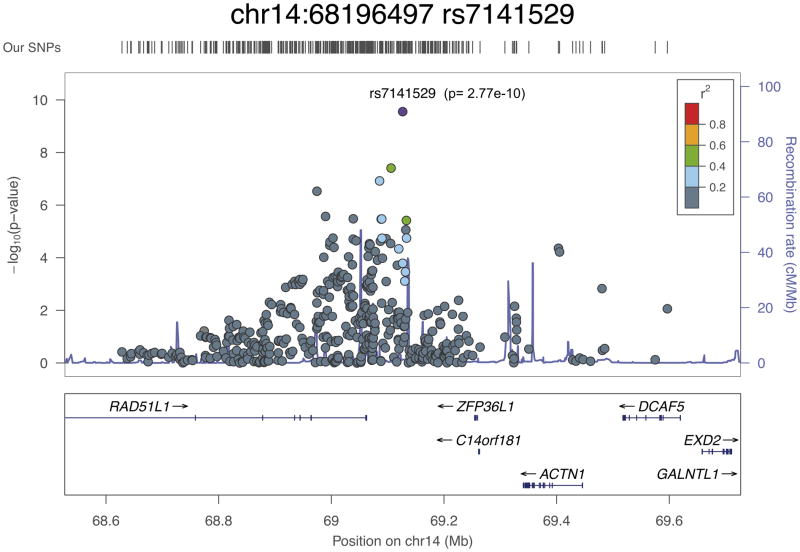
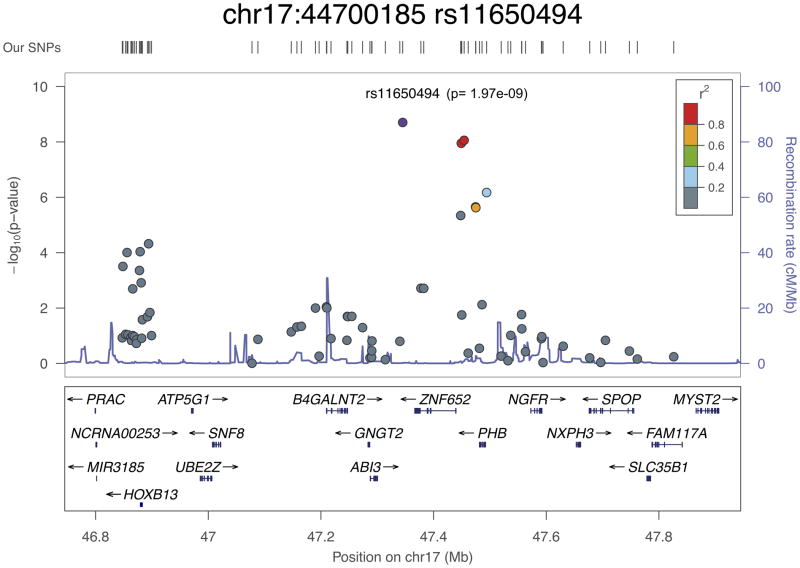
Prostate cancer is the most frequently diagnosed cancer in males in developed countries. To identify common prostate cancer susceptibility alleles, we genotyped 211,155 SNPs on a custom Illumina array (iCOGS) in blood DNA from 25,074 prostate cancer cases and 24,272 controls from the international PRACTICAL Consortium. Twenty-three new prostate cancer susceptibility loci were identified at genome-wide significance (P < 5 × 10(-8)). More than 70 prostate cancer susceptibility loci, explaining ∼30% of the familial risk for this disease, have now been identified. On the basis of combined risks conferred by the new and previously known risk loci, the top 1% of the risk distribution has a 4.7-fold higher risk than the average of the population being profiled. These results will facilitate population risk stratification for clinical studies.
Conflict of interest statement
The authors declare no competing financial interests.
Figures
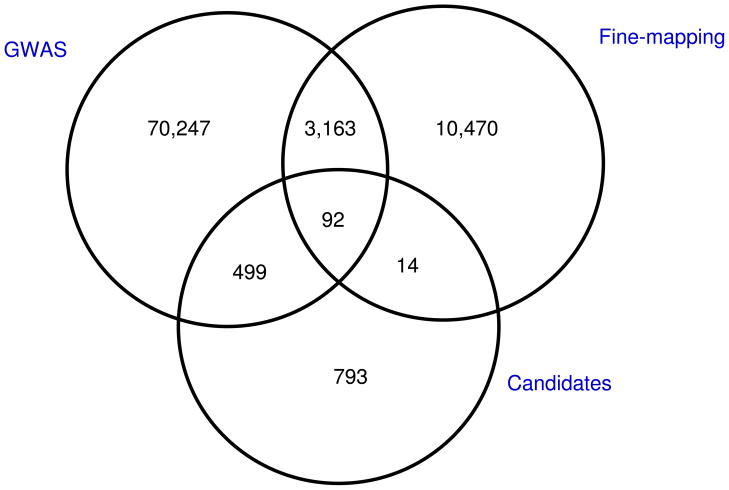
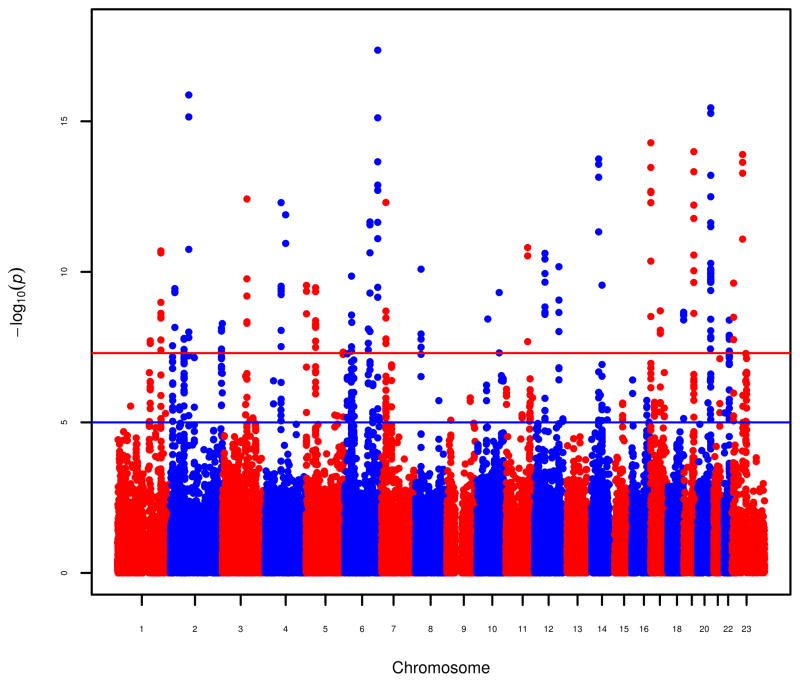
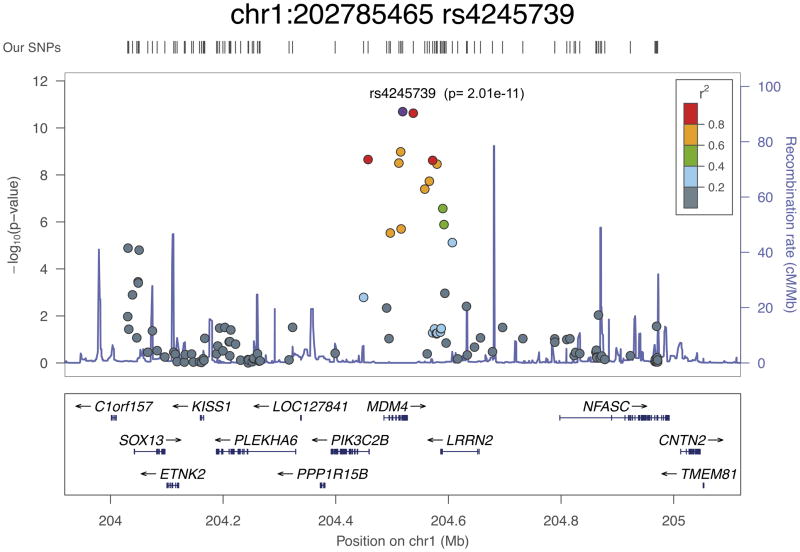
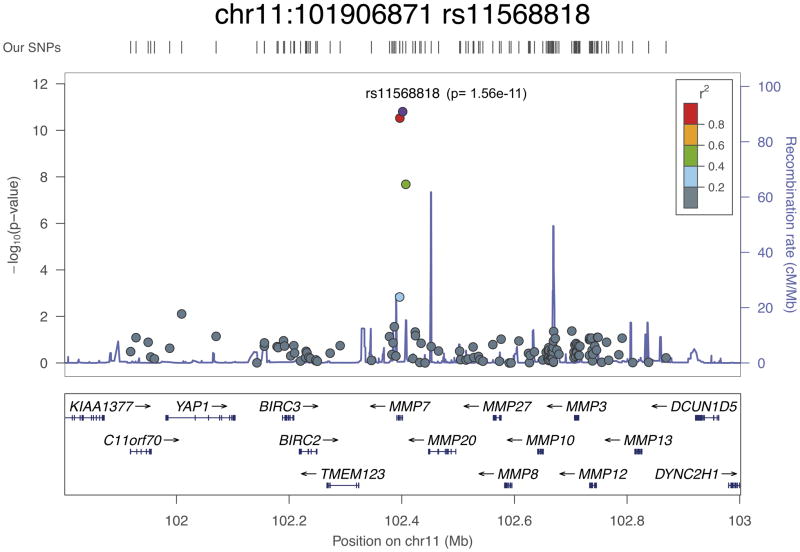
Comment in
-
Prostate cancer: Turning the COGS--23 new susceptibility loci identified.Nat Rev Urol. 2013 May;10(5):252. doi: 10.1038/nrurol.2013.81. Epub 2013 Apr 16. Nat Rev Urol. 2013. PMID: 23588404 No abstract available.
References
-
- Goh CL, et al. Genetic variants associated with predisposition to prostate cancer and potential clinical implications. J Intern Med. 2012;271:353–365. - PubMed
-
- Akamatsu S, et al. Common variants at 11q12, 10q26 and 3p11.2 are associated with prostate cancer susceptibility in Japanese. Nat Genet. 2012;44:426–429. - PubMed
MeSH terms
Grants and funding
- G2011/36/PCUK_/Prostate Cancer UK/United Kingdom
- T32 GM007814/GM/NIGMS NIH HHS/United States
- 10588/CRUK_/Cancer Research UK/United Kingdom
- 16565/CRUK_/Cancer Research UK/United Kingdom
- Z01 CP010195/ImNIH/Intramural NIH HHS/United States
- G1000143/MRC_/Medical Research Council/United Kingdom
- TL1 TR000132/TR/NCATS NIH HHS/United States
- Y99 CA999999/CA/NCI NIH HHS/United States
- P30 CA076292/CA/NCI NIH HHS/United States
- 14136/CRUK_/Cancer Research UK/United Kingdom
- G0401527/MRC_/Medical Research Council/United Kingdom
- Z99 CA999999/ImNIH/Intramural NIH HHS/United States
- P30 CA042014/CA/NCI NIH HHS/United States
- 11174/CRUK_/Cancer Research UK/United Kingdom
- G0900871/MRC_/Medical Research Council/United Kingdom
- R01 CA092447/CA/NCI NIH HHS/United States
- 11022/CRUK_/Cancer Research UK/United Kingdom
- ZIA CP010195/ImNIH/Intramural NIH HHS/United States
- 15007/CRUK_/Cancer Research UK/United Kingdom
- R01 CA092579/CA/NCI NIH HHS/United States
- 10118/CRUK_/Cancer Research UK/United Kingdom
- 10124/CRUK_/Cancer Research UK/United Kingdom
- 16561/CRUK_/Cancer Research UK/United Kingdom
- 13065/CRUK_/Cancer Research UK/United Kingdom
LinkOut - more resources
Full Text Sources
Other Literature Sources
Medical
