


Amino acid substitutions in cold-adapted proteins from Halorubrum lacusprofundi, an extremely halophilic microbe from antarctica
- PMID: 23536799
- PMCID: PMC3594186
- DOI: 10.1371/journal.pone.0058587
Amino acid substitutions in cold-adapted proteins from Halorubrum lacusprofundi, an extremely halophilic microbe from antarctica
Erratum in
-
Correction: Amino Acid Substitutions in Cold-Adapted Proteins from Halorubrum lacusprofundi, an Extremely Halophilic Microbe from Antarctica.PLoS One. 2024 Nov 19;19(11):e0314323. doi: 10.1371/journal.pone.0314323. eCollection 2024. PLoS One. 2024. PMID: 39561179 Free PMC article.
Abstract
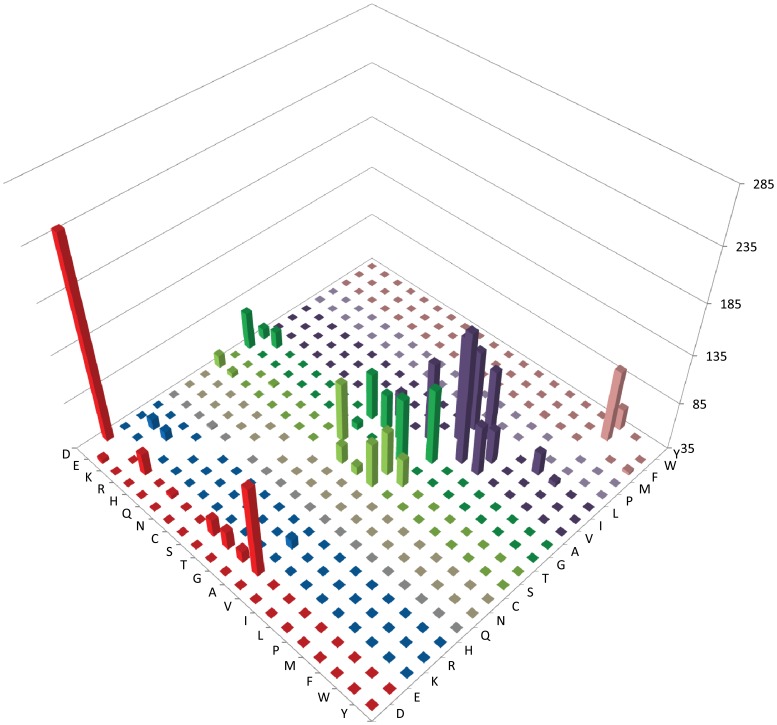
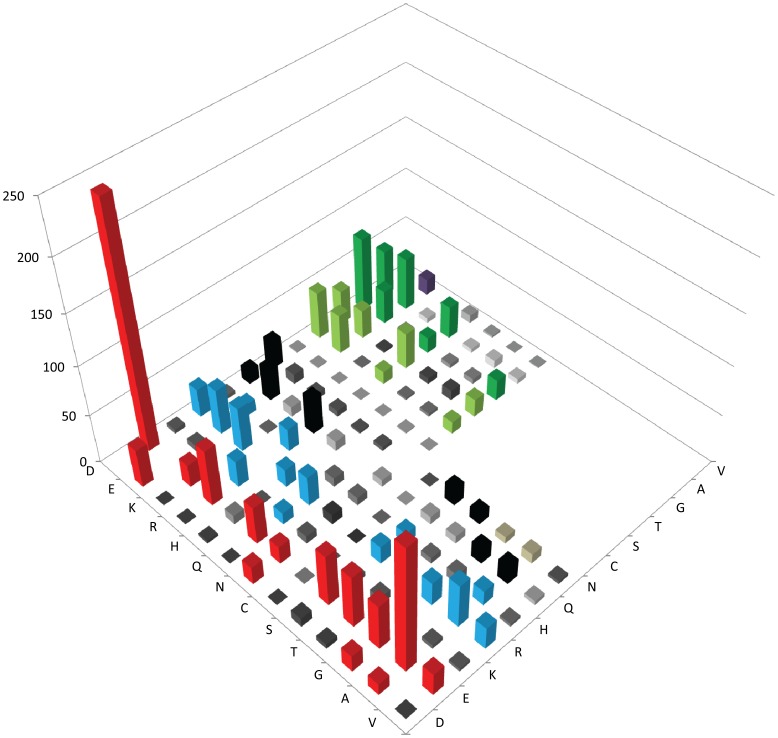
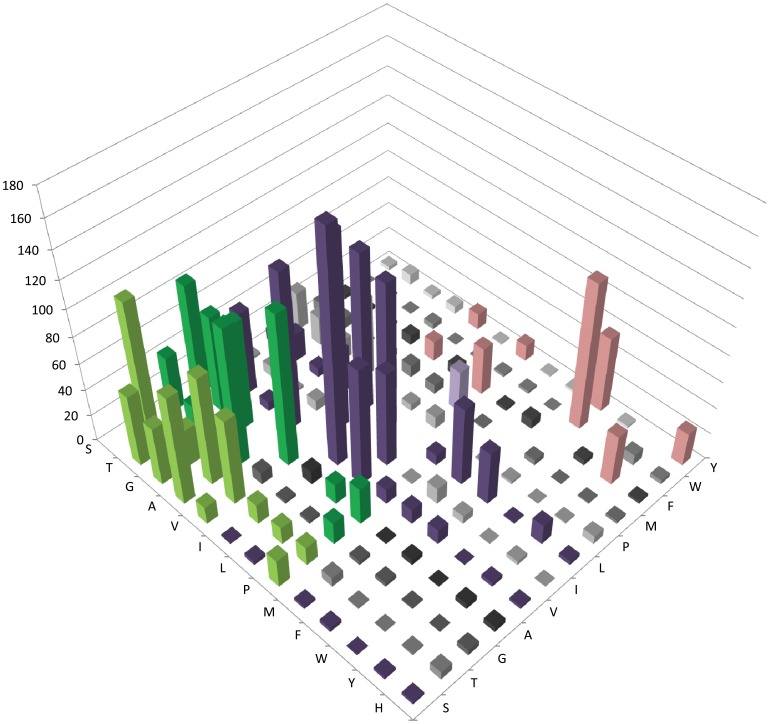
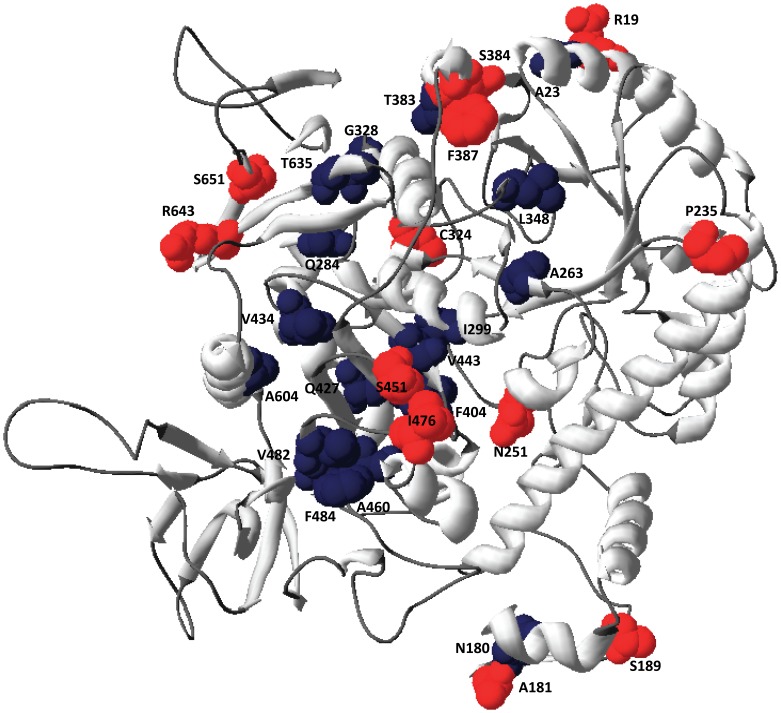
The halophilic Archaeon Halorubrum lacusprofundi, isolated from the perennially cold and hypersaline Deep Lake in Antarctica, was recently sequenced and compared to 12 Haloarchaea from temperate climates by comparative genomics. Amino acid substitutions for 604 H. lacusprofundi proteins belonging to conserved haloarchaeal orthologous groups (cHOGs) were determined and found to occur at 7.85% of positions invariant in proteins from mesophilic Haloarchaea. The following substitutions were observed most frequently: (a) glutamic acid with aspartic acid or alanine; (b) small polar residues with other small polar or non-polar amino acids; (c) small non-polar residues with other small non-polar residues; (d) aromatic residues, especially tryptophan, with other aromatic residues; and (e) some larger polar residues with other similar residues. Amino acid substitutions for a cold-active H. lacusprofundi β-galactosidase were then examined in the context of a homology modeled structure at residues invariant in homologous enzymes from mesophilic Haloarchaea. Similar substitutions were observed as in the genome-wide approach, with the surface accessible regions of β-galactosidase displaying reduced acidity and increased hydrophobicity, and internal regions displaying mainly subtle changes among smaller non-polar and polar residues. These findings are consistent with H. lacusprofundi proteins displaying amino acid substitutions that increase structural flexibility and protein function at low temperature. We discuss the likely mechanisms of protein adaptation to a cold, hypersaline environment on Earth, with possible relevance to life elsewhere.
Conflict of interest statement
Figures
References
Publication types
MeSH terms
Substances
LinkOut - more resources
Full Text Sources
Other Literature Sources
Molecular Biology Databases
