


Fiber-free white flour with fructose offers a better model of metabolic syndrome
- PMID: 23537367
- PMCID: PMC3621840
- DOI: 10.1186/1476-511X-12-44
Fiber-free white flour with fructose offers a better model of metabolic syndrome
Abstract
Background: The metabolic syndrome (MS) is a combination of metabolic abnormalities that lead to an increased risk of cardiovascular diseases. Due to its rising incidence and demanding life-long use of multiple drugs, there is a growing interest in testing and developing new allopathic, complementary and alternative therapies for controlling or curing disorders of MS. The discovery of new therapeutic modalities requires animal models of disease and currently available models have limitations. Developing an appropriate animal model for MS to achieve various therapeutic targets remains a challenge and this study aims to develop a rat model which closely depicts MS in humans.
Methodology: Rat model of MS was developed by replacing 60% of diet with fructose. Four groups of Sprague-Dawley rats were either given whole wheat or refined flour with and without fructose for 8 weeks. Data were analyzed on SPSS and Graphpad Prism using ANOVA with Tukey's and Bonferonni tests for multiple group comparison. A p-value of less than 0.05 was considered significant for differences between groups.
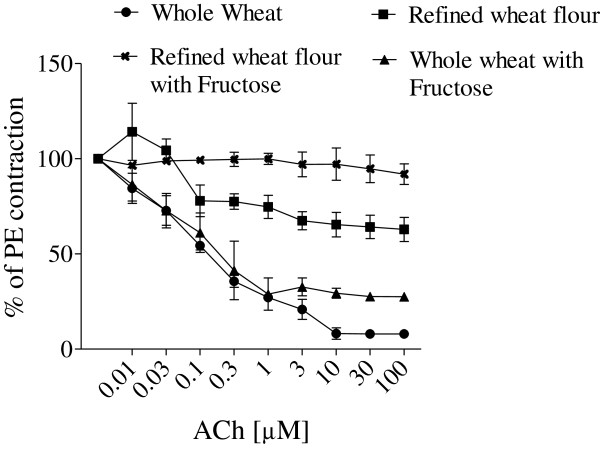
Results: Replacing whole wheat with refined wheat flour in rat chow in 60% fructose-fed Sprague-Dawley rats resulted in hypertension (p 0.01), hyper-insulinemia (p < 0.001), hyperglycemia (p 0.03) and a reduction in HDL levels (p 0.002) at 4 weeks while hyper-triglyceridemia (p 0.001) with endothelial dysfunction was observed at 8 weeks.
Conclusion: It is concluded that the refined wheat flour with 60% fructose in diet hastens the development of metabolic syndrome in 4 weeks and replacing whole wheat flour with refined flour in diet induces a more effective abnormality including a low HDL. Further studies may be directed to assess the associated pathological changes, which can be used to study the effect of different therapeutic modalities on an animal model of MS with low HDL.
Figures
References
-
- Ervin RB. Prevalence of metabolic syndrome among adults 20 years of age and over, by sex, age, race and ethnicity, and body mass index: United States. National Health Statistics Reports. 2009;13:1–8. - PubMed
-
- Barnard RJ, Roberts CK, Varon SM, Berger JJ. Diet-induced insulin resistance precedes other aspects of the metabolic syndrome. J Appl Physiol. 1998;84(4):1311–1315. - PubMed
-
- Riccardi G, Rivellese AA. Dietary treatment of the metabolic syndrome–the optimal diet. Br J Nutr. 2000;83(Suppl 1):S143–148. - PubMed
Publication types
MeSH terms
Substances
LinkOut - more resources
Full Text Sources
Other Literature Sources
Medical
