


Is surgical intervention avoidable in cases of emphysematous gastritis? A case presentation and literature review
- PMID: 23537915
- PMCID: PMC3731705
- DOI: 10.1016/j.ijscr.2012.12.021
Is surgical intervention avoidable in cases of emphysematous gastritis? A case presentation and literature review
Abstract
Introduction: Gas located within the gastric wall is a rare finding that is associated with a mortality rate of 50%. It confers two main diagnoses: gastric emphysema and emphysematous gastritis. Due to its high mortality rate, emphysematous gastritis must be differentiated from gastric emphysema early to avoid adverse outcomes and plan the management of these patients.
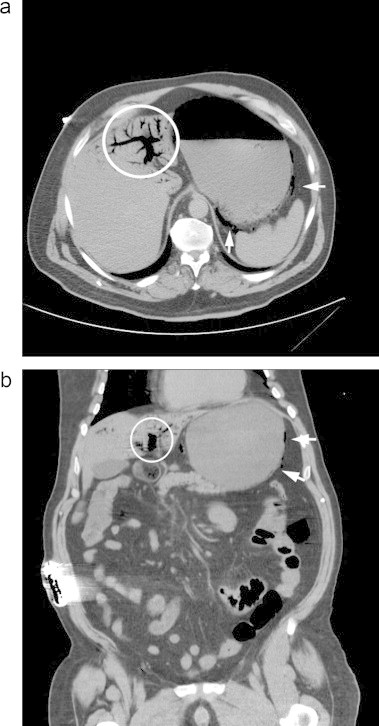
Presentation of case: We introduce a 55 year-old male who presents with diffuse abdominal pain associated with fever, nausea, vomiting, and diarrhea. Patient has positive peritoneal signs with fever and leukocytosis. Air in the gastric wall and portal venous system was visualized on Computed Tomography (CT). The patient underwent emergent laparotomy which showed normal bowel with few adhesions.
Discussion: Various etiologies can cause gas within the gastric wall but concomitant air in the hepatic venous system is highly suspicious for emphysematous gastritis. CT imaging is the most sensitive and specific way to differentiate emphysematous gastritis versus gastric emphysema. Although rare, there are many cases of emphysematous gastritis that undergo prompt surgical exploration. Recently, however, medical treatment has become more common and surgical management reserved for complications.
Conclusion: We conclude by stating that this case of emphysematous gastritis, due to gastric ulcers, would have no difference in outcome if treated medically instead of surgically. Historically, patients with emphysematous gastritis warranted surgical intervention. More recently, case reports of emphysematous gastritis are favoring conservative management. The consensus still remains that there is no standard approach for these patients and most patients in extremis are undergoing surgical intervention.
Copyright © 2013. Published by Elsevier Ltd.
Figures



References
-
- Zenooz N., Robbin M.R., Perez V. Gastric pneumatosis following nasogastric tube placement: a case report with literature review. Emergency Radiology. 2007;13:205–207. - PubMed
-
- Henry G. Emphysematous gastritis. American Journal of Roentgenology. 1952;68:15–18. - PubMed
-
- Ocepek A., Skok P., Virag M., Kamenik B., Horvat M. Emphysematous gastritis – case report and review of the literature. Zeitschrift fur Gastroenterologie. 2004;42(8):735–738. - PubMed
-
- Van Mook W.N., Van der Geest S., Goessens M.L., Schoon E.J., Ramsay G. Gas within the wall of the stomach due to emphysematous gastritis: case report and review. European Journal of Gastroenterology and Hepatology. 2002;14(10):1155–1160. - PubMed
LinkOut - more resources
Full Text Sources
Other Literature Sources
Research Materials
