


mTOR regulates DNA damage response through NF-κB-mediated FANCD2 pathway in hematopoietic cells
- PMID: 23538752
- PMCID: PMC4225699
- DOI: 10.1038/leu.2013.93
mTOR regulates DNA damage response through NF-κB-mediated FANCD2 pathway in hematopoietic cells
Abstract
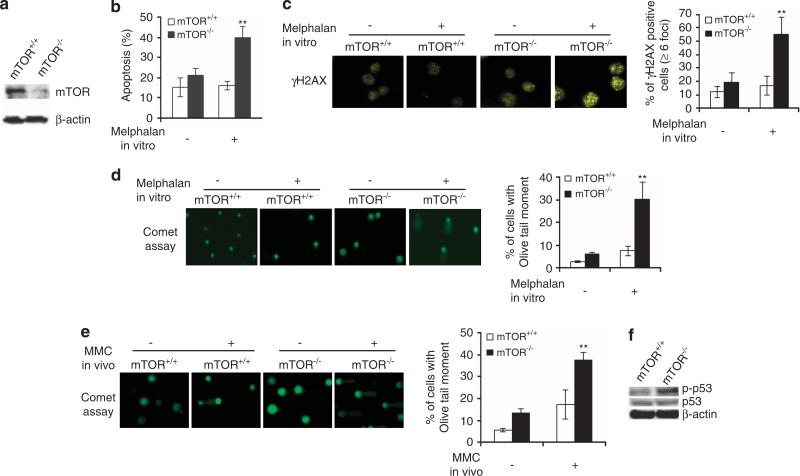
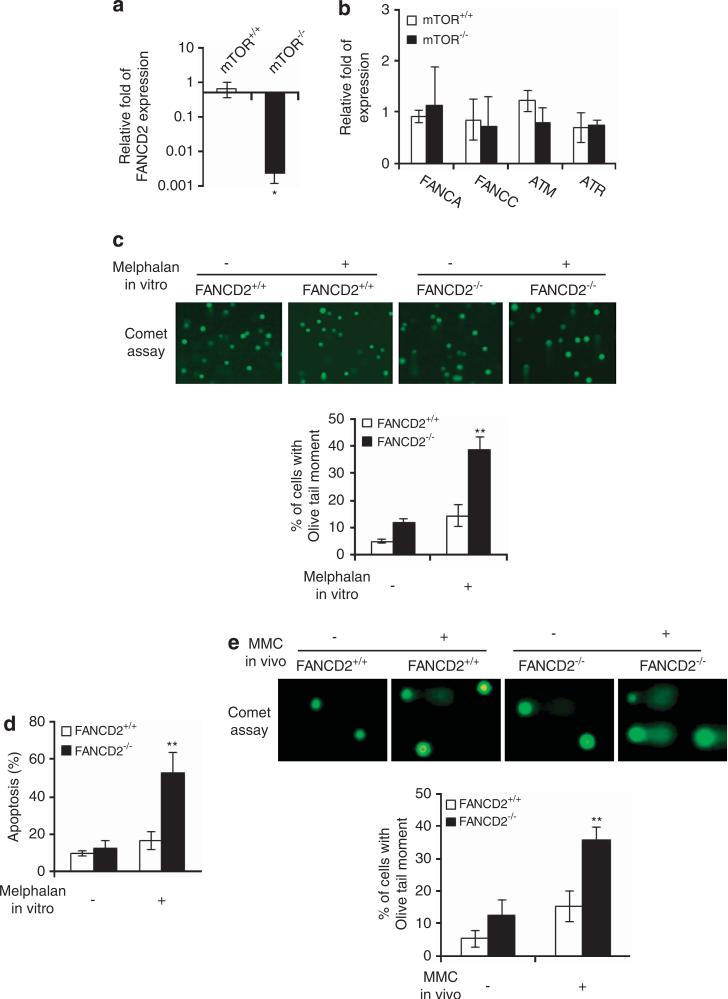
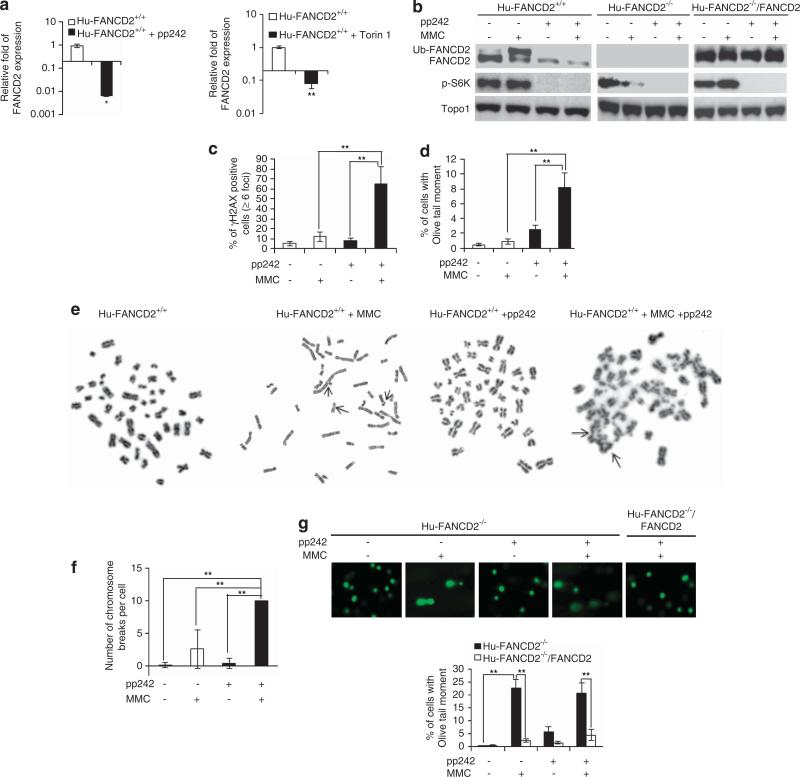
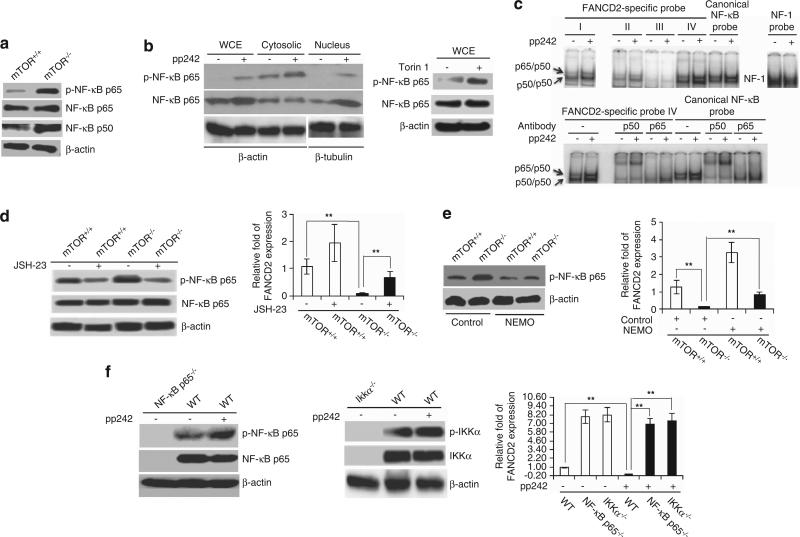
Hematopoietic stem/progenitor cells (HSPCs) function to give rise to mature blood cells. Effective DNA damage response (DDR) and maintenance of genomic stability are crucial for normal functioning of HSPCs. Mammalian target of rapamycin (mTOR) integrates signals from nutrients and growth factors to control protein synthesis, cell growth, survival and metabolism, and has been shown to regulate DDR in yeast and human cancer cells through the p53/p21 signaling cascade. Here, we show that gene targeting of mTOR in HSPCs causes a defective DDR due to a variety of DNA damage agents, mimicking that caused by deficient FANCD2, a key component of the Fanconi anemia (FA) DDR machinery. Mechanistically, mTOR(-/-) HSPCs express drastically reduced FANCD2. Consistent with these genetic findings, inactivation of mTOR in human lymphoblast cells by pp242 or Torin 1, mTOR kinase inhibitors, suppresses FANCD2 expression and causes a defective DDR that can be rescued by reconstitution of exogenous FANCD2. Further mechanistic studies show that mTOR deficiency or inactivation increases phosphorylation and nuclear translocation of nuclear factor (NF)-κB, which results in an enhanced NF-κB binding to FANCD2 promoter to suppress FANCD2 expression. Thus, mTOR regulates DDR and genomic stability in hematopoietic cells through a noncanonical pathway involving NF-κB-mediated FANCD2 expression.
Figures
References
-
- Lombard DB, Chua KF, Mostoslavsky R, Franco S, Gostissa M, Alt FW. DNA repair, genome stability, and aging. Cell. 2005;120:497–512. - PubMed
-
- Sancar A, Lindsey-Boltz LA, Unsal-Kaçmaz K, Linn S. Molecular mechanisms of mammalian DNA repair and the DNA damage checkpoints. Annu Rev Biochem. 2004;73:39–85. - PubMed
-
- Vousden KH, Lane DP. p53 in health and disease. Nat Rev Mol Cell Biol. 2007;8:275–283. - PubMed
-
- Milyavsky M, Gan OI, Trottier M, Komosa M, Tabach O, Notta F, et al. A distinctive DNA damage response in human hematopoietic stem cell reveals an apoptosis-independent role of p53 in self-renewal. Cell Stem Cell. 2010;7:186–197. - PubMed
Publication types
MeSH terms
Substances
Grants and funding
LinkOut - more resources
Full Text Sources
Other Literature Sources
Medical
Molecular Biology Databases
Research Materials
Miscellaneous
