


Nuclear receptors as drug targets in cholestatic liver diseases
- PMID: 23540496
- PMCID: PMC3633080
- DOI: 10.1016/j.cld.2012.12.001
Nuclear receptors as drug targets in cholestatic liver diseases
Abstract
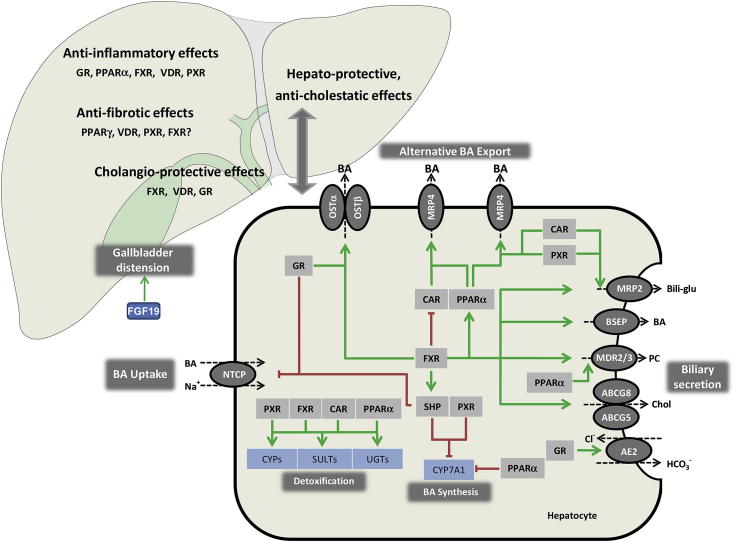
Cholestatic liver diseases encompass a wide spectrum of disorders with different causes, resulting in impaired bile flow and accumulation of bile acids and other potentially hepatotoxic cholephils. The understanding of the molecular mechanisms of bile formation and cholestasis has recently improved significantly through new insights into nuclear receptor (patho)biology. Nuclear receptors are ligand-activated transcription factors, which act as central players in the regulation of genes responsible for elimination and detoxification of biliary constituents accumulating in cholestasis. They also control other pathophysiologic processes such as inflammation, fibrogenesis, and carcinogenesis involved in the pathogenesis and disease progression of cholestasis liver diseases.
Copyright © 2013 Elsevier Inc. All rights reserved.
Figures
References
-
- Erlinger S. What is cholestasis in 1985? J Hepatol. 1985;1:687–693. - PubMed
-
- Trauner M., Meier P.J., Boyer J.L. Molecular pathogenesis of cholestasis. N Engl J Med. 1998;339:1217–1227. - PubMed
-
- Wagner M., Zollner G., Trauner M. Nuclear receptors in liver disease. Hepatology. 2011;53:1023–1034. - PubMed
-
- Trauner M., Halilbasic E. Nuclear receptors as new perspective for the management of liver diseases. Gastroenterology. 2011;140:1120–1125.e1–12. - PubMed
-
- McKenna N.J., Lanz R.B., O'Malley B.W. Nuclear receptor coregulators: cellular and molecular biology. Endocr Rev. 1999;20:321–344. - PubMed
Publication types
MeSH terms
Substances
Grants and funding
LinkOut - more resources
Full Text Sources
Other Literature Sources
