


A re-evaluation of the role of hCTR1, the human high-affinity copper transporter, in platinum-drug entry into human cells
- PMID: 23543413
- PMCID: PMC3657103
- DOI: 10.1124/mol.113.085068
A re-evaluation of the role of hCTR1, the human high-affinity copper transporter, in platinum-drug entry into human cells
Abstract
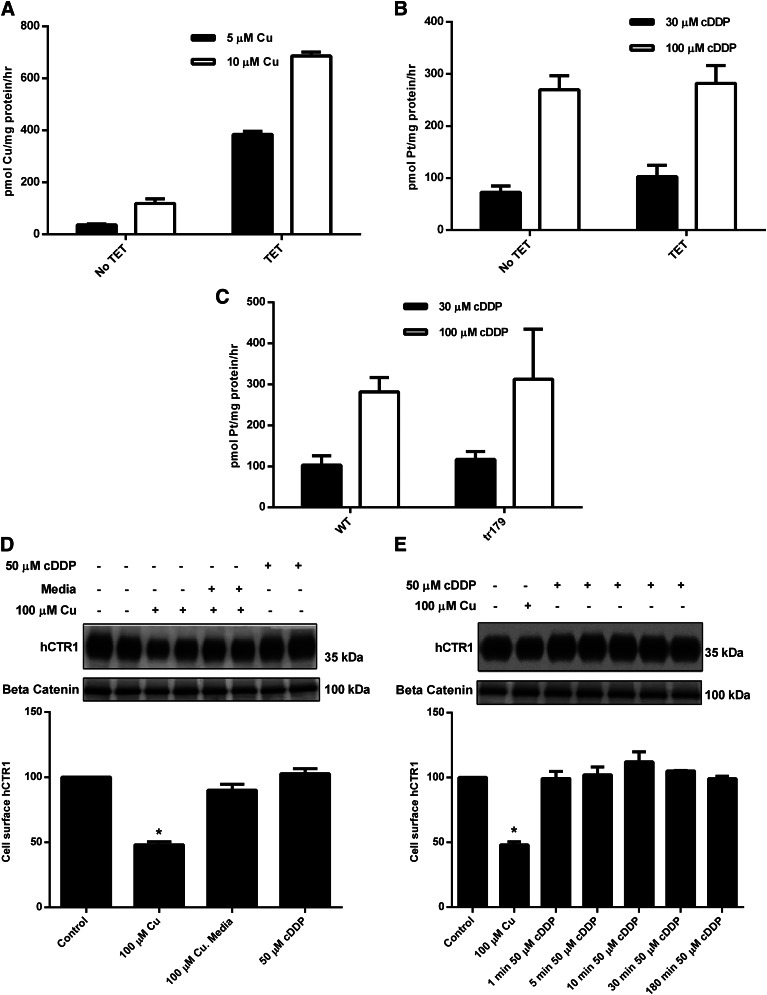
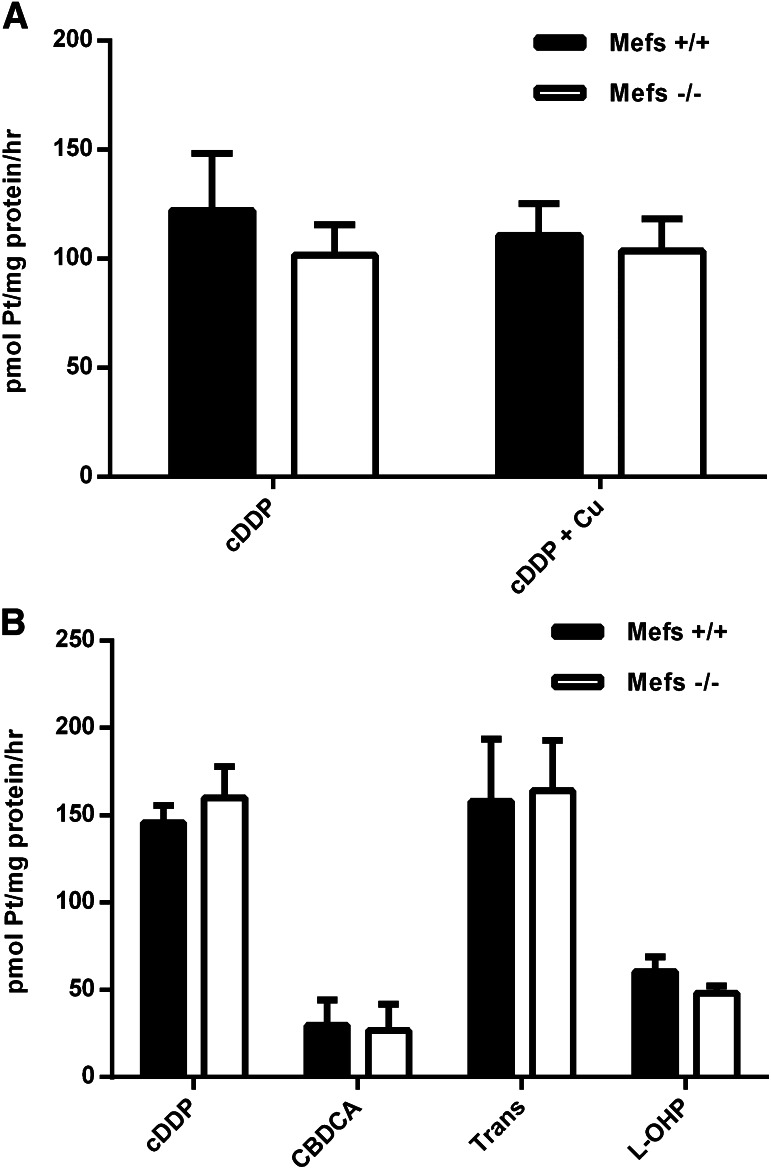
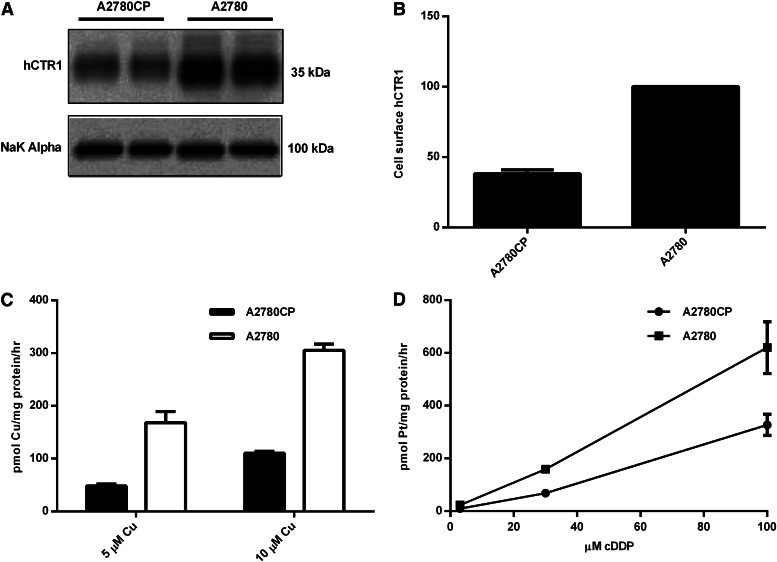
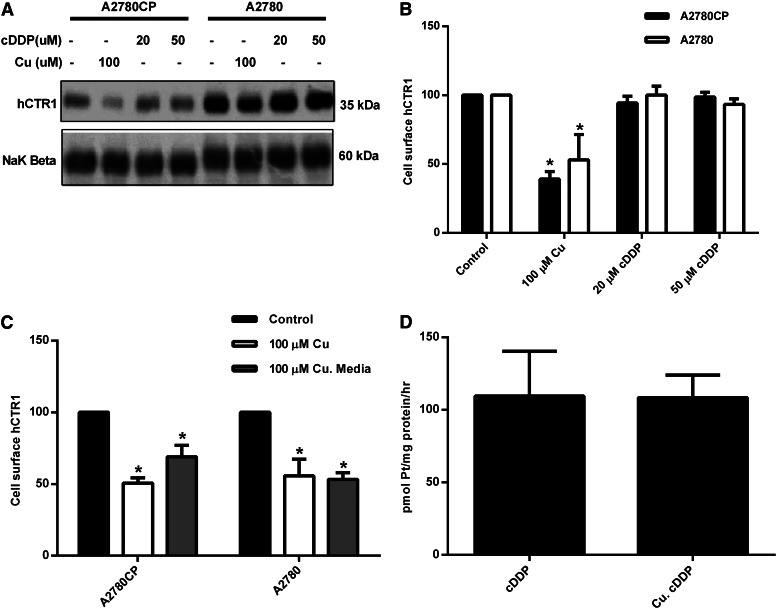
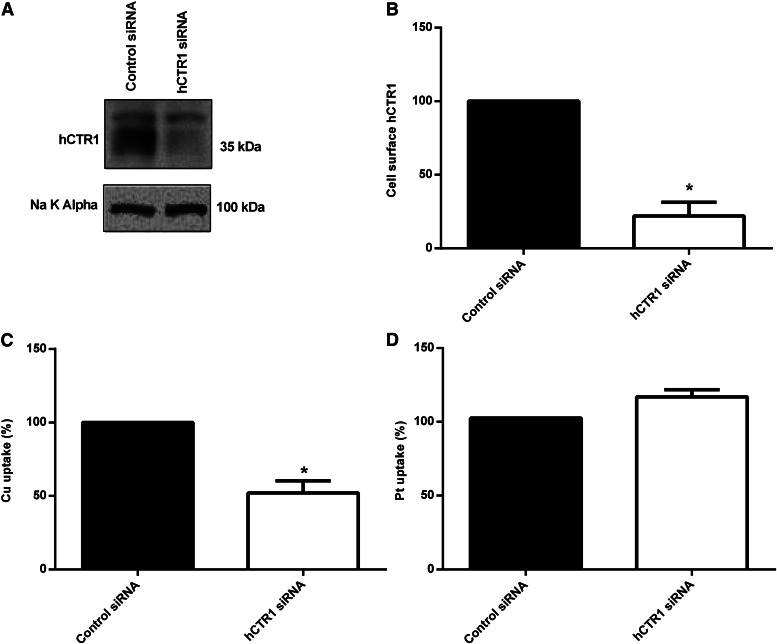
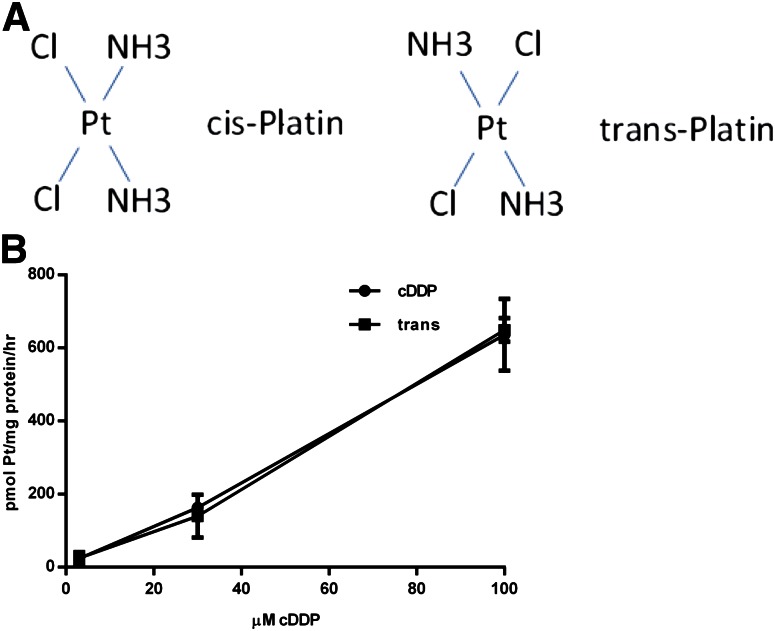
Cisplatin (cDDP) is an anticancer drug used in a number of malignancies, including testicular, ovarian, cervical, bladder, lung, head, and neck cancers. Its use is limited by the development of resistance, often rationalized via effects on cellular uptake. It has been claimed that human copper transporter 1 (hCTR1), the human high-affinity copper transporter, is the major entry pathway for cDDP and related drugs via a mechanism that mimics copper. This is an unexpected property of hCTR1, a highly selective copper (I) transporter. We compared the uptake rates of copper with cDDP (and several analogs) into human embryonic kidney 293 cells overexpressing wild-type or mutant hCTR1, mouse embryonic fibroblasts that do or do not express CTR1, and human ovarian tumor cells that are sensitive or resistant to cDDP. We have also compared the effects of extracellular copper, which causes regulatory endocytosis of hCTR1, to those of cDDP. We confirm the correlation between higher hCTR1 levels and higher platinum drug uptake in tumor cells sensitive to the drug. However, we show that hCTR1 is not the major entry route of platinum drugs, and that the copper transporter is not internalized in response to extracellular drug. Our data suggest the major entry pathway for platinum drugs is not saturable at relevant concentrations and not protein-mediated. Clinical trials have been initiated that depend upon regulating membrane levels of hCTR1. If reduced drug uptake is a major factor in resistance, hCTR1 is unlikely to be a productive target in attempts to enhance efficacy, although the proteins involved in copper homeostasis may play a role.
Figures
References
-
- Ahmed Z, Deyama Y, Yoshimura Y, Suzuki K. (2009) Cisplatin sensitivity of oral squamous carcinoma cells is regulated by Na+,K+-ATPase activity rather than copper-transporting P-type ATPases, ATP7A and ATP7B. Cancer Chemother Pharmacol 63:643–650 - PubMed
-
- Andrews PA, Howell SB. (1990) Cellular pharmacology of cisplatin: perspectives on mechanisms of acquired resistance. Cancer Cells 2:35–43 - PubMed
-
- Andrews PA, Velury S, Mann SC, Howell SB. (1988) cis-Diamminedichloroplatinum(II) accumulation in sensitive and resistant human ovarian carcinoma cells. Cancer Res 48:68–73 - PubMed
-
- Beretta GL, Gatti L, Tinelli S, Corna E, Colangelo D, Zunino F, Perego P. (2004) Cellular pharmacology of cisplatin in relation to the expression of human copper transporter CTR1 in different pairs of cisplatin-sensitive and -resistant cells. Biochem Pharmacol 68:283–291 - PubMed
Publication types
MeSH terms
Substances
Grants and funding
LinkOut - more resources
Full Text Sources
Other Literature Sources
Research Materials
