


Continuous versus intermittent infusions of antibiotics for the treatment of severe acute infections
- PMID: 23543565
- PMCID: PMC8946287
- DOI: 10.1002/14651858.CD008481.pub2
Continuous versus intermittent infusions of antibiotics for the treatment of severe acute infections
Abstract
Background: Intravenous broad-spectrum antibiotics are indicated for the treatment of severe infections. However, the emergence of infections caused by multi-drug resistant organisms in conjunction with a lack of novel antibiotics has prompted the investigation of alternative dosing strategies to improve clinical efficacy and tolerability. To optimise pharmacokinetic and pharmacodynamic antibiotic parameters, continuous antibiotic infusions have been compared to traditional intermittent antibiotic infusions.
Objectives: To compare the clinical efficacy and safety of continuous intravenous administration of concentration-dependent and time-dependent antibiotics to traditional intermittent intravenous administration in adults with severe acute bacterial infections.
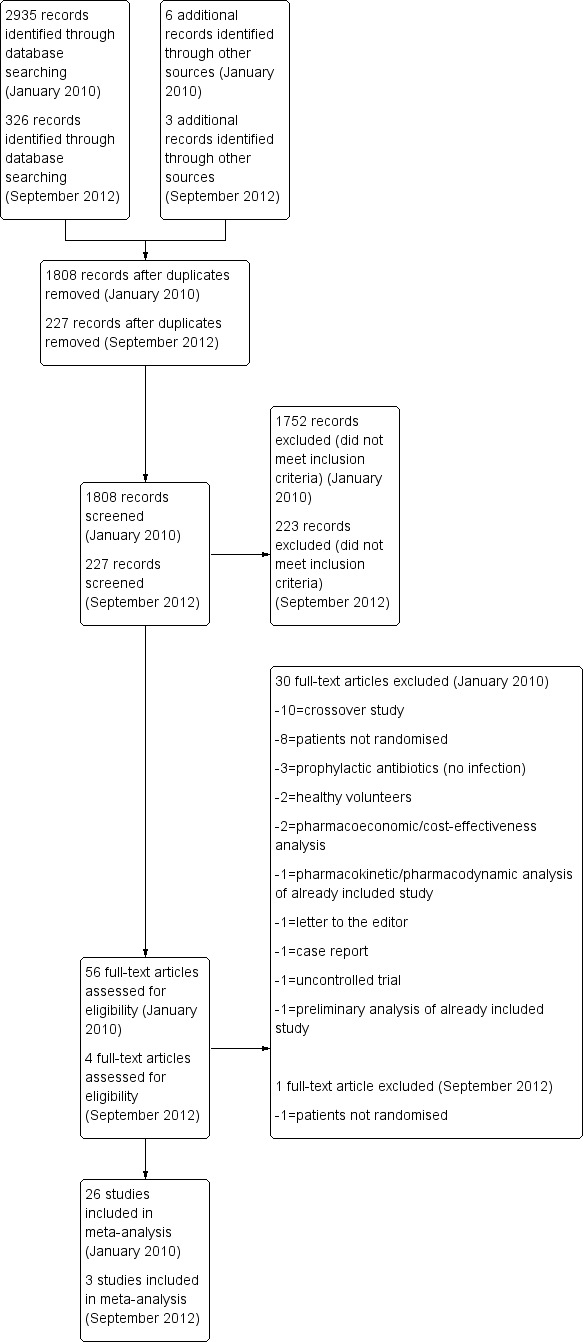
Search methods: The following electronic databases were searched in September 2012: The Cochrane Injuries Group Specialised Register, Cochrane Central Register of Controlled Trials (The Cochrane Library), MEDLINE (OvidSP), EMBASE (OvidSP), CINAHL, ISI Web of Science: Science Citation Index Expanded (SCI-EXPANDED), ISI Web of Science: Conference Proceedings Citation Index-Science (CPCI-S). The reference lists of all relevant material, the Internet and the trials registry www.clinicaltrials.gov for completed and ongoing trials were also searched.
Selection criteria: Randomized controlled trials in adults with a bacterial infection requiring intravenous antibiotic therapy comparing continuous versus intermittent infusions of antibiotics were included. Both time-dependent and concentration-dependent antibiotics were considered.
Data collection and analysis: Three independent authors performed data extraction for the included studies. All data was cross-checked and disagreements resolved by consensus. An intention to treat analysis was conducted using a random-effects model.
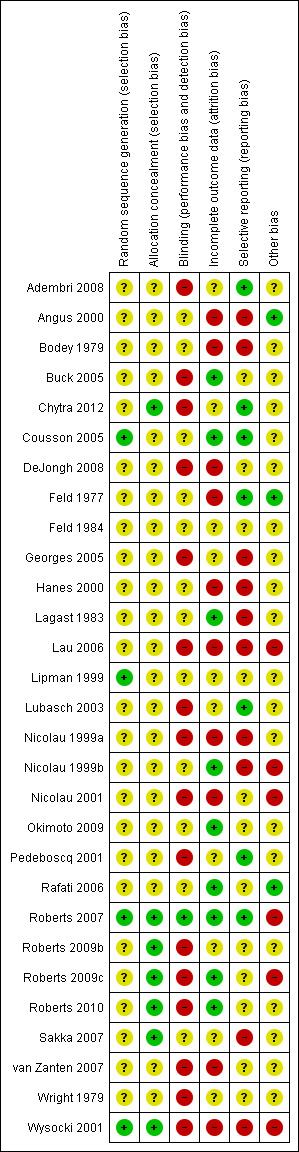
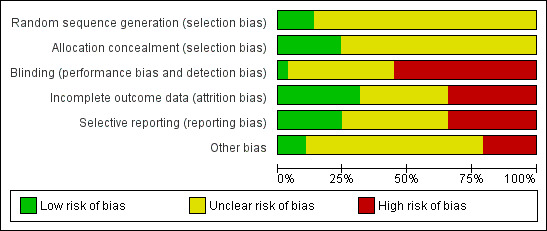
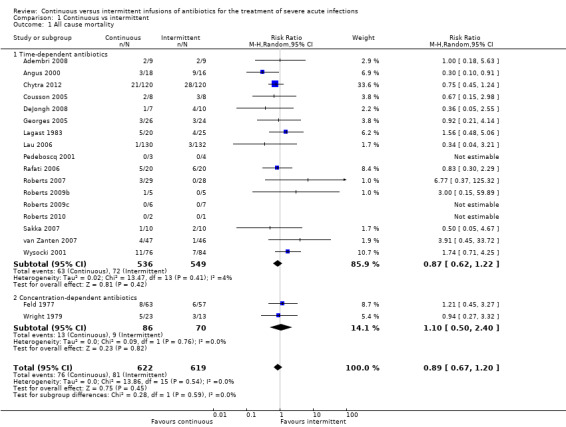
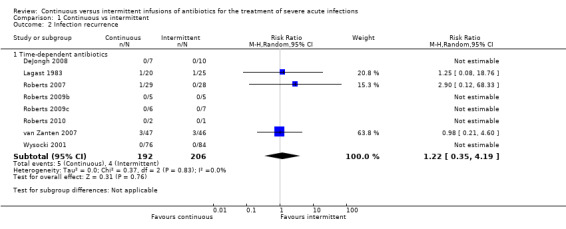
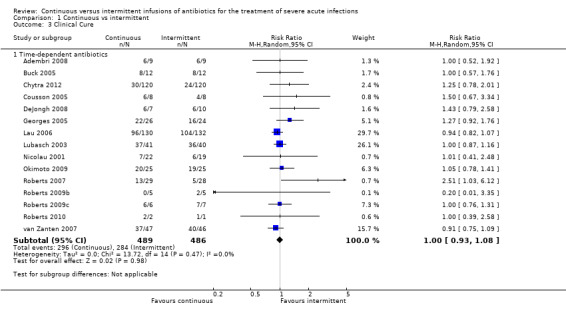
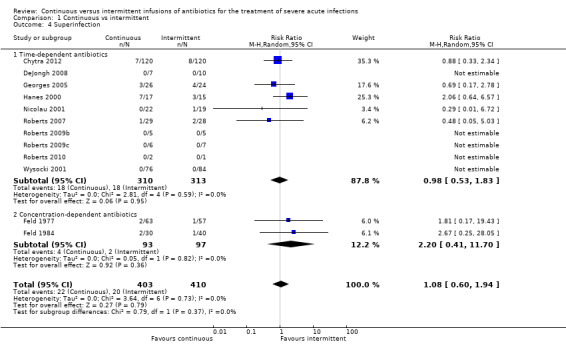
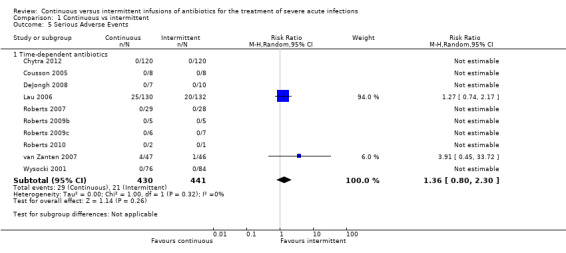
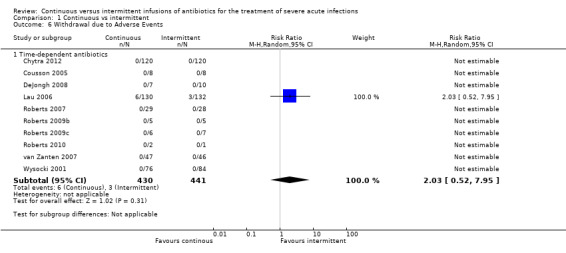
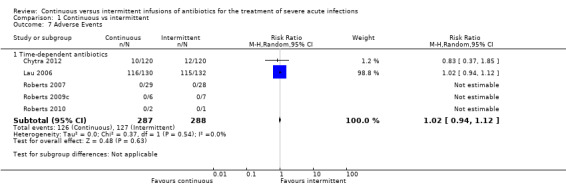
Main results: Twenty-nine studies met inclusion criteria with a combined total of over 1,600 patients. The majority of included studies were judged to be at unclear or high risk of bias with regard to randomisation sequence generation, allocation concealment, blinding, management of incomplete outcome data, selective outcome reporting, and other potential threats to validity. No studies were judged to be at low risk of bias for all methodological quality items assessed. There were no differences in all-cause mortality (n=1241, RR 0.89, 95% CI 0.67 - 1.20, p=0.45), infection recurrence (n=398, RR 1.22, 95% CI 0.35 - 4.19, p=0.76), clinical cure (n=975, RR 1.00, 95% CI 0.93 - 1.08, p=0.98), and superinfection post-therapy (n=813, RR 1.08, 95% CI 0.60 - 1.94, p=0.79). There were no differences in safety outcomes including adverse events (n=575, RR 1.02, 95% CI 0.94 - 1.12, p=0.63), serious adverse events (n=871, RR 1.36, 95% CI 0.80 - 2.30, p=0.26), and withdrawal due to adverse events (n=871, RR 2.03, 95% CI 0.52 - 7.95, p=0.31). A difference was observed in the subgroup analyses of clinical cure in septic versus non-septic patients, where intermittent antibiotic infusions were favoured for clinical cure in septic patients. However, this effect was not consistent between random-effects and fixed-effects analyses. No differences were found in sensitivity analyses conducted.
Authors' conclusions: There were no differences in mortality, infection recurrence, clinical cure, superinfection post-therapy, and safety outcomes when comparing continuous infusions of intravenous antibiotics to traditional intermittent infusions of antibiotics. However, the wide confidence intervals suggest that beneficial or harmful effects cannot be ruled out for all outcomes. Therefore, the current evidence is insufficient to recommend the widespread adoption of continuous infusion antibiotics in the place of intermittent infusions of antibiotics. Further large prospective randomised trials, with consistent and complete reporting of clinical outcome measures, conducted with concurrent pharmacokinetic and pharmacodynamic studies in special populations are required to determine whether adoption of continuous antibiotic infusions is warranted in specific circumstances.
Conflict of interest statement
All authors: none known.
Aaron Tejani: no direct or indirect association with the pharmaceutical industry in the past 8 years.
Figures
Update of
References
References to studies included in this review
Adembri 2008 {published data only}
-
- Adembri C, Fallani S, Cassetta MI, Arrigucci S, Ottaviano A, Pecile P, Mazzei T, Gaudio R, Novelli A. Linezolid pharmacokinetic/pharmacodynamic profile in critically ill septic patients: intermittent versus continuous infusion. International Journal of Antimicrobial Agents 2008;31(2):122‐9. - PubMed
Angus 2000 {published data only}
-
- Angus BJ, Smith MD, Suputtamongkol Y, Mattie H, Walsh AL, Wuthiekanun V, Chaowagul W, White NJ. Pharmacokinetic‐pharmacodynamic evaluation of ceftazidime continuous infusion vs intermittent bolus injection in septicaemic melioidosis. British Journal of Clinical Pharmacology 2000;49(5):445‐52. - PMC - PubMed
Bodey 1979 {published data only}
-
- Bodey GP, Ketchel SJ, Rodriguez V. A randomized study of carbenicillin plus cefamandole or tobramycin in the treatment of febrile episodes in cancer patients. American Journal of Medicine 1979;67(4):608‐16. - PubMed
Buck 2005 {published data only}
-
- Buck C, Bertram N, Ackermann T, Sauerbruch T, Derendorf H, Paar WD. Pharmacokinetics of piperacillin‐tazobactam: intermittent dosing versus continuous infusion. International Journal of Antimicrobial Agents 2005;25(1):62‐7. - PubMed
Chytra 2012 {published and unpublished data}
-
- Chytra I, Stepan M, Benes J, Pelnar P, Zidkova A, Bergerova T, Pradl R, Kasal E. Clinical and microbiological efficacy of continuous versus intermittent application of meropenem in critically ill patients: a randomized open‐label controlled trial. Critical Care 2012;16:R113 (Epub ahead of print). - PMC - PubMed
Cousson 2005 {published and unpublished data}
-
- Cousson J, Floch T, Vernet‐Garnier V, Appriou M, Petit JS, Jovenin N, Lamiable D, Hoizey G. Pharmacodynamic interest of ceftazidime continuous infusion vs intermittent bolus administration in patients with severe nosocomial pneumonia (French). Pathologie Biologie 2005;53:546‐50. - PubMed
DeJongh 2008 {published and unpublished data}
-
- Jongh R, Hens R, Basma V, Mouton JW, Tulkens PM, Carryn S. Continuous versus intermittent infusion of temocillin, a directed spectrum penicillin for intensive care patients with nosocomial pneumonia: stability, compatibility, population pharmacokinetic studies and breakpoint selection. Journal of Antimicrobial Chemotherapy 2008;61(2):382‐8. - PubMed
Feld 1977 {published data only}
-
- Feld R, Valdivieso M, Bodey GP, Rodriguez V. A comparative trial of sisomicin therapy by intermittent versus continuous infusion. The American Journal of the Medical Sciences 1977;274(2):179‐88. - PubMed
Feld 1984 {published data only}
-
- Feld R, Rachlis A, Tuffnell PG, Duncan I, Moran L, Pinfold P, DeBoer G. Empiric therapy for infections in patients with granulocytopenia. Continuous v interrupted infusion of tobramycin plus cefamandole. Archives of Internal Medicine 1984;144(5):1005‐10. - PubMed
Georges 2005 {published data only}
-
- Georges B, Conil JM, Cougot P, Decun JF, Archambaud M, Seguin T, Chabanon G, Virenque C, Houin G, Saivin S. Cefepime in critically ill patients: continuous infusion vs. an intermittent dosing regimen. International Journal of Clinical Pharmacology and Therapeutics 2005;43(8):360‐9. - PubMed
Hanes 2000 {published data only}
-
- Hanes SD, Wood GC, Herring V, Croce MA, Fabian TC, Pritchard E, Boucher BA. Intermittent and continuous ceftazidime infusion for critically ill trauma patients. The American Journal of Surgery 2000;179(6):436‐40. - PubMed
Lagast 1983 {published data only}
-
- Lagast H, Meunier‐Carpentier F, Klastersky J. Treatment of gram‐negative bacillary septicemia with cefoperazone. European Journal of Clinical Microbiology 1983;2(6):554‐8. - PubMed
Lau 2006 {published data only}
-
- Lau WK, Mercer D, Itani KM, Nicolau DP, Kuti JL, Mansfield D, Dana A. Randomized, open‐label, comparative study of piperacillin‐tazobactam administered by continuous infusion versus intermittent infusion for treatment of hospitalized patients with complicated intra‐abdominal infection. Antimicrobial Agents and Chemotherapy 2006;50(11):3556‐61. - PMC - PubMed
Lipman 1999 {published data only}
-
- Lipman J, Gomersall CD, Gin T, Joynt GM, Young RJ. Continuous infusion ceftazidime in intensive care: a randomized controlled trial. Journal of Antimicrobial Chemotherapy 1999;43(2):309‐11. - PubMed
Lubasch 2003 {published data only}
-
- Lubasch A, Luck S, Hartmut L, Mauch H, Lorenz J, Bolcskei P, Welte T. Optimizing ceftazidime pharmacodynamics in patients with acute exacerbation of severe chronic bronchitis. Journal of Antimicrobial Chemotherapy 2003;51:659‐64. - PubMed
Nicolau 1999a {published data only}
-
- Nicolau DP, McNabb J, Lacy MK, Li J, Quintiliani R, Nightingale CH. Pharmacokinetics and pharmacodynamics of continuous and intermittent ceftazidime during the treatment of nosocomial pneumonia. Clinical Drug Investigation 1999;18(2):133‐9.
Nicolau 1999b {published data only}
-
- Nicolau DP, Lacy MK, McNabb J, Quintiliani R, Nightingale CH. Pharmacokinetics of continuous and intermittent ceftazidime in intensive care unit patients with nosocomial pneumonia. Infectious Diseases in Clinical Practice 1999;8(1):45‐9.
Nicolau 2001 {published data only}
-
- Nicolau DP, McNabb J, Lacy MK, Quintiliani R, Nightingale CH. Continuous versus intermittent administration of ceftazidime in intensive care unit patients with nosocomial pneumonia. International Journal of Antimicrobial Agents 2001;17(6):497‐504. - PubMed
Okimoto 2009 {published data only}
-
- Okimoto N, Ishiga M, Nanba F, Kibayashi T, Kishimoto M, Kurihara T, Honda Y, Asaoka N, Tamada S. Clinical effects of continuous infusion and intermittent infusion of meropenem on bacterial pneumonia in the elderly (Japanese). Nihon Kokyuki Gakkai Zasshi 2009;47(7):553‐7. - PubMed
Pedeboscq 2001 {published and unpublished data}
-
- Pedeboscq S, Dubau B, Frappier S, Hernandez V, Veyssieres D, Winnock S, Pometan JP. Comparison of 2 administration protocols (continuous or discontinuous) of a time‐dependent antibiotic, Tazocin (French). Pathologie Biologie (Paris) 2001;49(7):540‐7. - PubMed
Rafati 2006 {published data only}
-
- Rafati MR, Rouini MR, Mojtahedzadeh M, Najafi A, Tavakoli H, Gholami K, Fazeli MR. Clinical efficacy of continuous infusion of piperacillin compared with intermittent dosing in septic critically ill patients. International Journal of Antimicrobial Agents 2006;28(2):122‐7. - PubMed
Roberts 2007 {published and unpublished data}
-
- Roberts JA, Boots R, Rickard CM, Thomas P, Quinn J, Roberts DM, Richards B, Lipman J. Is continuous infusion ceftriaxone better than once‐a‐day dosing in intensive care? A randomized controlled pilot study. Journal of Antimicrobial Chemotherapy 2007;59(2):285‐91. - PubMed
Roberts 2009b {published and unpublished data}
-
- Roberts JA, Kirkpatrick CMJ, Roberts MS, Robertson TA, Dalley AJ, Lipman J. Meropenem dosing in critically ill patients with sepsis and without renal dysfunction: intermittent bolus versus continuous administration? Monte Carlo dosing simulations and subcutaneous tissue distribution. Journal of Antimicrobial Chemotherapy 2009;64(1):142‐50. - PubMed
Roberts 2009c {published and unpublished data}
-
- Roberts JA, Roberts MS, Robertson TA, Dalley AJ, Lipman J. Piperacillin penetration into tissue of critically ill patients with sepsis‐bolus versus continuous administration?. Critical Care Medicine 2009;37(3):926‐33. - PubMed
Roberts 2010 {published and unpublished data}
-
- Roberts JA, Kirkpatrick CMJ, Roberts MS, Dalley AJ, Lipman J. First‐dose and steady‐state population pharmacokinetics and pharmacodynamics of piperacillin by continuous or intermittent dosing in critically ill patients with sepsis. International Journal of Antimicrobial Agents 2010;35:156‐63. - PubMed
Sakka 2007 {published data only}
-
- Sakka SG, Glauner AK, Bulitta JB, Kinzig‐Schippers M, Pfister W, Drusano GL, Sorgel F. Population pharmacokinetics and pharmacodynamics of continuous versus short‐term infusion of imipenem‐cilastatin in critically ill patients in a randomized, controlled trial. Antimicrobial Agents and Chemotherapy 2007;51(9):3304‐10. - PMC - PubMed
van Zanten 2007 {published and unpublished data}
-
- Zanten ARH, Oudijk M, Nohlmans‐Paulssen MKE, Meer YG, Girbes ARJ, Polderman KH. Continuous vs. intermittent cefotaxime administration in patients with chronic obstructive pulmonary disease and respiratory tract infections: pharmacokinetics/pharmacodynamics, bacterial susceptibility and clinical efficacy. British Journal of Clinical Pharmacology 2007;63(1):100‐9. - PMC - PubMed
Wright 1979 {published data only}
-
- Wright JP, Potgieter PD, Forder AA, Botha P, Brinkworth G, Elisha G, Ferguson AD. Gentamicin and penicillin in the treatment of severe respiratory infections. South African Medical Journal 1979;55(6):197‐200. - PubMed
Wysocki 2001 {published and unpublished data}
-
- Wysocki M, Delatour F, Faurisson F, Rauss A, Pean Y, Misset B, Thomas F, Timsit JF, Similowski T, Mentec H, Mier L, Dreyfuss D, and the study group. Continuous versus intermittent infusion of vancomycin in severe staphylococcal infections: prospective multicenter randomized study. Antimicrobial Agents and Chemotherapy 2001;45(9):2460‐7. - PMC - PubMed
References to studies excluded from this review
Adembri 2010 {published data only}
-
- Adembri C, Ristori R, Chelazzi C, Arrigucci S, Cassetta MI, Gaudio AR, Novelli A. Cefazolin bolus and continuous administration for elective cardiac surgery: improved pharmacokinetic and pharmacodynamic parameters. Journal of Thoracic and Cardiovascular Surgery 2010;140:471‐5. - PubMed
Ambrose 1998 {published data only}
-
- Ambrose PG, Quindliani R, Nightingale CH, Nicolau DP. Continuous vs. intermittent infusion of cefuroxime for the treatment of community‐acquired pneumonia. Infectious Diseases in Clinical Practice 1998;7(9):463‐70.
Benko 1996 {published data only}
Bosso 1999 {published data only}
-
- Bosso J, Bonapace C, Flume P, White R. A pilot study of the efficacy of constant‐infusion ceftazidime in the treatment of endobronchial infections in adults with cystic fibrosis. Pharmacotherapy 1999;19(5):620‐26. - PubMed
Buijk 2002 {published data only}
-
- Buijk SLCE, Gyssens IC, Mouton JW, Vliet A, Verbrugh HA. Pharmacokinetics of ceftazidime in serum and peritoneal exudate during continuous versus intermittent administration to patients with severe intra‐abdominal infections. Journal of Antimicrobial Chemotherapy 2002;49(1):121‐8. - PubMed
Burgess 2002 {published data only}
-
- Burgess D, Waldrep T. Pharmacokinetics and pharmacodynamics of piperacillin/tazobactam when administered by continuous infusion and intermittent dosing. Clinical Therapeutics 2002;24(7):1090‐1104. - PubMed
DeRyke 2006 {published data only}
-
- DeRyke CA, Kuti JL, Mansfield D, Dana A, Nicolau DP. Pharmacoeconomics of continuous versus intermittent infusion of piperacillin‐tazobactam for the treatment of complicated intraabdominal infection. American Journal of Health System Pharmacy 2006;63(8):750‐5. - PubMed
Georges 1999 {published data only}
-
- Georges B, Archambaud M, Saivin S, Decun J, Cougot P, Mazerolles M, Andrieu P, Suc C, Houin G, Chabanon G, Virenque C. Continuous versus intermittent cefepime infusion in critical care. Preliminary results (French). Pathologie Biologie 1999;47(5):483‐85. - PubMed
Grant 2002 {published data only}
-
- Grant E, Kuti J, Nicolau D, Nightingale C, Quintiliani R. Clinical efficacy and pharmacoeconomics of a continuous‐infusion piperacillin‐tazobactam program in a large community teaching hospital. Pharmacotherapy 2002;22(4):471‐83. - PubMed
Hutschala 2009 {published data only}
-
- Hutschala D, Kinstner C, Skhirdladze K, Thalhammer F, Muller M, Tschernko E. Influence of vancomycin on renal function in critically ill patients after cardiac surgery. Anesthesiology 2009;111:356‐65. - PubMed
James 1996 {published data only}
Jaruratanasirikul 2002 {published data only}
-
- Jaruratanasirikul S, Sriwiriyajan S, Ingviya N. Continuous infusion versus intermittent administration of cefepime in patients with gram‐negative bacilli bacteraemia. Journal of Pharmacy and Pharmacology 2002;54:1693‐96. - PubMed
Jaruratanasirikul 2005 {published data only}
Jaruratanasirikul 2009 {published data only}
-
- Jaruratanasirikul S, Sudsai T. Comparison of the pharmacodynamics of imipenem in patients with ventilator‐associated pneumonia following administration by 2 or 0.5h infusion. Journal of Anitimicrobial Chemotherapy 2009;63:560‐63. - PubMed
Jaruratanasirikul 2010 {published data only}
-
- Jaruratanasirikul S, Julamanee J, Sudsai T, Saengsuwan P, Jullangkoon M, Ingviya N, Jarumanokul R. Comparison of continuous infusion versus intermittent infusion of vancomycin in patients with methicillin‐resistant Staphylococcus aureus. Journal of the Medical Association of Thailand 2010;93(2):172‐6. - PubMed
Kirkpatrick 2001 {published data only}
-
- Kickpatrick C, Howard G, Vella‐Brincat J. Comment: serum concentrations of cefuroxime after continuous infusion in coronary bypass graft patients. The Annals of Pharmacotherapy 2001;53:1295‐96. - PubMed
Klepser 1998 {published data only}
-
- Klepser M, Patel K, Nicolau D, Quintiliani R, Nightingale C. Comparison of bactericidal activities of intermittent and continuous infusion dosing of vancomycin against methicillin‐resistant staphylococcus aureus and enterococcus faecalis. Pharmacotherapy 1998;18(5):1069‐74. - PubMed
Kojika 2005 {published data only}
-
- Kojika M, Sato N, Hakozaki M, Suzuki Y, Takahasi G, Endo S, Suzuki K, Wakabayasi G. A preliminary study of the administration of carbapenem antibiotics in sepsis patients on the basis of administration time. The Japanese Journal of Antibiotics 2005;58(5):452‐7. - PubMed
Langgartner 2007 {published data only}
-
- Langgartner J, Lehn N, Gluck T, Herzig H, Kees F. Comparison of the pharmacokinetics of piperacillin and sulbactam during intermittent and continuous intravenous infusion. Chemotherapy 2007;53:370‐77. - PubMed
Li 2005 {published data only}
-
- Li C, Kuti JL, Nightingale CH, Mansfield DL, Dana A, Nicolau DP. Population pharmacokinetics and pharmacodynamics of piperacillin/tazobactam in patients with complicated intra‐abdominal infection. Journal of Antimicrobial Chemotherapy 2005;56(2):388‐95. - PubMed
Lorente 2006 {published data only}
-
- Lorente L, Lorenzo L, Martin MM, Jimenez A, Mora ML. Meropenem by continuous versus intermittent infusion in ventilator‐associated pneumonia due to gram‐negative bacilli. Annals of Pharmacotherapy 2006;40:219‐23. - PubMed
Martin 1998 {published data only}
-
- Martin C, Cotin A, Giraud A, Beccani‐Argeme M, Alliot P, Mallet MN, Argeme M. Comparison of concentrations of sulbactam‐ampicillin administered by bolus injections or bolus plus continuous infusion in tissues of patients undergoing colorectal surgery. Antimicrobial Agents and Chemotherapy 1998;42(5):1093‐97. - PMC - PubMed
McNabb 2001 {published data only}
-
- McNabb JJ, Nightingale CH, Quintiliani R, Nicolau DP. Cost‐effectiveness of ceftazidime by continuous infusion versus intermittent infusion for nosocomial pneumonia. Pharmacotherapy 2001;21(5):549‐55. - PubMed
Nicasio 2007 {published data only}
-
- Nicasio A, Quintiliani R, DeRyke C, Kuti J, Nicolau D. Treatment of serratia marcescens meningitis with prolonged infusion of meropenem. The Annals of Pharmacotherapy 2007;41:1077‐81. - PubMed
Pass 2001 {published data only}
-
- Pass SE, Miyagawa CI, Healy DP, Ivey TD. Serum concentrations of cefuroxime after continuous infusion in coronary bypass graft patients. Annals of Pharmacotherapy 2001;35:409‐13. - PubMed
Schuster 2009 {published data only}
-
- Schuster KM, Wilson D, Schulman CI, Pizano LR, Ward CG, Namias N. Continuous infusion oxacillin for the treatment of burn wound cellulitis. Surgical Infections 2009;10(1):41‐5. - PubMed
Seguin 2009 {published data only}
-
- Seguin P, Verdier M, Chanavaz C, Engrand C, Laviolle B, Donnio P, Malledant Y. Plasma and peritoneal concentration following continuous infusion of cefotaxime in patients with secondary peritonitis. Journal of Antimicrobial Chemotherapy 2009;63:564‐67. - PubMed
Thalhammer 1999 {published data only}
-
- Thalhammer F, Traunmuller F, Menyawi I, Frass M, Hollenstein U, Locker G, Stoiser B, Staudinger T, Thalhammer‐Scherrer R, Burgmann H. Continuous infusion versus intermittent administration of meropenem in critically ill patients. Journal of Antimicrobial Chemotherapy 1999;43:523‐27. - PubMed
Vinks 2003 {published data only}
Vuagnat 2004 {published data only}
-
- Vuagnat A, Stern R, Lotthe A, Schuhmacher H, Duong M, Hoffmeyer P, Bernard L. High dose vancomycin for osteomyelitis: continuous vs. intermittent infusion. Journal of Clinical Pharmacy and Therapeutics 2004;29:351‐57. - PubMed
Waltrip 2002 {published data only}
-
- Waltrip T, Lewis R, Young V, Farmer M, Clayton S, Myers S, Gray L, Galandiuk S. A pilot study to determine the feasibility of continuous cefazolin infusion. Surgical Infections 2002;3(1):5‐9. - PubMed
References to ongoing studies
Cousson 2010 {unpublished data only}
-
- Cousson J, Floch T, Hoizey G, Nicolai F, Guillard T, Vernet‐Garnier V. Comparison of pharmacodynamic interest of ceftazidime continuous infusion vs intermittent bolus administration in epithelial lining fluid concentrations of patients with severe nosocomial pneumonia. 50th Interscience Conference on Antimicrobial Agents and Chemotherapy (poster) 2010.
NCT00891423 {unpublished data only}
-
- Johnson P. A Randomised controlled crossover pilot study of meropenem standard 30 minute infusion versus prolonged 3 hour infusion in intensive care patients. Available at http://www.clinicaltrials.gov, last updated July 2012. Accessed November 14, 2012.
NCT01158937 {unpublished data only}
-
- Cortes D. Pharmacokinetic study of extended infusion meropenem in adult cystic fibrosis patients with exacerbation of pulmonary infection. Available at http://www.clinicaltrials.gov, last updated June 2012. Accessed November 14, 2012.
NCT01198925 {unpublished data only}
-
- Decruyenaere J. Assessment of the optimal dosing of piperacillin‐tazobactam in intensive care unit patients: extended versus continuous infusion. Available at http://www.clinicaltrials.gov, last updated July 2012. Accessed November 14, 2012.
NCT01379157 {unpublished data only}
-
- Jaruratanasirikul S. The pharmacodynamics of imipenem in critically ill patients with ventilator‐associated pneumonia following administration by 4h or 0.5h infusion. Available at http://www.clinicaltrials.gov, last updated December 2011. Accessed November 14, 2012.
NCT01577368 {unpublished data only}
-
- Gil‐Navarro MV. Efficacy and safety of piperacillin‐tazobactam continuous infusion vs intermittent infusion for complicated or nosocomial Pseudomonas aeruginosa infection or suspected infection. Available at http://www.clinicaltrials.gov, last updated April 2012. Accessed November 14, 2012.
NCT01667094 {unpublished data only}
-
- Peleg A. Continuous infusion anti‐pseudomonal beta‐lactams for the treatment of acute, infective pulmonary exacerbations in cystic fibrosis: a prospective randomised controlled trial. Available at http://www.clinicaltrials.gov, last updated August 2012. Accessed November 14, 2012.
NCT01720940 {unpublished data only}
-
- Fisher D. Reducing nephrotoxicity of vancomycin: a prospective, randomised study of continuous versus intermittent infusion of vancomycin. Available at http://www.clinicaltrials.gov, last updated November 2012. Accessed November 14, 2012.
Additional references
Ariano 2010
Balshem 2011
-
- Balshem H, Helfand M, Schunemann HJ, Oxman AD, Kunz R, Brozek J, Vist GE, Flack‐Ytter Y, Meerpohl J, Norris S, Guyall GH. GRADE guidelines: 3. Rating the quality of evidence. Journal of Clinical Epidemiology 2011;64:401‐06. - PubMed
Craig 1998
-
- Craig WA. Pharmacokinetic/pharmacodynamic parameters: rationale for antibacterial dosing of mice and men. Clinical Infectious Diseases 1998;26(1):1‐10. - PubMed
Drusano 2004
-
- Drusano GL. Antimicrobial pharmacodynamics: critical interactions of "bug and drug". Nature Reviews Microbiology 2004;2(4):289‐300. - PubMed
Florea 2003
-
- Florea NR, Kotapati S, Kuti JL, Geissler EC, Nightingale CH, Nicolau DP. Cost analysis of continuous versus intermittent infusion of piperacillin–tazobactam: a time–motion study. American Journal of Health System Pharmacy 2003;60(22):2321‐7. - PubMed
Ghafourian 2011
GRADEpro 2008 [Computer program]
-
- Version 3.2 for Windows. Brozek J, Oxman A, Schunemann H. GRADEpro (GRADEprofiler).. The Cochrane Collaboration, 2008.
Guyatt 2011
-
- Guyatt G, Oxman AD, Akl EA, Kunz R, Vist G, Brozek J, Norris S, Falck‐Ytter Y, Glasziou P, deBeer H, Jaeschke R, Rind D, Meerpohl J, Dahm P, Schunemann HJ. GRADE guidelines: 1. Introduction ‐ GRADE evidence profiles and summary of findings tables. Journal of Clinical Epidemiology 2011;64:383‐94. - PubMed
Higgins 2003
Higgins 2009
-
- Higgins JPT, Green S (editors). Cochrane Handbook for Systematic Reviews of Interventions Version 5.0.2 [updated September 2009]. The Cochrane Collaboration, 2009. Available from www.cochrane‐handbook.org.
Hitt 1997
-
- Hitt CM, Nighingale CH, Quintilliani R, Nicolau DP. Cost comparison of single daily IV doses of ceftriaxone versus continuous infusion of cefotaxime. American Journal of Health System Pharmacy 1997;54(14):1614‐8. - PubMed
Kasiakou 2005a
-
- Kasiakou SK, Lawrence KR, Choulis N, Falagas ME. Continuous versus intermittent intravenous administration of antibacterials with time‐ dependent action: a systematic review of pharmacokinetic and pharmacodynamic parameters. Drugs 2005;65(17):2499‐511. - PubMed
Kasiakou 2005b
-
- Kasiakou SK, Sermaides GJ, Michalopoulos A, Soteriades ES, Falagas ME. Continuous versus intermittent intravenous administration of antibiotics: a meta‐analysis of randomised controlled trials. Lancet Infectious Diseases 2005;5(9):581‐9. - PubMed
Lipman 2001
-
- Lipman J, Wallis SC, Rickard CM, Fraenkel D. Low cefpirome levels during twice daily dosing in critically ill septic patients: pharmacokinetic modelling calls for more frequent dosing. Intensive Care Medicine 2001;27(2):363‐70. - PubMed
Lodise 2006
-
- Lodise TP, Lomaestro BM, Drusano GL, Society of Infectious Diseases Pharmacists. Application of antimicrobial pharmacodynamic concepts into clinical practice: focus on B‐lactam antibiotics. Pharmacotherapy 2006;26(9):1320‐32. - PubMed
Lodise 2007
-
- Lodise TP Jr, Lomaestro B, Drusano GL. Piperacillin‐tazobactam for pseudomonas aeruginosa Infection: clinical implications of an extended‐infusion dosing strategy. Clinical Infectious Diseases 2007;44(3):357‐63. - PubMed
McKinnon 2008
-
- McKinnon PS, Paladino JA, Schentag JJ. Evaluation of area under the inhibitory curve (AUIC) and time above the minimum inhibitory concentration (T>MIC) as predictors of outcome for cefepime and ceftazidime in serious bacterial infections. International Journal of Antimicrobial Agents 2008;31(4):345‐51. - PubMed
Meyer 2011
-
- Meyer E, Ziegler R, Mattner F, Schwab F, Gastmeier P, Martin M. Increase of patients co‐colonised or co‐infected with methicillin‐resistant Staphylococcus aureus, vancomycin‐resistant Enterococcus faecium or extended‐spectrum B‐lactamase‐producing Enterobacteriaceae. Infection 2011;39(6):501‐6. - PubMed
Moore 1987
-
- Moore RD, Lietman PS, Smith CR. Clinical response to aminoglycoside therapy: importance of the ratio of peak concentration to minimal inhibitory concentration. Journal of Infectious Diseases 1987;155(1):93‐9. - PubMed
Neidell 2012
Nicolau 1996
RevMan 2008 [Computer program]
-
- The Nordic Cochrane Centre, The Cochrane Collaboration. Review Manager (RevMan). Version 5.0. Copenhagen: The Nordic Cochrane Centre, The Cochrane Collaboration, 2008.
Roberts 2006
-
- Roberts JA, Lipman J. Antibacterial dosing in intensive care: pharmacokinetics, degree of disease and pharmacodynamics of sepsis. Clinical Pharmacokinetics 2006;45(8):755‐73. - PubMed
Roberts 2008
-
- Roberts JA, Lipman J, Blot S, Rello J. Better outcomes through continuous infusion of time‐dependent antibiotics to critically ill patients?. Current Opinion in Critical Care 2008;14(4):390‐6. - PubMed
Roberts 2009a
-
- Roberts JA, Webb S, Paterson D, Ho KM, Lipman J. A systematic review on clinical benefits of continuous administration of B‐lactam antibiotics. Critical Care Medicine 2009;37(6):2071‐8. - PubMed
Rosenthal 2012
-
- Rosenthal VD, Bijie H, Maki DG, Mehta Y, Apisarnthanarak A, Medeiros EA, Leblebicioglu H, Fisher D, Alvarez‐Moreno C, Khader IA, Martinez M, Cuellar LE, Navoa‐Ng JA, Abouqal R, Garcell HG, Mitrev Z, Garcia MCP, Hamdi A, Duenas L, Cancel E, Gurskis V, Rasslan O, Ahmed A, Kanj SS, Ugalde OC, Mapp T, Raka L, Meng CY, Thu LA, Ghazal S, Gikas A, Narvaez LP, Mejia N, Hadjieva N, Elanbya MOG, Siritt MEG, Jayatilleke K, INICC members. International nosocomial infection control consortium (INICC) report, data summary of 36 countries, for 2004‐2009. American Journal of Infection Control 2012;40(5):396‐407. - PubMed
Sunenshine 2007
-
- Sunenshine RH, Wright MO, Maragakis LL, Harris AD, Song X, Hebden J, Cosgrove SE, Anderson A, Carnell J, Jernigan DB, Kleinbaum DG, Peri TM, Standiford HC, Srinivasan A. Multidrug‐resistant Acinetobacter infection mortality rate and length of hospitalization. Emerging Infectious Diseases 2007;13(1):97‐103. - PMC - PubMed
Tamma 2011
van Zanten 2009
-
- Zanten AR. The jury is still out on continuous infusion of B‐lactam antibiotics in intensive care patients. Critical Care Medicine 2009;37(6):2137‐8. - PubMed
Viaene 2002
-
- Viaene E, Chanteux H, Servais H, Mingeot‐Leclercq M, Tulkens P. Comparative stability studies of antipseudomonal B‐Lactams for potential administration through portable elastomeric pumps (home therapy for cystic fibrosis patients) and motor‐operated syringes (intensive care units). Antimicrobial Agents and Chemotherapy 2002;46(8):2327‐32. - PMC - PubMed
References to other published versions of this review
Publication types
MeSH terms
Substances
LinkOut - more resources
Full Text Sources
Other Literature Sources
Medical
Miscellaneous
