


Topical calcineurin inhibitors for atopic dermatitis: review and treatment recommendations
- PMID: 23549982
- PMCID: PMC3715696
- DOI: 10.1007/s40272-013-0013-9
Topical calcineurin inhibitors for atopic dermatitis: review and treatment recommendations
Abstract
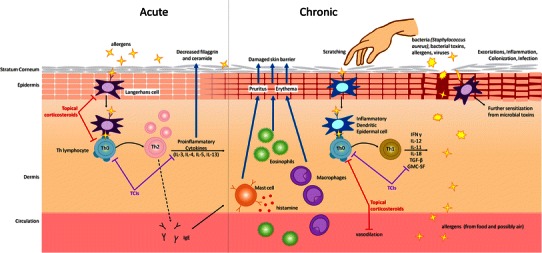
Atopic dermatitis (AD) is an inflammatory skin disease commonly affecting children and managed by pediatricians, primary care physicians, allergists, and dermatologists alike. For many years, the only available topical pharmacological treatment was topical corticosteroids. This changed in 2000-2001, when topical formulations of two calcineurin inhibitors (tacrolimus and pimecrolimus) were approved for short-term or chronic intermittent treatment of AD in patients ≥ 2 years of age, in whom other treatments have been ineffective or contraindicated. These topical calcineurin inhibitors (TCIs) quickly became a popular treatment option due at least in part to concerns over adverse events associated with prolonged topical corticosteroid use, especially in children. However, based on theoretical concerns about a possible risk of lymphoma associated with TCI use, a Boxed Warning was placed on both products in 2006. Since then, despite an extensive body of evidence, no causal relationship has been demonstrated between TCI use and an increased risk of lymphoma; however, the US FDA has concluded that a link cannot be ruled out. In fact, based on post-marketing surveillance of spontaneous, literature, and solicited reports, we report here that the lymphoma incidence in the topical pimecrolimus-exposed population is up to approximately 54-fold less than that seen in the general US population. This review summarizes the mechanism of action of TCIs, the factors that prompted the Boxed Warning, and recent TCI safety and efficacy data. Based on these data, both topical corticosteroids and TCIs should have defined roles in AD management, with TCIs favored for sensitive skin areas (e.g., face) and instances where topical corticosteroids have proven ineffective, thereby minimizing the risk of adverse effects with both drug classes.
Figures
References
-
- Valeant Pharmaceuticals North America. Data on file, 2012.
Publication types
MeSH terms
Substances
LinkOut - more resources
Full Text Sources
Other Literature Sources
