


Genome-wide association study of pre-eclampsia detects novel maternal single nucleotide polymorphisms and copy-number variants in subsets of the Hyperglycemia and Adverse Pregnancy Outcome (HAPO) study cohort
- PMID: 23551011
- PMCID: PMC3740040
- DOI: 10.1111/ahg.12021
Genome-wide association study of pre-eclampsia detects novel maternal single nucleotide polymorphisms and copy-number variants in subsets of the Hyperglycemia and Adverse Pregnancy Outcome (HAPO) study cohort
Abstract
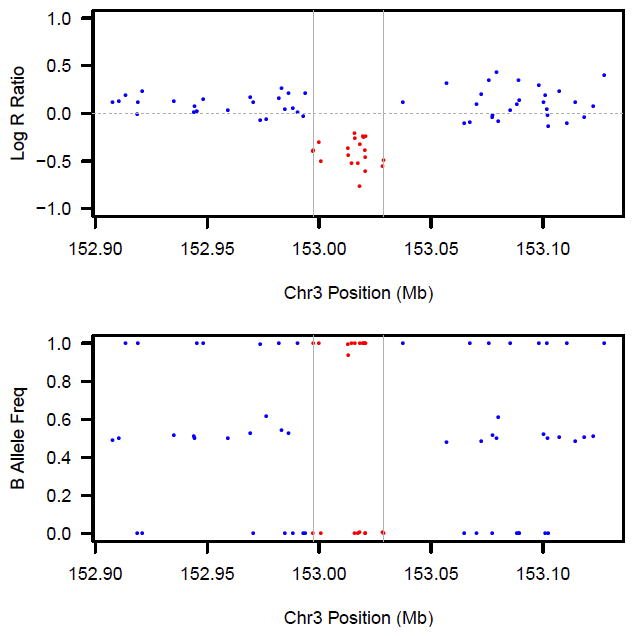
A genome-wide association study was undertaken to identify maternal single nucleotide polymorphisms (SNPs) and copy-number variants (CNVs) associated with pre-eclampsia. Case-control analysis was performed on 1070 Afro-Caribbean (n = 21 cases and 1049 controls) and 723 Hispanic (n = 62 cases and 661 controls) mothers and 1257 mothers of European ancestry (n = 50 cases and 1207 controls) from the Hyperglycemia and Adverse Pregnancy Outcome (HAPO) study. European ancestry subjects were genotyped on Illumina Human610-Quad and Afro-Caribbean and Hispanic subjects were genotyped on Illumina Human1M-Duo BeadChip microarrays. Genome-wide SNP data were analyzed using PLINK. CNVs were called using three detection algorithms (GNOSIS, PennCNV, and QuantiSNP), merged using CNVision, and then screened using stringent criteria. SNP and CNV findings were compared to those of the Study of Pregnancy Hypertension in Iowa (SOPHIA), an independent pre-eclampsia case-control dataset of Caucasian mothers (n = 177 cases and 116 controls). A list of top SNPs were identified for each of the HAPO ethnic groups, but none reached Bonferroni-corrected significance. Novel candidate CNVs showing enrichment among pre-eclampsia cases were also identified in each of the three ethnic groups. Several variants were suggestively replicated in SOPHIA. The discovered SNPs and copy-number variable regions present interesting candidate genetic variants for pre-eclampsia that warrant further replication and investigation.
Keywords: Copy‐number variant; genome‐wide association study; microarray analysis; pre‐eclampsia; single nucleotide polymorphism.
© 2013 John Wiley & Sons Ltd/University College London.
Conflict of interest statement
The authors declare that they have no conflicts of interest.
Figures

References
-
- Arngrimsson R, Björnsson S, Geirsson RT, Björnsson H, Walker JJ, Snaedal G. Genetic and familial predisposition to eclampsia and pre-eclampsia in a defined population. Br J Obstet Gynaecol. 1990;97:762–769. - PubMed
-
- Brown MA, Lindheimer MD, de Swiet M, Van Assche A, Moutquin JM. The classification and diagnosis of the hypertensive disorders of pregnancy: statement from the International Society for the Study of Hypertension in Pregnancy (ISSHP) Hypertens Pregnancy. 2001;20:IX–XIV. - PubMed
-
- Caughey AB, Stotland NE, Washington AE, Escobar GJ. Maternal ethnicity, paternal ethnicity, and parental ethnic discordance: predictors of preeclampsia. Obstet Gynecol. 2005;106:156–161. - PubMed
-
- Cnattingius S, Reilly M, Pawitan Y, Lichtenstein P. Maternal and fetal genetic factors account for most of familial aggregation of preeclampsia: a population-based Swedish cohort study. Am J Med Genet A. 2004;130A:365–371. - PubMed
Publication types
MeSH terms
Grants and funding
LinkOut - more resources
Full Text Sources
Other Literature Sources
