


Functional consequences of WNT3/Frizzled7-mediated signaling in non-transformed hepatic cells
- PMID: 23552403
- PMCID: PMC3503290
- DOI: 10.1038/oncsis.2012.31
Functional consequences of WNT3/Frizzled7-mediated signaling in non-transformed hepatic cells
Abstract
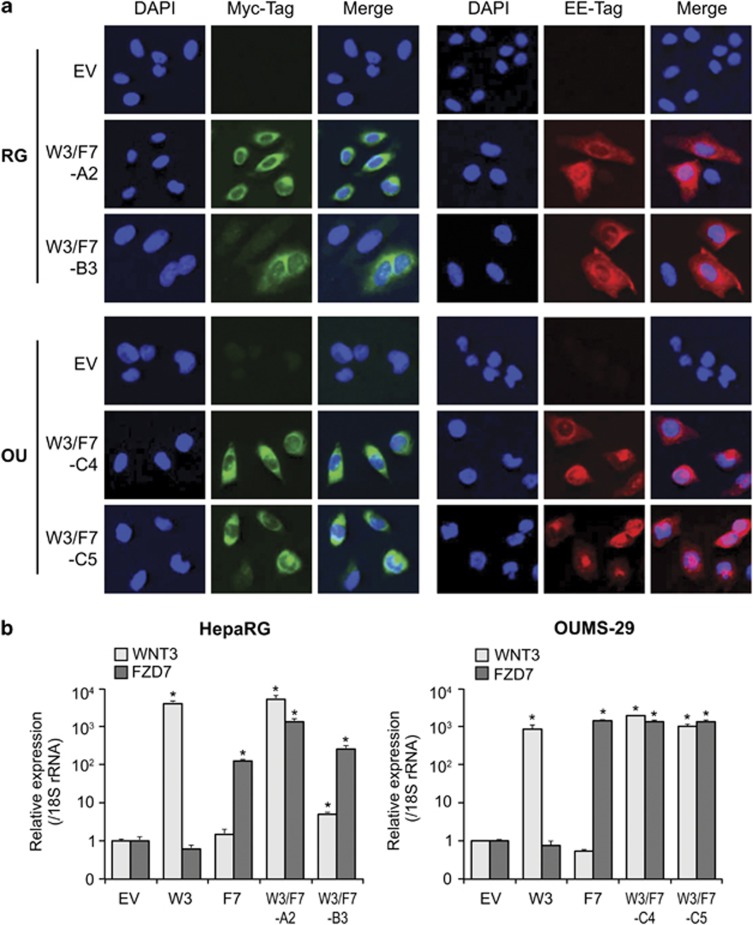
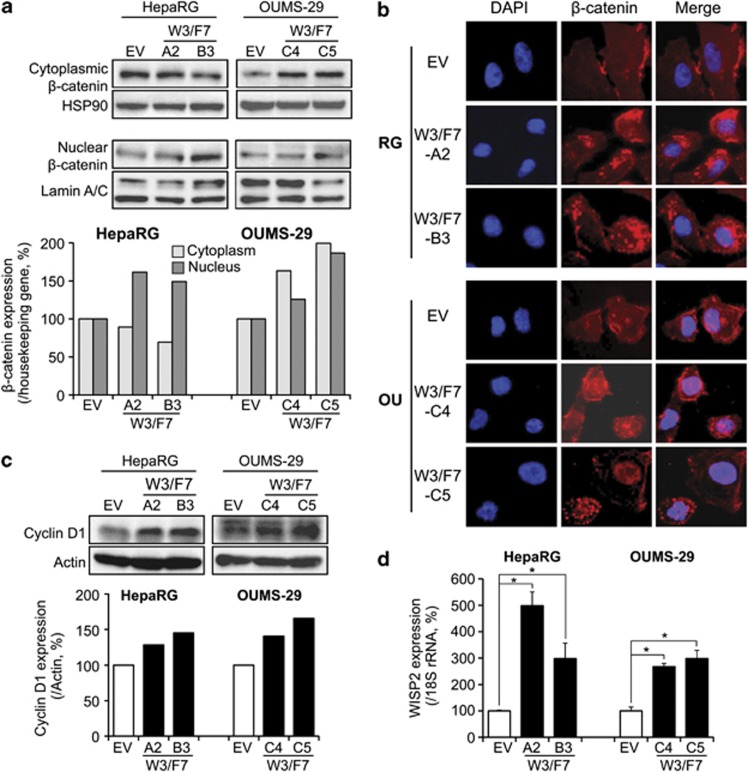
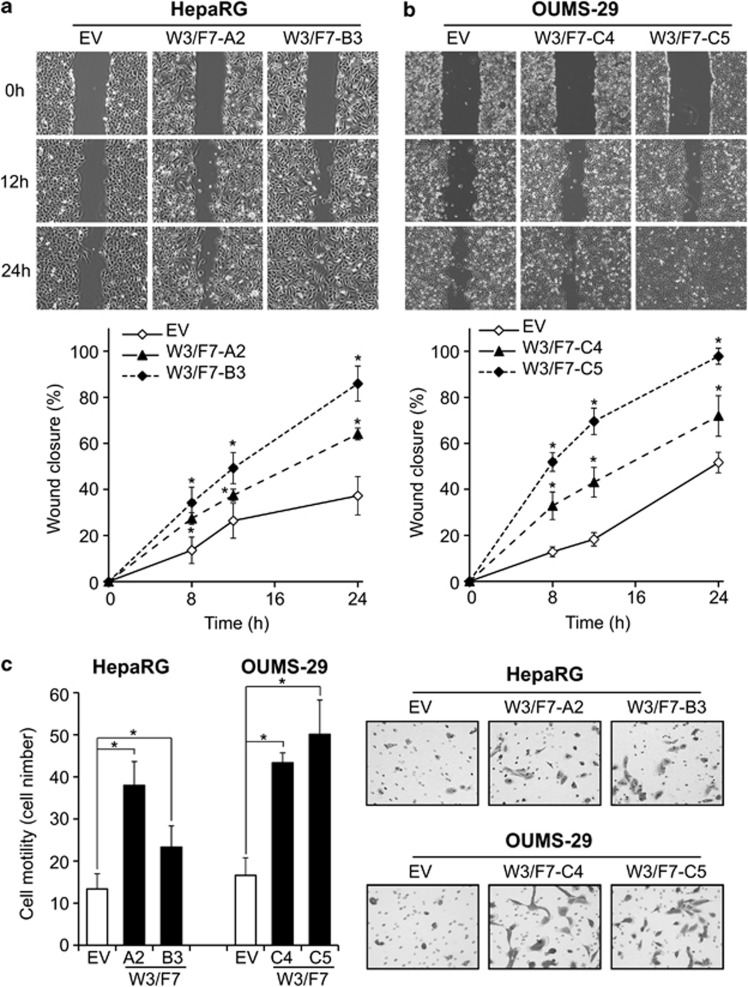
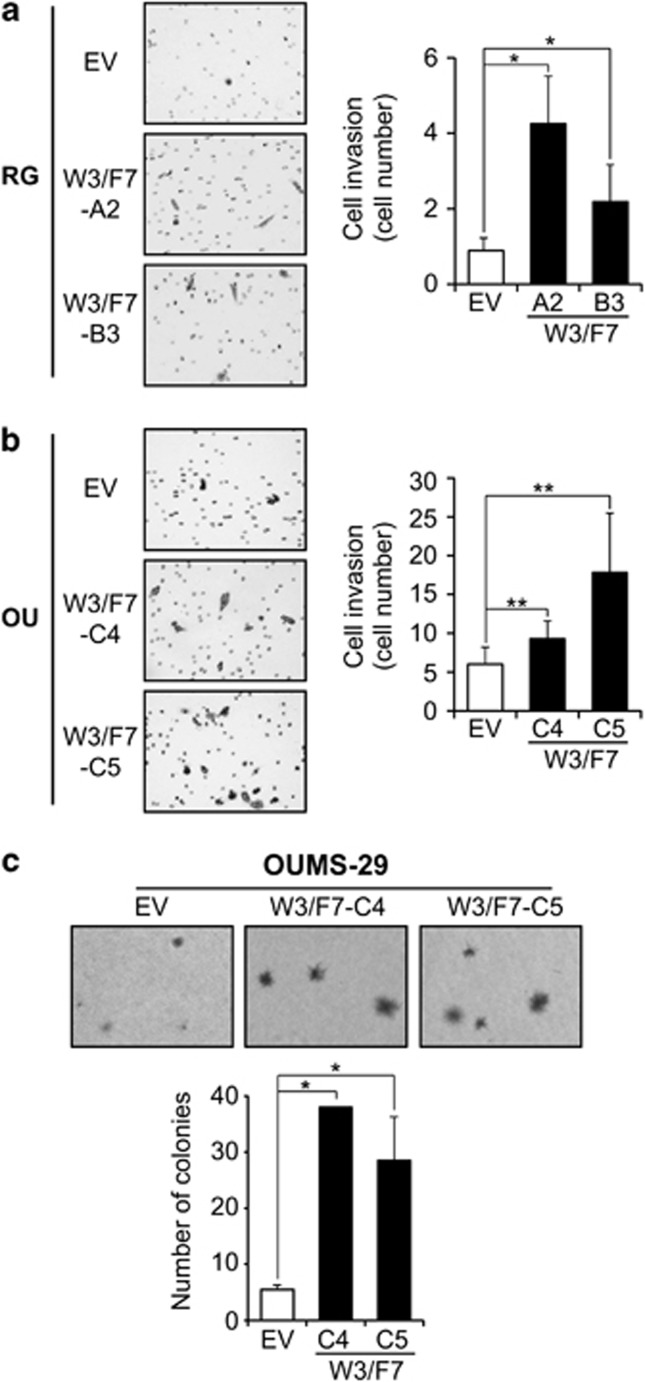
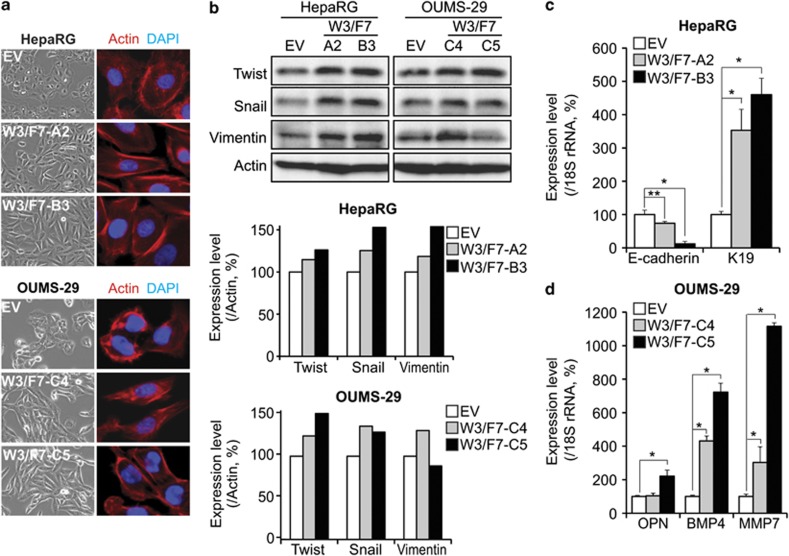
We have previously demonstrated that WNT3 and Frizzled7 (FZD7) expression levelswere upregulated in hepatocellular carcinoma (HCC) and that they directly interact to activate the canonical Wnt/β-catenin pathway in HCC cell lines. In this study, we investigated the functional consequences of WNT3 and FZD7 expression levels in non-transformed hepatic cells to address the question of whether WNT3/FZD7-mediated signal transduction could be involved in cellular transformation. After stable transfection of WNT3 and FZD7, the activation of the Wnt/β-catenin pathway was confirmed by western blot, immunostaining and quantitative real-time reverse transcriptase-PCR (qRT-PCR) analysis in two non-transformed hepatocyte-derived cell lines. In vitro characteristics of the malignant phenotype were measured, including cell proliferation, migration, invasion and anchorage-independent growth in soft agar. Stable expression of WNT3 and FZD7 in the two cell lines led to cellular accumulation of β-catenin and expression of downstream target genes activated by this pathway. In the stable WNT3/FZD7-expressing clones, hepatic cell proliferation, migration, invasion as well as soft agar colony formation were enhanced compared with the non-transformed control cells. The epithelial-mesenchymal transition (EMT) factors, Twist, Snail and Vimentin, were increased in cells expressing WNT3 and FZD7. However, the WNT3/FZD7-expressing cells did not form tumors in vivo. We conclude that activation of the WNT3/FZD7 canonical pathway has a role in the early stages of hepatocarcinogenesis by promoting the acquisition of a malignant phenotype with features of EMT.
Figures

References
-
- Ferlay J, Shin HR, Bray F, Forman D, Mathers C, Parkin DM. Estimates of worldwide burden of cancer in 2008: GLOBOCAN 2008. Int J Cancer. 2010;127:2893–2917. - PubMed
Grants and funding
LinkOut - more resources
Full Text Sources
Other Literature Sources
Molecular Biology Databases
Research Materials
