


CEM43°C thermal dose thresholds: a potential guide for magnetic resonance radiofrequency exposure levels?
- PMID: 23553588
- PMCID: PMC3799975
- DOI: 10.1007/s00330-013-2825-y
CEM43°C thermal dose thresholds: a potential guide for magnetic resonance radiofrequency exposure levels?
Abstract
Objective: To define thresholds of safe local temperature increases for MR equipment that exposes patients to radiofrequency fields of high intensities for long duration. These MR systems induce heterogeneous energy absorption patterns inside the body and can create localised hotspots with a risk of overheating.
Methods: The MRI + EUREKA research consortium organised a "Thermal Workshop on RF Hotspots". The available literature on thresholds for thermal damage and the validity of the thermal dose (TD) model were discussed.
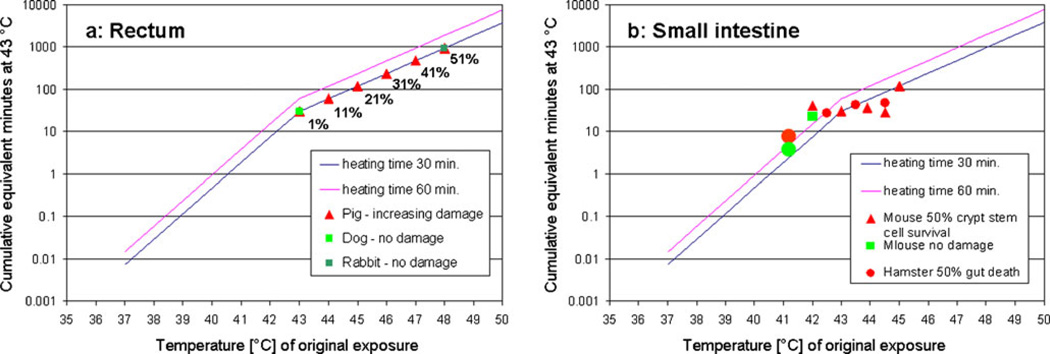
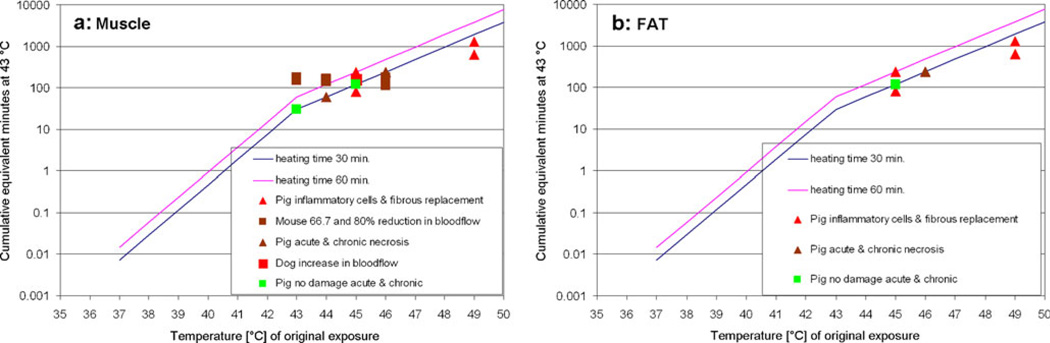
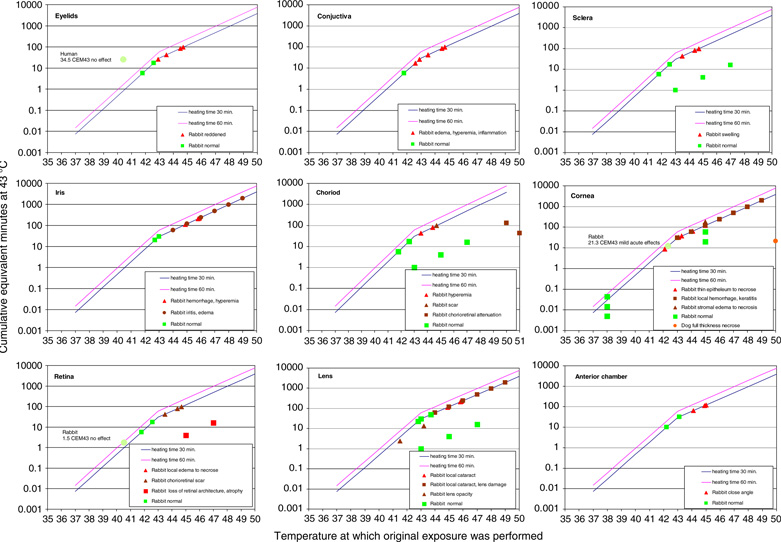
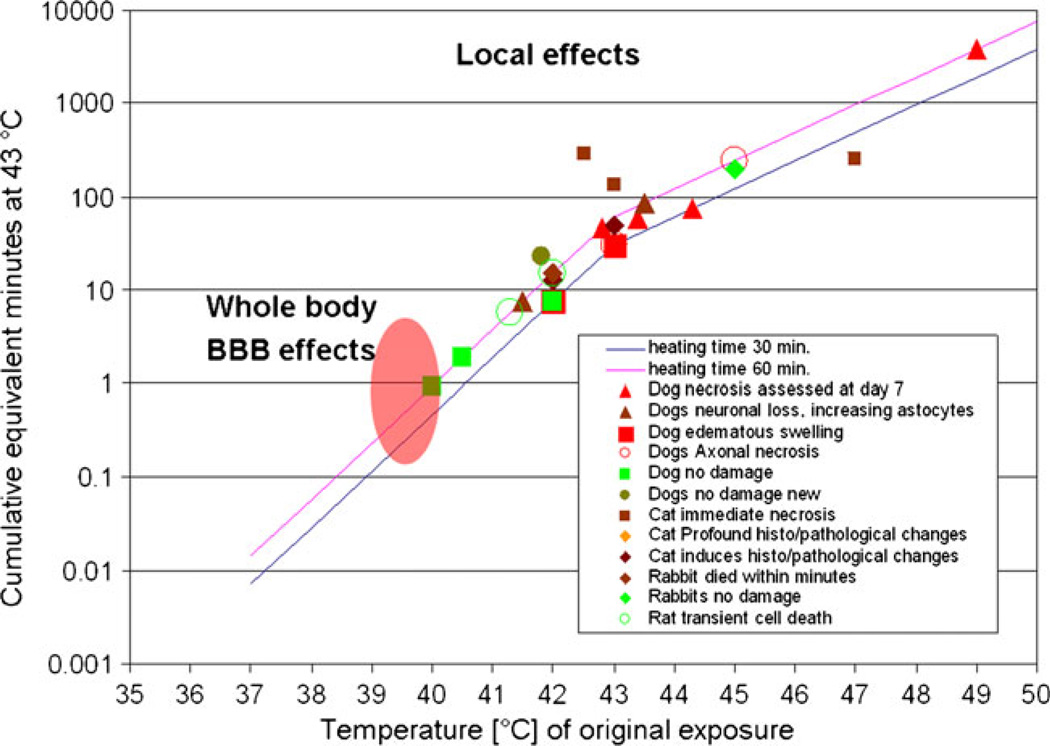
Results/conclusions: The following global TD threshold guidelines for safe use of MR are proposed: 1. All persons: maximum local temperature of any tissue limited to 39 °C 2. Persons with compromised thermoregulation AND (a) Uncontrolled conditions: maximum local temperature limited to 39 °C (b) Controlled conditions: TD < 2 CEM43°C 3. Persons with uncompromised thermoregulation AND (a) Uncontrolled conditions: TD < 2 CEM43°C (b) Controlled conditions: TD < 9 CEM43°C The following definitions are applied: Controlled conditions A medical doctor or a dedicated trained person can respond instantly to heat-induced physiological stress Compromised thermoregulation All persons with impaired systemic or reduced local thermoregulation
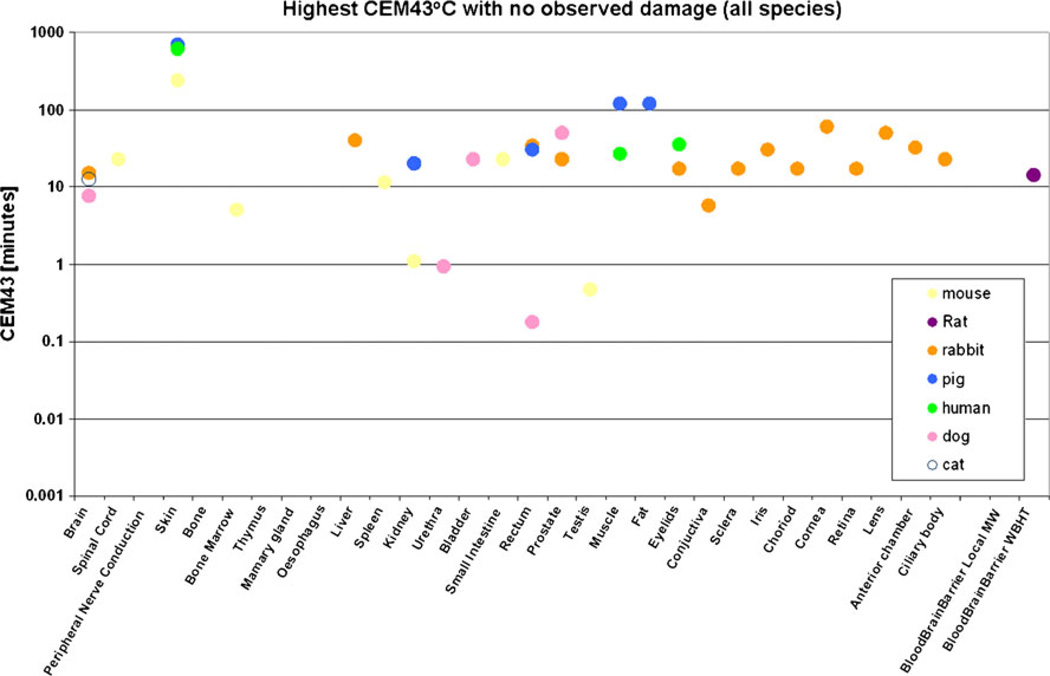
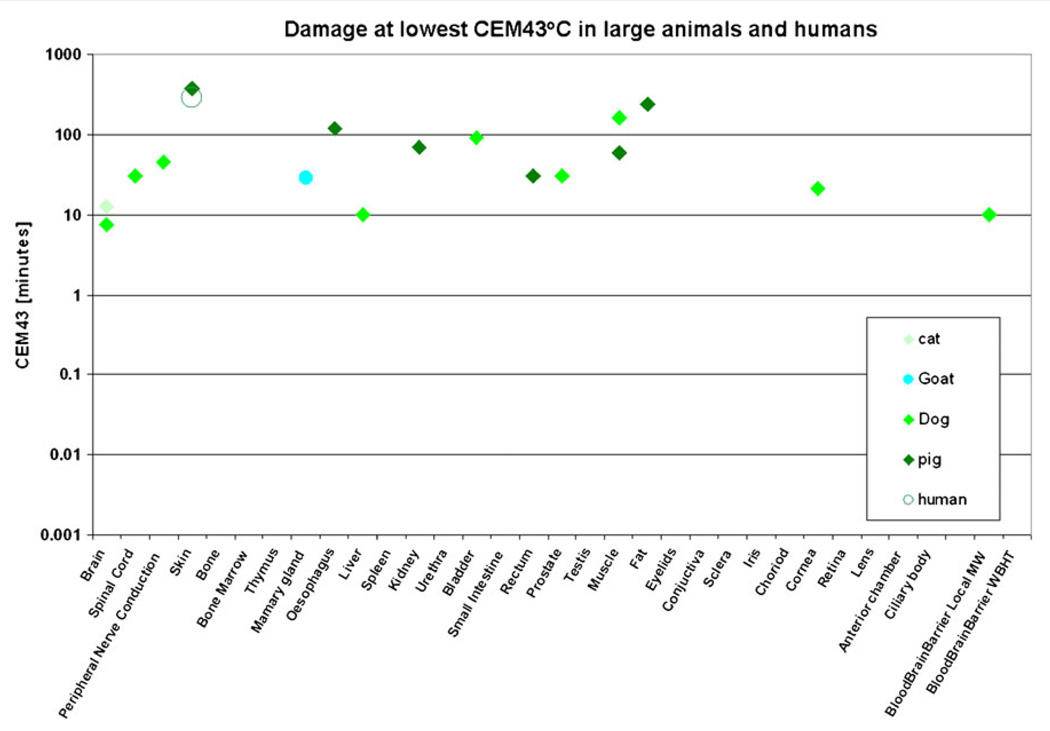
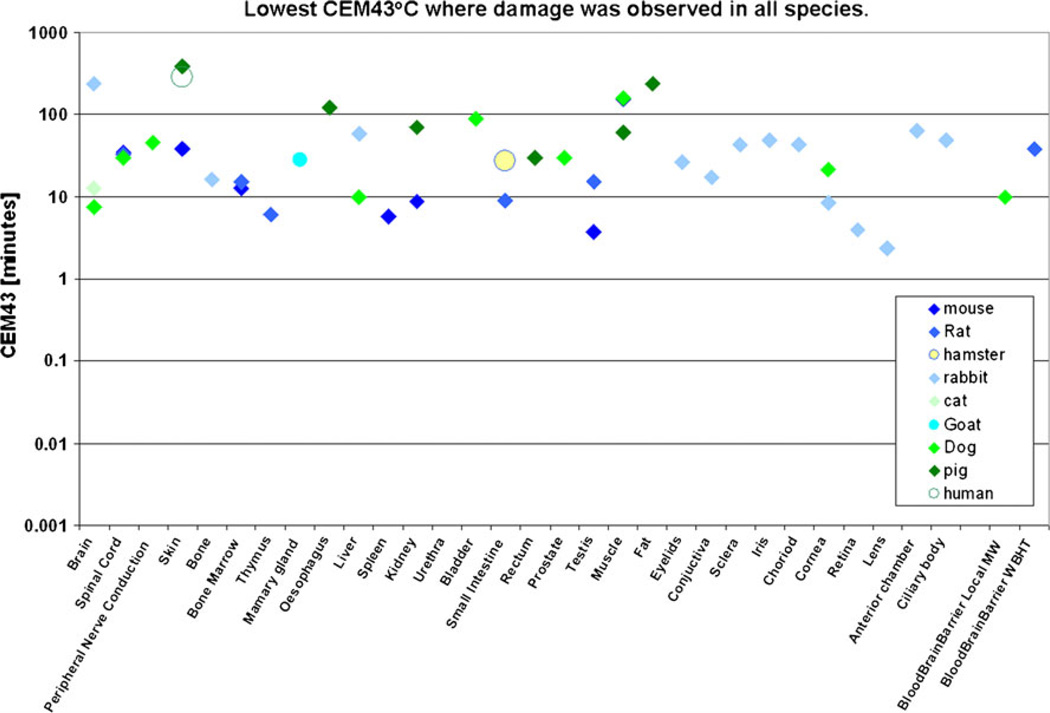
Key points: • Standard MRI can cause local heating by radiofrequency absorption. • Monitoring thermal dose (in units of CEM43°C) can control risk during MRI. • 9 CEM43°C seems an acceptable thermal dose threshold for most patients. • For skin, muscle, fat and bone,16 CEM43°C is likely acceptable.
Figures
References
-
- Dewhirst MW, Vujaskovic Z, Jones E, Thrall D. Re-setting the biologic rationale for thermal therapy. Rev Int J Hyperthermia. 2005;21:779–790. - PubMed
-
- Horsman MR, Overgaard J. Hyperthermia: a potent enhancer of radiotherapy. Clin Oncol. 2007;19:418–426. - PubMed
-
- Ryan TP, Turner PF, Hamilton B. Interstitial microwave transition form hyperthermia to ablation: historical perspectives and current trends in thermal therapy. Int J Hyperthermia. 2010;26:415–433. - PubMed
-
- Rempp H, Hoffmann R, Roland J, Buck A, Kickhefel A, Claussen CD, Pereira PL, Schick F, Clasen S. Threshold-based prediction of the coagulation zone in sequential temperature mapping in MR-guided radiofrequency ablation of liver tumours. Eur Radiol. 2012;22:1091–1100. - PubMed
-
- Terraz S, Cernicanu A, Lepetit-Coiffé M, Viallon M, Salomir R, Mentha G, Becker CD. Radiofrequency ablation of small liver malignancies under magnetic resonance guidance: progress in targeting and preliminary observations with temperature monitoring. Eur Radiol. 2010;20:886–897. - PubMed
Publication types
MeSH terms
Grants and funding
LinkOut - more resources
Full Text Sources
Other Literature Sources
Medical
