


Ubiquitin E3 ligase Wwp1 negatively regulates osteoblast function by inhibiting osteoblast differentiation and migration
- PMID: 23553732
- PMCID: PMC3749248
- DOI: 10.1002/jbmr.1938
Ubiquitin E3 ligase Wwp1 negatively regulates osteoblast function by inhibiting osteoblast differentiation and migration
Abstract
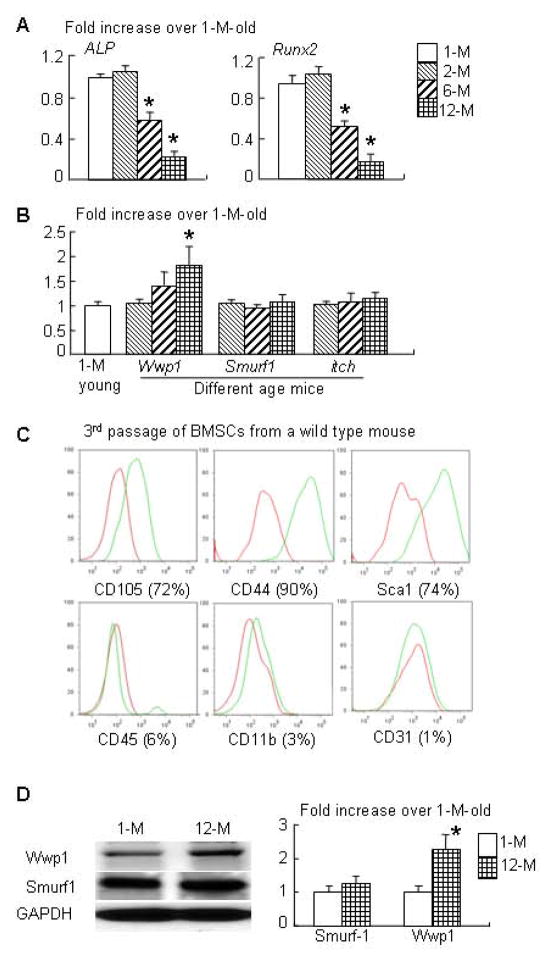
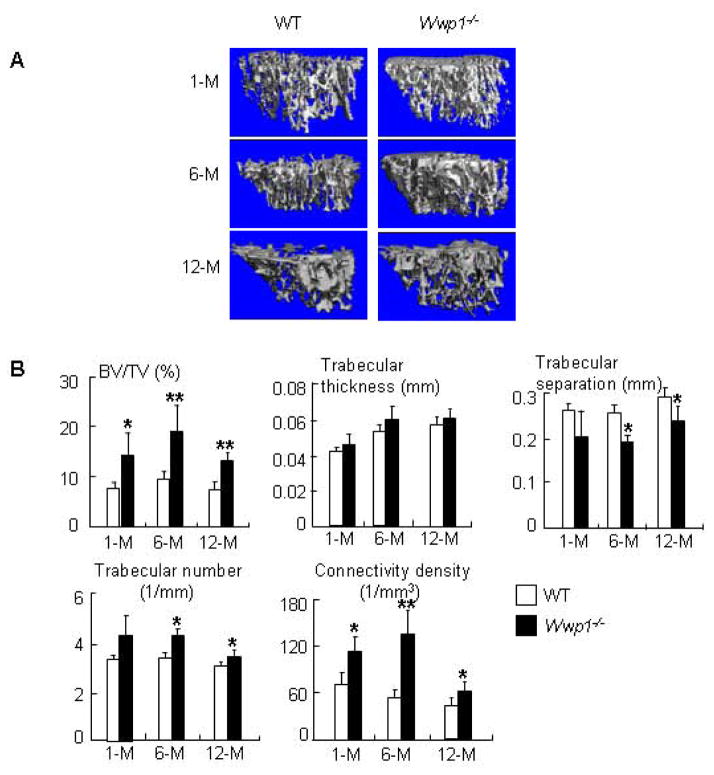
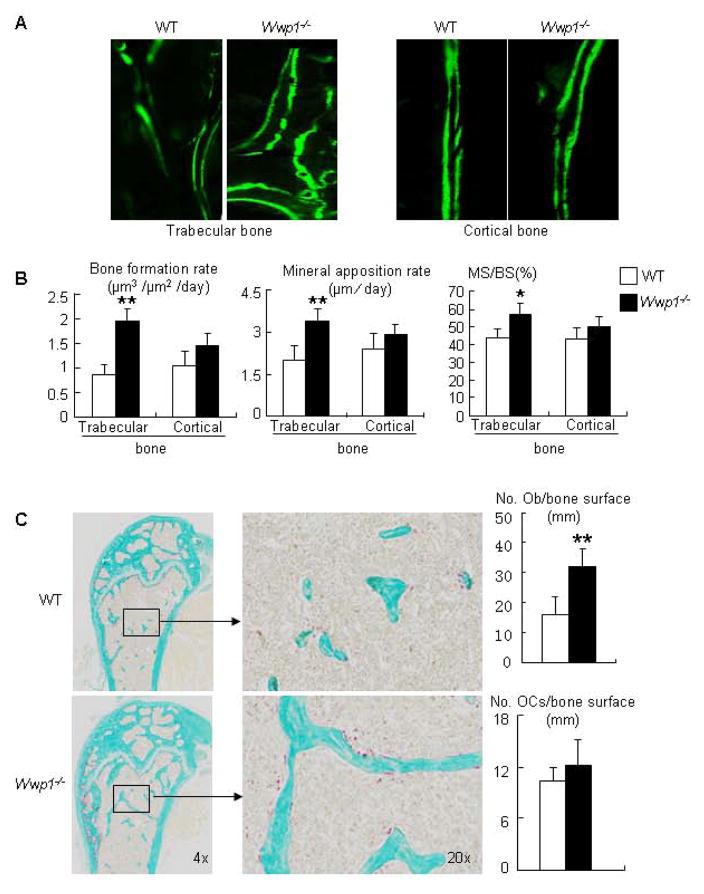
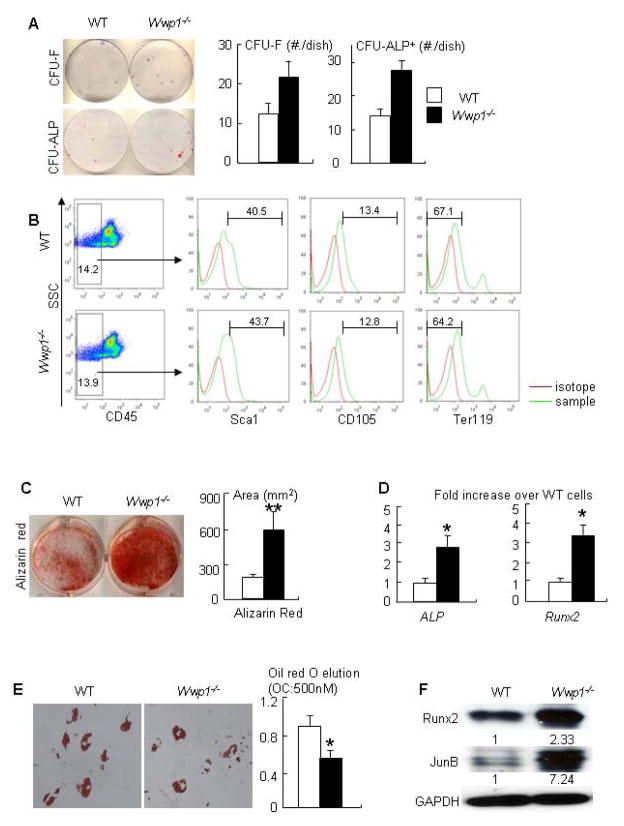
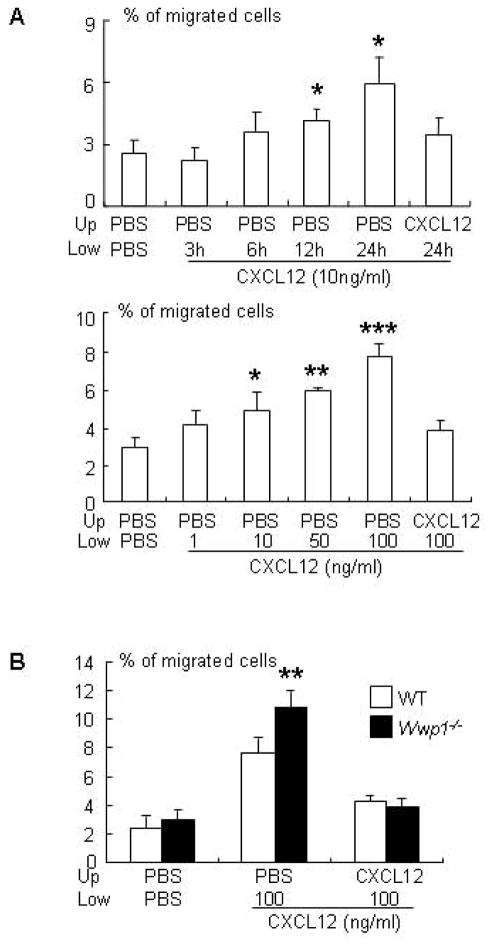
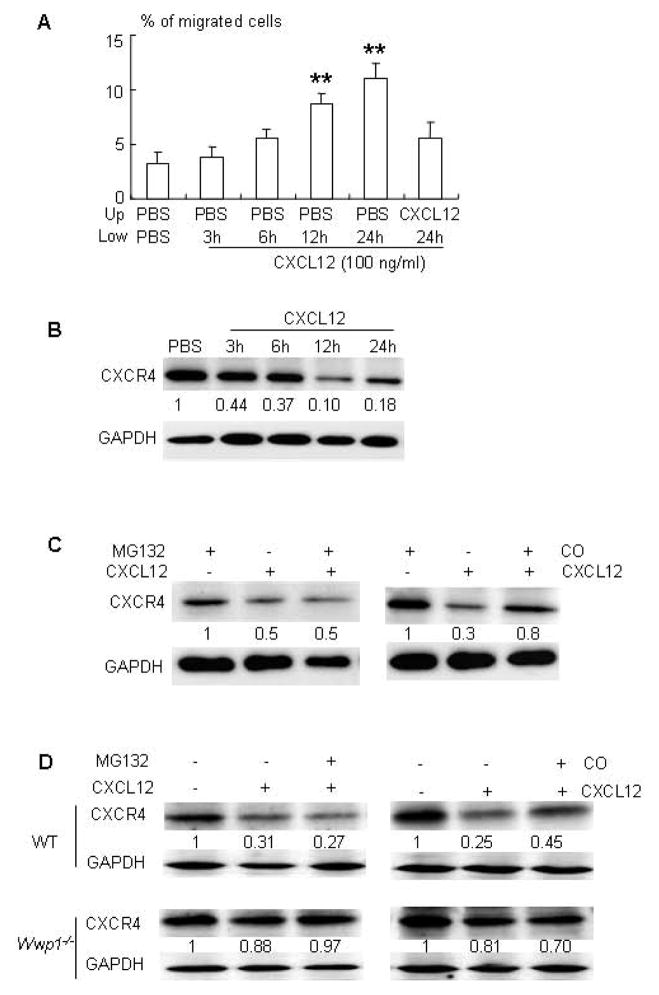
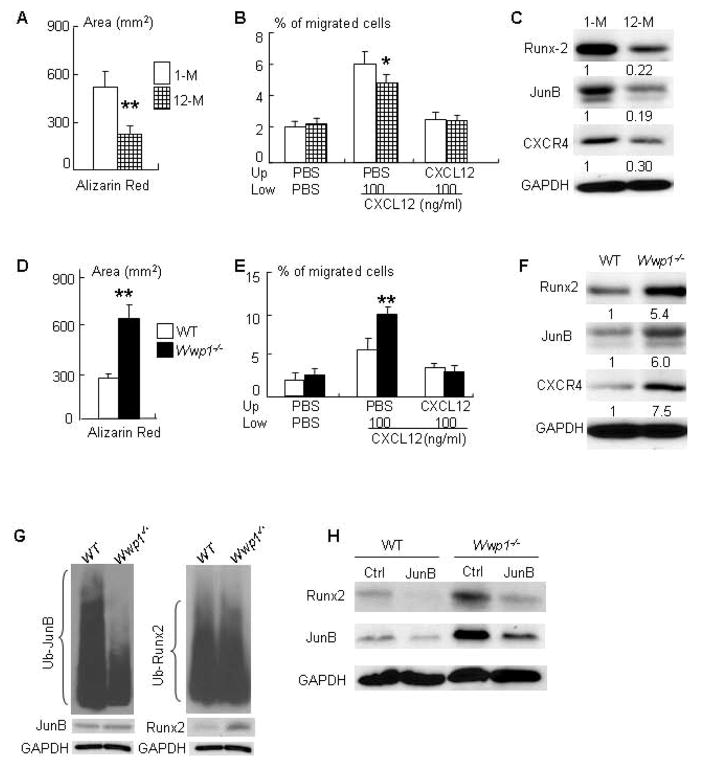
Ubiquitin E3 ligase-mediated protein degradation promotes proteasomal degradation of key positive regulators of osteoblast functions. For example, the E3 ligases--SMAD-specific E3 ubiquitin protein ligase 1 (Smurf1), Itch, and WW domain-containing E3 ubiquitin protein ligase 1 (Wwp1)--promote degradation of Runt-related transcription factor 2 (Runx2), transcription factor jun-B (JunB), and chemokine (C-X-C) receptor type 4 (CXCR-4) proteins to inhibit their functions. However, the role of E3 ligases in age-associated bone loss is unknown. We found that the expression level of Wwp1, but not Smurf1 or Itch, was significantly increased in CD45-negative (CD45(-)) bone marrow-derived mesenchymal stem cells from 6-month-old and 12-month-old wild-type (WT) mice. Wwp1 knockout (Wwp1(-/-)) mice developed increased bone mass as they aged, associated with increased bone formation rates and normal bone resorption parameters. Bone marrow stromal cells (BMSCs) from Wwp1(-/-) mice formed increased numbers and areas of alkaline phosphatase(+) and Alizarin red(+) nodules and had increased migration potential toward chemokine (C-X-C motif) ligand 12 (CXCL12) gradients. Runx2, JunB, and CXCR-4 protein levels were significantly increased in Wwp1(-/-) BMSCs. Wwp1(-/-) BMSCs had increased amount of ubiquitinated JunB protein, but Runx2 ubiquitination was no change. Knocking down JunB in Wwp1(-/-) BMSCs returned Runx2 protein levels to that in WT cells. Thus, Wwp1 negatively regulates osteoblast functions by affecting both their migration and differentiation. Mechanisms designed to decrease Wwp1 levels in BMSCs may represent a new approach to prevent the decrease in osteoblastic bone formation associated with aging.
Keywords: BONE FORMATION; MESENCHYMAL STEM CELLS; OSTEOBLASTS; WWP1.
© 2013 American Society for Bone and Mineral Research.
Conflict of interest statement
Figures
References
-
- McCarthy TL, Ji C, Centrella M. Links among growth factors, hormones, and nuclear factors with essential roles in bone formation. Crit Rev Oral Biol Med. 2000;11:409–22. - PubMed
-
- Lian JB, Javed A, Zaidi SK, Lengner C, Montecino M, van Wijnen AJ, Stein JL, Stein GS. Regulatory controls for osteoblast growth and differentiation: role of Runx/Cbfa/AML factors. Crit Rev Eukaryot Gene Expr. 2004;14:1–41. - PubMed
-
- Zuo C, Huang Y, Bajis R, Sahih M, Li YP, Dai K, Zhang X. Osteoblastogenesis regulation signals in bone remodeling. Osteoporos Int. 2012;23:1653–63. - PubMed
-
- Marie PJ, Kassem M. Osteoblasts in osteoporosis: past, emerging, and future anabolic targets. Eur J Endocrinol. 2011;165:1–10. - PubMed
Publication types
MeSH terms
Substances
Grants and funding
LinkOut - more resources
Full Text Sources
Other Literature Sources
Molecular Biology Databases
Research Materials
Miscellaneous
