


Initial testing (stage 1) of eribulin, a novel tubulin binding agent, by the pediatric preclinical testing program
- PMID: 23553917
- PMCID: PMC4263960
- DOI: 10.1002/pbc.24517
Initial testing (stage 1) of eribulin, a novel tubulin binding agent, by the pediatric preclinical testing program
Abstract
Background: Antimitotic agents are essential components for curative therapy of pediatric acute leukemias and many solid tumors. Eribulin is a novel agent that differs from both Vinca alkaloids and taxanes in its mode of binding to tubulin polymers.
Procedures: Eribulin was tested against the PPTP in vitro cell line panel at concentrations from 0.1 nM to 1.0 μM and against the PPTP in vivo xenograft panels at a dose of 1 mg/kg (solid tumors) or 1.5 mg/kg (ALL models) using a q4dx3 schedule repeated at Day 21.
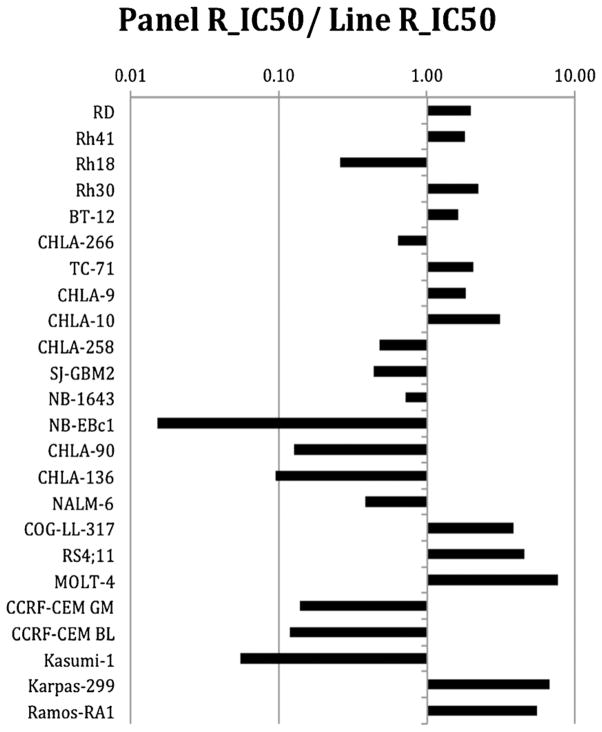
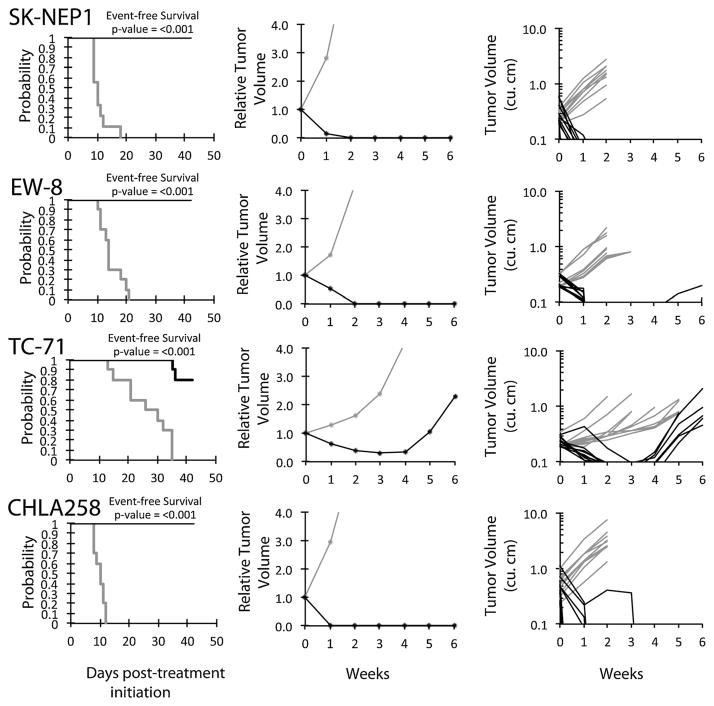
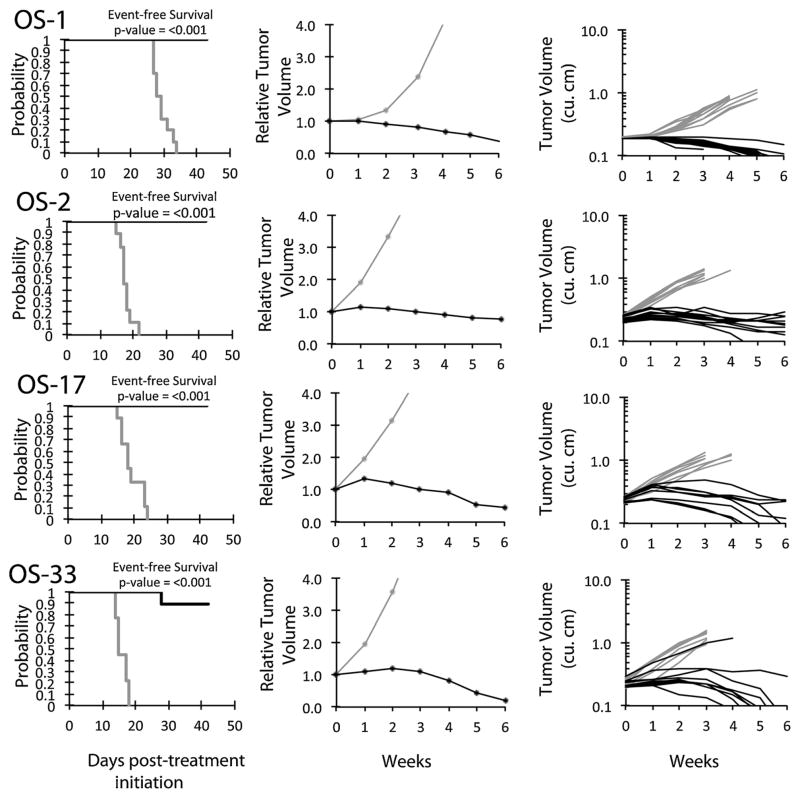
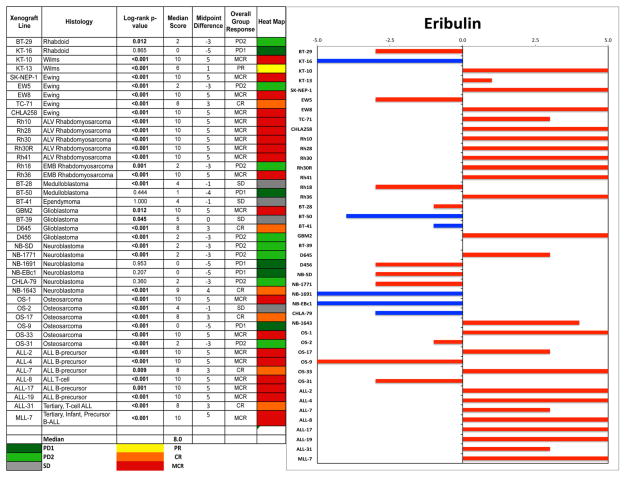
Results: In vitro eribulin demonstrated cytotoxic activity, with a median relative IC50 value of 0.27 nM, (range <0.1-14.8 nM). Eribulin was well tolerated in vivo, and all 43 xenograft models were considered evaluable for efficacy. Eribulin induced significant differences in event-free survival (EFS) distribution compared to control in 29 of 35 (83%) of the solid tumors and in 8 of 8 (100%) of the ALL xenografts. Objective responses were observed in 18 of 35 (51%) solid tumor xenografts. Complete responses (CR) or maintained CR were observed in panels of Wilms tumor, Ewing sarcoma, rhabdomyosarcoma, glioblastoma, and osteosarcoma xenografts. All eight ALL xenografts achieved CR or MCR.
Conclusions: The high level of activity observed for eribulin against the PPTP preclinical models makes this an interesting agent to consider for pediatric evaluation. The activity pattern observed for eribulin in the solid tumor panels is equal or superior to that observed previously for vincristine.
Copyright © 2013 Wiley Periodicals, Inc.
Conflict of interest statement
Conflict of interest: Nothing to declare.
Figures
References
-
- Bai RL, Paull KD, Herald CL, et al. Halichondrin B and homohalichondrin B, marine natural products binding in the vinca domain of tubulin. Discovery of tubulin-based mechanism of action by analysis of differential cytotoxicity data. J Biol Chem. 1991;266:15882–15889. - PubMed
-
- Towle MJ, Salvato KA, Budrow J, et al. In vitro and in vivo anticancer activities of synthetic macrocyclic ketone analogues of halichondrin B. Cancer Res. 2001;61:1013–1021. - PubMed
-
- Jordan MA, Wilson L. Microtubules as a target for anticancer drugs. Nat Rev Cancer. 2004;4:253–265. - PubMed
-
- Jordan MA, Kamath K, Manna T, et al. The primary antimitotic mechanism of action of the synthetic halichondrin E7389 is suppression of microtubule growth. Mol Cancer Ther. 2005;4:1086–1095. - PubMed
Publication types
MeSH terms
Substances
Grants and funding
LinkOut - more resources
Full Text Sources
Other Literature Sources
