


Large-scale neurochemical metabolomics analysis identifies multiple compounds associated with methamphetamine exposure
- PMID: 23554582
- PMCID: PMC3611962
- DOI: 10.1007/s11306-012-0456-y
Large-scale neurochemical metabolomics analysis identifies multiple compounds associated with methamphetamine exposure
Abstract
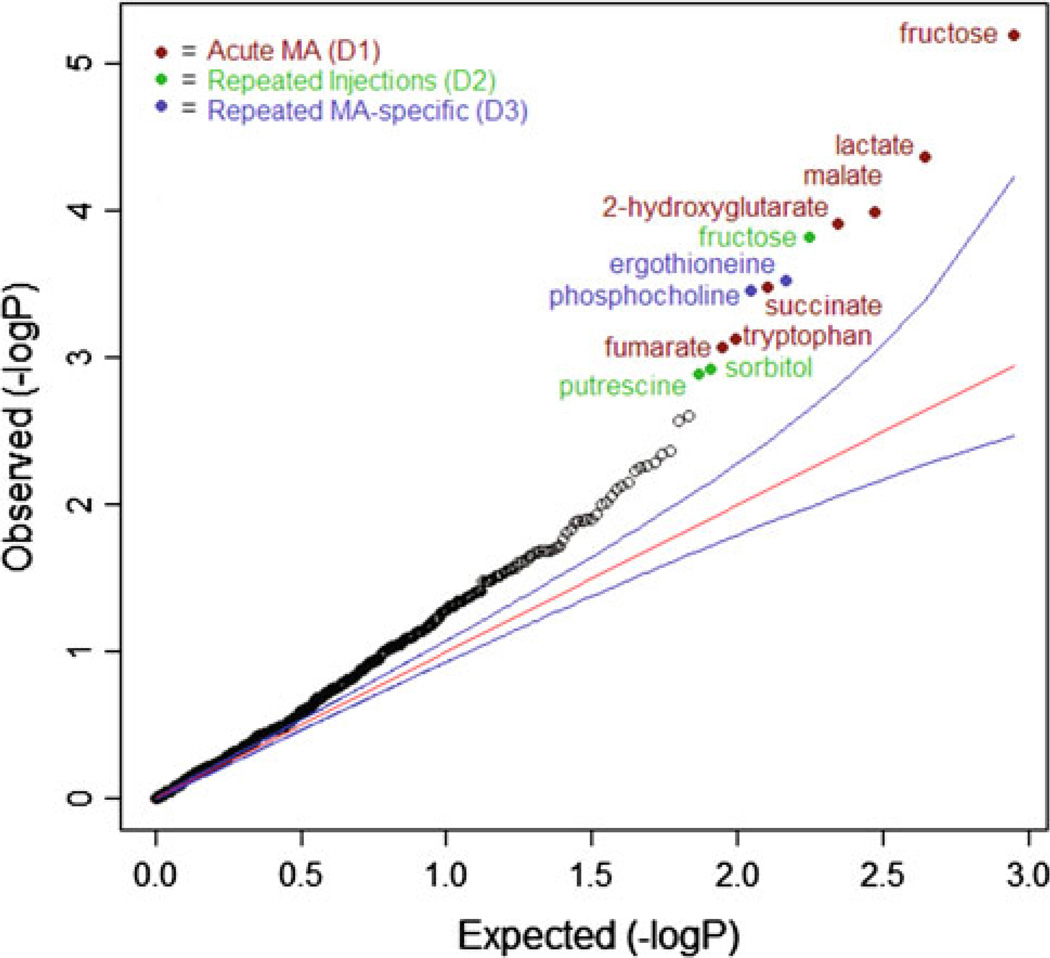
Methamphetamine (MA) is an illegal stimulant drug of abuse with serious negative health consequences. The neurochemical effects of MA have been partially characterized, with a traditional focus on classical neurotransmitter systems. However, these directions have not yet led to novel drug treatments for MA abuse or toxicity. As an alternative approach, we describe here the first application of metabolomics to investigate the neurochemical consequences of MA exposure in the rodent brain. We examined single exposures at 3 mg/kg and repeated exposures at 3 mg/kg over 5 days in eight common inbred mouse strains. Brain tissue samples were assayed using high-throughput gas and liquid chromatography mass spectrometry, yielding quantitative data on >300 unique metabolites. Association testing and false discovery rate control yielded several metabolome-wide significant associations with acute MA exposure, including compounds such as lactate (p = 4.4 × 10⁻⁵, q = 0.013), tryptophan (p = 7.0 × 10⁻⁴, q = 0.035) and 2-hydroxyglutarate (p = 1.1 × 10⁻⁴, q = 0.022). Secondary analyses of MA-induced increase in locomotor activity showed associations with energy metabolites such as succinate (p = 3.8 × 10⁻⁷). Associations specific to repeated (5 day) MA exposure included phosphocholine (p = 4.0 × 10⁻⁴, q = 0.087) and ergothioneine (p = 3.0 × 10⁻⁴, q = 0.087). Our data appear to confirm and extend existing models of MA action in the brain, whereby an initial increase in energy metabolism, coupled with an increase in behavioral locomotion, gives way to disruption of mitochondria and phospholipid pathways and increased endogenous antioxidant response. Our study demonstrates the power of comprehensive MS-based metabolomics to identify drug-induced changes to brain metabolism and to develop neurochemical models of drug effects.
Keywords: Drugs of abuse; Inbred mice; Mass spectrometry; Neurotoxicity; Psychostimulants.
Figures
References
-
- Akanmu D, Cecchini R, Aruoma OI, Halliwell B. The antioxidant action of ergothioneine. Archives of Biochemistry and Biophysics. 1991;288:10–16. - PubMed
-
- Ariyannur PS, Moffett JR, Manickam P, et al. Methamphetamine-induced neuronal protein NAT8L is the NAA biosynthetic enzyme: Implications for specialized acetyl coenzyme A metabolism in the CNS. Brain Research. 2010;1335:1–13. - PubMed
-
- Benjamini Y, Hochberg Y. Controlling the false discovery rate: A practical and powerful approach to multiple testing. Journal of the Royal Statistical Society B. 1995;57:289–300.
-
- Caligiuri MP, Buitenhuys C. Do preclinical findings of methamphetamine-induced motor abnormalities translate to an observable clinical phenotype? Neuropsychopharmacology. 2005;30:2125–2134. - PubMed
Grants and funding
LinkOut - more resources
Full Text Sources
Research Materials