


Targeting CDH17 suppresses tumor progression in gastric cancer by downregulating Wnt/β-catenin signaling
- PMID: 23554857
- PMCID: PMC3598811
- DOI: 10.1371/journal.pone.0056959
Targeting CDH17 suppresses tumor progression in gastric cancer by downregulating Wnt/β-catenin signaling
Erratum in
-
Correction: Targeting CDH17 Suppresses Tumor Progression in Gastric Cancer by Downregulating Wnt/β-Catenin Signaling.PLoS One. 2019 May 16;14(5):e0217124. doi: 10.1371/journal.pone.0217124. eCollection 2019. PLoS One. 2019. PMID: 31095636 Free PMC article.
Abstract
Purpose: Gastric cancer remains one of the leading causes of cancer death worldwide. Patients usually present late with local invasion or metastasis, for which there are no effective therapies available. Following previous studies that identified the adhesion molecule Cadherin-17(CDH17) as a potential marker for gastric carcinoma, we performed proof-of-principle studies to develop rational therapeutic approaches targeting CDH17 for treating this disease.
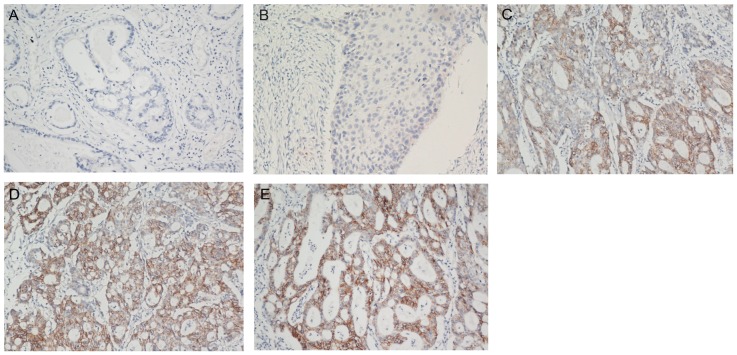
Methods: Immunohistochemistry was used to study the expression of CDH17 in 156 gastric carcinomas, and the relationship between survival and CDH17 expression was studied by multivariate analyses. The effect of RNA interference-mediated knockdown of CDH17 on proliferation of gastric carcinoma cell lines was examined in vitro and in vivo, as well as the effects on downstream signaling by immunoblotting.
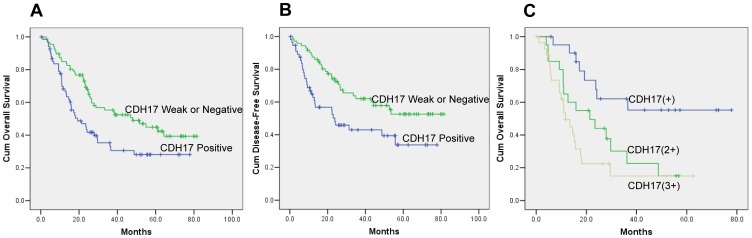
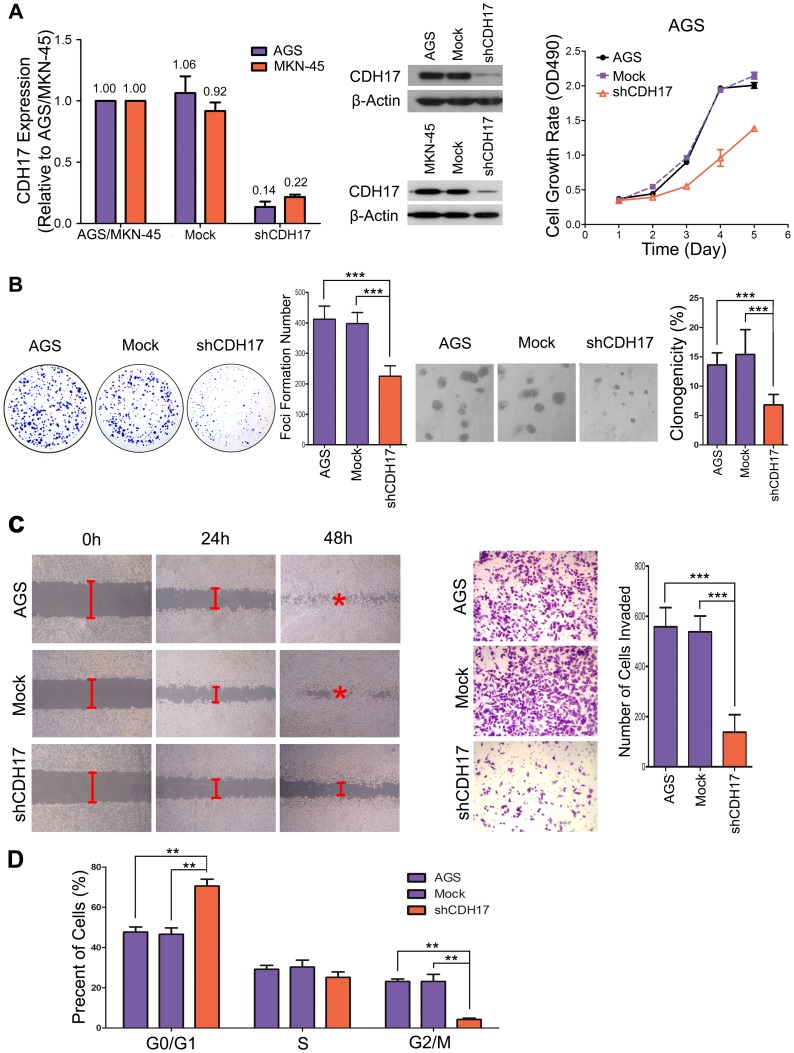
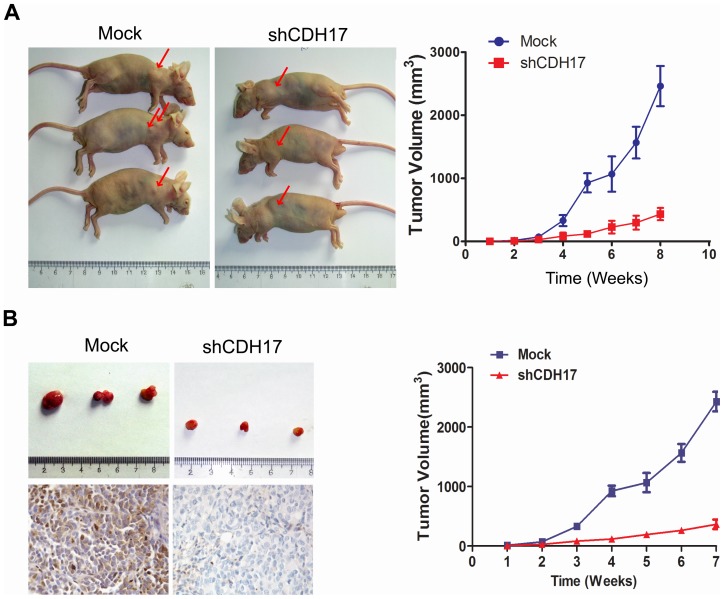
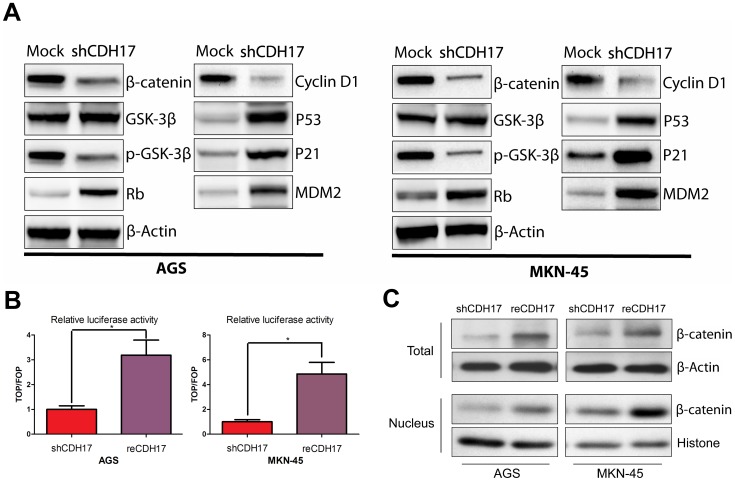
Results: CDH17 was consistently up-regulated in human gastric cancers, and overall survival in patients with CDH17 upregulation was poorer than in those without expression of this gene (5 yrs overall survival rate 29.0% vs. 45.0%, P<0.01). Functional assays demonstrated that CDH17 knockdown inhibited cell proliferation, adhesion, migration, invasion, clonogenicity and induce G0/G1 arrest. In mice, shRNA-mediated CDH17 knockdown markedly inhibits tumor growth; intratumoral injection of CDH17 shRNAs results in significant antitumor effects on transplanted tumor models. The antitumor mechanisms underlying CDH17 inhibition involve inactivation of Wnt/β-catenin signaling.
Conclusion: Our results identify CDH17 as a biomarker of gastric carcinoma and attractive therapeutic target for this aggressive malignancy.
Conflict of interest statement
Figures
References
-
- Jemal A, Bray F, Center MM, Ferlay J, Ward E, et al. (2011) Global cancer statistics. CA Cancer J Clin 61: 69–90. - PubMed
-
- Sasako M, Sano T, Yamamoto S, Kurokawa Y, Nashimoto A, et al. (2008) D2 lymphadenectomy alone or with para-aortic nodal dissection for gastric cancer. N Engl J Med 359: 453–462. - PubMed
-
- Kattan MW, Karpeh MS, Mazumdar M, Brennan MF (2003) Postoperative nomogram for disease-specific survival after an R0 resection for gastric carcinoma. J Clin Oncol 21: 3647–3650. - PubMed
-
- Ishiyama N, Lee SH, Liu S, Li GY, Smith MJ, et al. (2010) Dynamic and static interactions between p120 catenin and E-cadherin regulate the stability of cell-cell adhesion. Cell 141: 117–128. - PubMed
Publication types
MeSH terms
Substances
LinkOut - more resources
Full Text Sources
Other Literature Sources
Medical
