


Mesenchymal stem cells derived from adipose tissue vs bone marrow: in vitro comparison of their tropism towards gliomas
- PMID: 23554877
- PMCID: PMC3595264
- DOI: 10.1371/journal.pone.0058198
Mesenchymal stem cells derived from adipose tissue vs bone marrow: in vitro comparison of their tropism towards gliomas
Abstract
Introduction: Glioblastoma is the most common primary malignant brain tumor, and is refractory to surgical resection, radiation, and chemotherapy. Human mesenchymal stem cells (hMSC) may be harvested from bone marrow (BMSC) and adipose (AMSC) tissue. These cells are a promising avenue of investigation for the delivery of adjuvant therapies. Despite extensive research into putative mechanisms for the tumor tropism of MSCs, there remains no direct comparison of the efficacy and specificity of AMSC and BMSC tropism towards glioma.
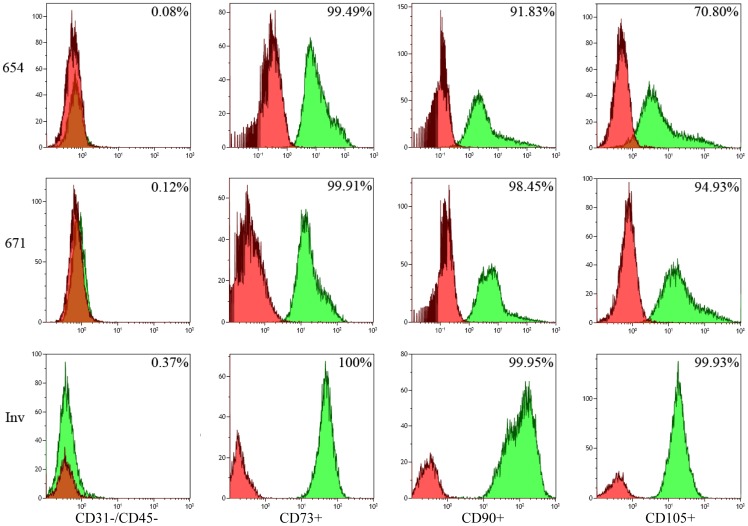
Methods: Under an IRB-approved protocol, intraoperative human Adipose MSCs (hAMSCs) were established and characterized for cell surface markers of mesenchymal stem cell origin in conjunction with the potential for tri-lineage differentiation (adipogenic, chondrogenic, and osteogenic). Validated experimental hAMSCs were compared to commercially derived hBMSCs (Lonza) and hAMSCs (Invitrogen) for growth responsiveness and glioma tropism in response to glioma conditioned media obtained from primary glioma neurosphere cultures.
Results: Commercial and primary culture AMSCs and commercial BMSCs demonstrated no statistically significant difference in their migration towards glioma conditioned media in vitro. There was statistically significant difference in the proliferation rate of both commercial AMSCs and BMSCs as compared to primary culture AMSCs, suggesting primary cultures have a slower growth rate than commercially available cell lines.
Conclusions: Adipose- and bone marrow-derived mesenchymal stem cells have similar in vitro glioma tropism. Given the well-documented ability to harvest larger numbers of AMSCs under local anesthesia, adipose tissue may provide a more efficient source of MSCs for research and clinical applications, while minimizing patient morbidity during cell harvesting.
Conflict of interest statement
Figures


References
-
- McGirt MJ, Chaichana KL, Attenello FJ, Weingart JD, Than K, et al. (2008) Extent of surgical resection is independently associated with survival in patients with hemispheric infiltrating low-grade gliomas. Neurosurgery 63: 700–707; author reply 707–708. - PubMed
-
- Bernstein JJ, Woodard CA (1995) Glioblastoma cells do not intravasate into blood vessels. Neurosurgery 36: 124–132; discussion 132. - PubMed
-
- Bao S, Wu Q, McLendon RE, Hao Y, Shi Q, et al. (2006) Glioma stem cells promote radioresistance by preferential activation of the DNA damage response. Nature 444: 756–760. - PubMed
-
- Eramo A, Ricci-Vitiani L, Zeuner A, Pallini R, Lotti F, et al. (2006) Chemotherapy resistance of glioblastoma stem cells. Cell death and differentiation 13: 1238–1241. - PubMed
Publication types
MeSH terms
LinkOut - more resources
Full Text Sources
Other Literature Sources
