. 2013;8(3):e60047.
doi: 10.1371/journal.pone.0060047. Epub 2013 Mar 28.

Antifungal efficacy during Candida krusei infection in non-conventional models correlates with the yeast in vitro susceptibility profile

Affiliations

Antifungal efficacy during Candida krusei infection in non-conventional models correlates with the yeast in vitro susceptibility profile

Liliana Scorzoni et al. PLoS One. 2013.

Abstract

The incidence of opportunistic fungal infections has increased in recent decades due to the growing proportion of immunocompromised patients in our society. Candida krusei has been described as a causative agent of disseminated fungal infections in susceptible patients. Although its prevalence remains low among yeast infections (2-5%), its intrinsic resistance to fluconazole makes this yeast important from epidemiologic aspects. Non mammalian organisms are feasible models to study fungal virulence and drug efficacy. In this work we have used the lepidopteran Galleria mellonella and the nematode Caenorhabditis elegans as models to assess antifungal efficacy during infection by C. krusei. This yeast killed G. mellonella at 25, 30 and 37°C and reduced haemocytic density. Infected larvae melanized in a dose-dependent manner. Fluconazole did not protect against C. krusei infection, in contrast to amphotericin B, voriconazole or caspofungin. However, the doses of these antifungals required to obtain larvae protection were always higher during C. krusei infection than during C. albicans infection. Similar results were found in the model host C. elegans. Our work demonstrates that non mammalian models are useful tools to investigate in vivo antifungal efficacy and virulence of C. krusei.


Conflict of interest statement

Competing Interests: The authors have the following interests: In the past 5 years, M.C.E. has received grant support from Astellas Pharma, bioMerieux, Gilead Sciences, Merck Sharp and Dohme, Pfizer, Schering Plough and Soria Melguizo SA. He has been an advisor/consultant to Gilead Sciences, Merck Sharp and Dohme, Pfizer, and Schering Plough. He has been paid for talks on behalf of Gilead Sciences, Merck Sharp and Dohme, Pfizer, and Schering Plough. There are no patents, products in development or marketed products to declare. This does not alter the authors' adherence to all the PLOS ONE policies on sharing data and materials.

Figures

Figure 1
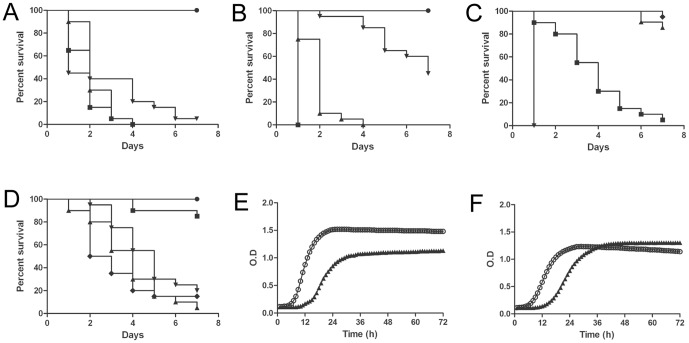
Figure 1. Comparison of the virulence of C. krusei and C. albicans in G. mellonella.
(A) Survival curve of G. mellonella infected with different inocula of C. krusei ATCC 6258 • PBS; ▪ 107 cells/larva; ▴ 5×10⁶ cells/larva;▾ 2.5×10⁶ cells/larva incubated at 37°C (B). Survival curve of G. mellonella infected with different inocula of C. albicans SC5314 • PBS; ▪ 106 cells/larva; ▴ 5×10⁵ cells/larva; ▾105 cells/larvae (C) Survival of G. mellonella infected with inactivated yeast. Control dead cells • PBS; ▪ C. krusei ATCC 6258 5×10⁶ cells/larva; ▴ C. krusei ATCC 6258 5×10⁶ cells/larva (dead); ▾ C. albicans SC5314 106 cells/larva; ♦ C. albicans SC5314 106 cells/larva (dead) (D); Effect of the incubation temperature on the virulence of C. albicans and C. krusei. • PBS; ▴ C. krusei ATCC 6258 (37°C); ▾C. krusei ATCC 6258 (30°C); ♦ C. albicans SC5314 (37°C); ▪C. albicans SC5314 (30°C); Growth curves of C. albicans (E) and C. krusei (F) at different temperatures. ○ 37°C; ▴ 30°C.
Figure 2
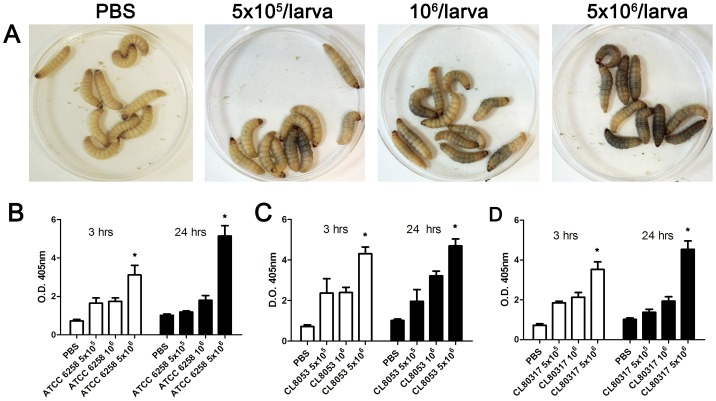
Figure 2. Melanization of G. mellonella infected with C. krusei.
(A) Visual appearance of G. mellonella larvae infected with different C. krusei doses. (B, C and D) Optical Density (OD) of the haemolymph of G. mellonella infected with C. krusei ATCC 6258 (B), clinical isolate CL8053 (C) and CL80317 (D) with 5×10⁵, 106, 5×10⁶ cells/larva. The different size inoculum reveals dose-response melanization (* p<0.05). All the experiments in this figure were performed at 37°C.
Figure 3
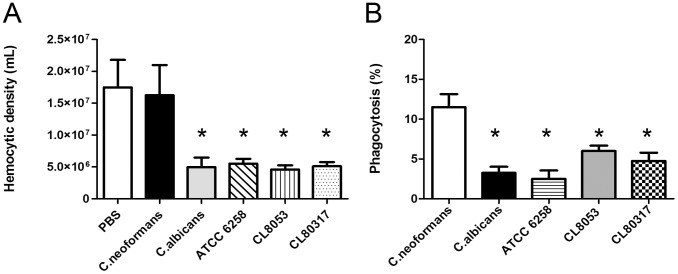
Figure 3. Interaction between C. krusei and haemocytes.
(A) Changes in haemocyte density during C. krusei infection. The haemolymph of infected larvae with C. neoformans, C. albicans SC5314, C. krusei ATCC 6258, CL8053 and CL80317 clinical isolates and PBS was collected and the concentration of haemocytes was estimated using a haemocytometer (B). Phagocytosis percentage of C. neoformans, C. albicans SC5314, C. krusei ATCC 6258, CL8053 and CL80317 clinical isolates. Asterisks denote differences statistically significant (p<0.05).
Figure 4
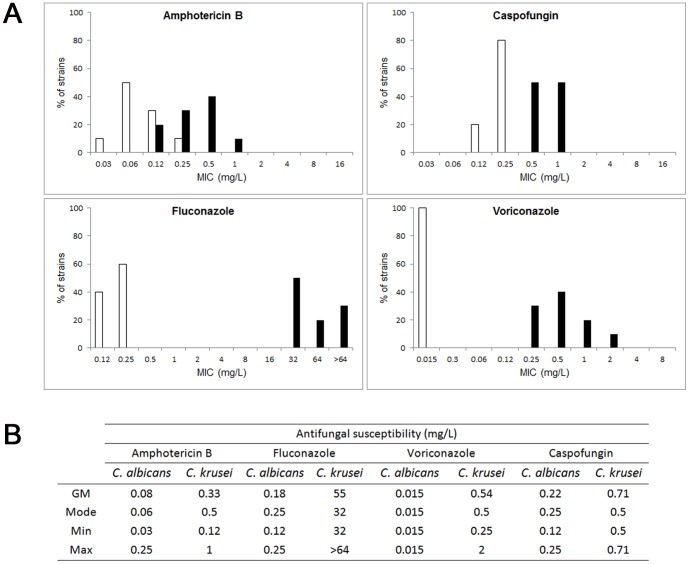
Figure 4. Antifungal susceptibility profile of C. krusei and C. albicans.
A) Distribution of MIC values (n = 10) to amphotericin B, caspofungin, fluconazole and voriconazole of C. albicans (white bars) and C. krusei (black bars). B) Description of antifungal susceptibility of C. albicans and C. krusei to different antifungals. N = 10. The geometric mean (GM), mode, minimum (Min) and maximum (Max) are shown.
Figure 5
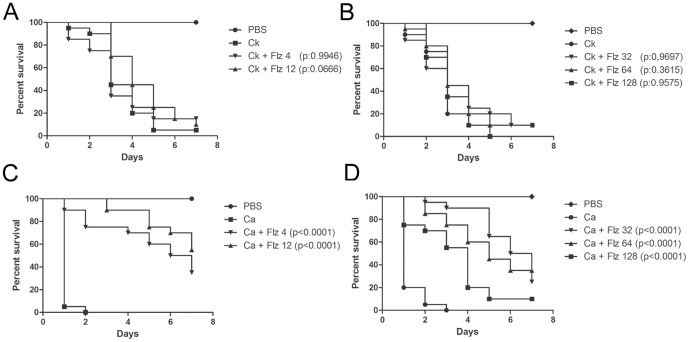
Figure 5. Efficacy of fluconazole during G. mellonella infection with C. krusei or C. albicans.
Effect of fluconazole during infection of larvae with 5×10⁶ cells of C. krusei (ATCC 6258) per larvae (A and B) and 5×10⁵ cells of C. albicans cells (SC5314) per larva (C and D) in G. mellonella. Fluconazole treatment with 4 or 12 mg/kg (A and C); 32, 64 or 128 mg/kg (B and D).
Figure 6
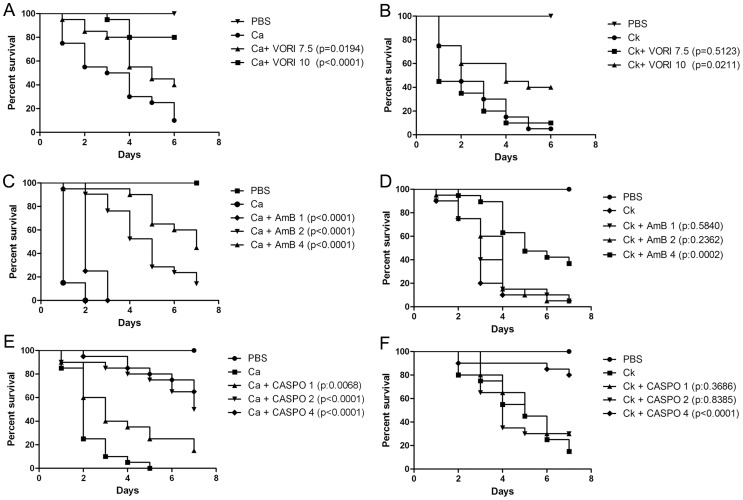
Figure 6. Efficacy of voriconazole, amphotericin B or caspofungin during C. krusei and C. albicans infection in G. mellonella.
A and B) Voriconazole treatment efficacy (7 and 10 mg/kg) in G. mellonella infected with C. albicans SC5314 (A) or C. krusei ATCC 6258 (B). C and D) Amphotericin B treatment efficacy (1, 2, 4 mg/kg) in G. mellonella infected with C. albicans SC5314 (C) or C. krusei ATCC 6258 (D). E and F) Caspofungin treatment efficacy (1, 2, 4 mg/kg) in G. mellonella infected with C. albicans SC5314 (E) or Candida krusei ATCC 6258 (F). In all the cases, the larvae were infected with 5×10⁵ C. albicans cells/larva and 5×10⁶ C. krusei cells/larva.
Figure 7
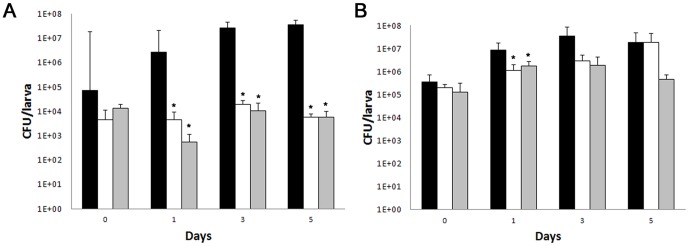
Figure 7. Effect of antifungal treatment on fungal burden in G. mellonella infected with C. albicans or C. krusei.
Galleria mellonella larvae were infected with C. krusei ATCC 6258 (A, 5×10⁶ cells/larva) or C. albicans SC5314 (B, 5×10⁵ cells/larva) and CFUs recovered from G. mellonella. Black bars, no treatment, white bars, fluconazole (12 mg/kg), grey bars, amphotericin B (4 mg/kg).
Figure 8
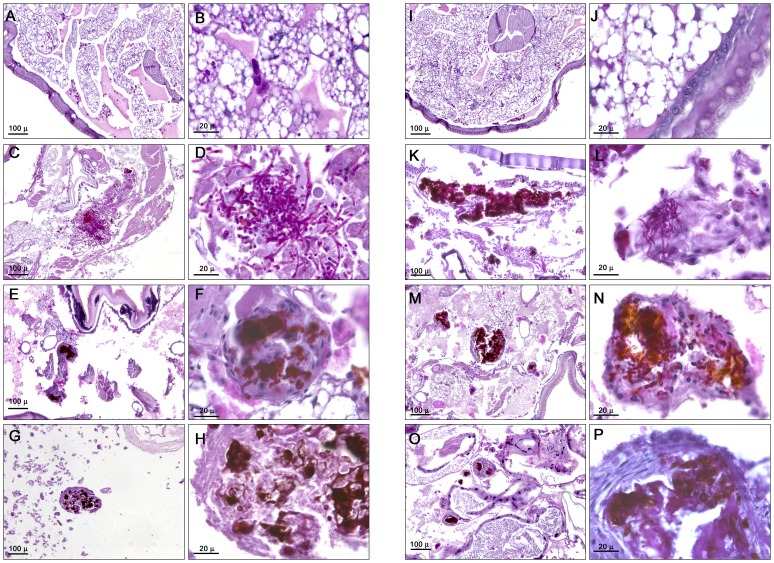
Figure 8. Histopathology of G. mellonella infected with C. krusei and C. albicans and treated with different antifungals.
Galleria mellonella was infected with 5×10⁵ cells/larva of C. albicans SC5314 (C–H), or with 5×10⁶ cells/larva of C. krusei ATCC 6258 (K–P). After 96 hours of infection, larvae were processed for histopathology as described in Material and Methods. (A, B, I, J), uninfected controls; (C, D, K and L), untreated controls; (E, F, M and N), larvae treated with fluconazole (12 mg/kg); (G, H, O and P), larvae treated with amphotericin B (4 mg/kg). (A, C, E, G, I, K, M, O), low magnification; (B, D, F, H, J, L, N and P), high magnification.
Figure 9
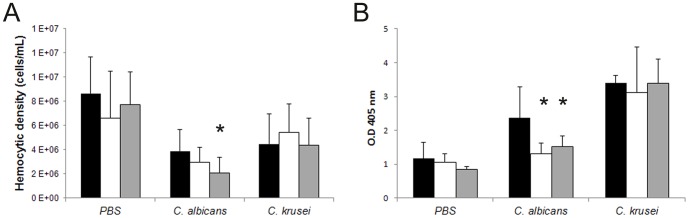
Figure 9. Effect of antifungal treatment of haemocyte density and melanization of G. mellonella infected with C. krusei or C. albicans.
(A) Hemocytic density of G. mellonella infected with C. albicans SC5314 or C. krusei ATCC 6258 treated with amphotericin B (4 mg/kg) or fluconazole (64 mg/kg). (B) Optical Density (OD) of the haemolymph of G. mellonella infected with C. albicans or C. krusei treated with amphotericin B (4 mg/kg) or with fluconazole (64 mg/kg). Black bars, no treatment; grey bars, fluconazole; white bars, amphotericin B. * p<0.05.
Figure 10
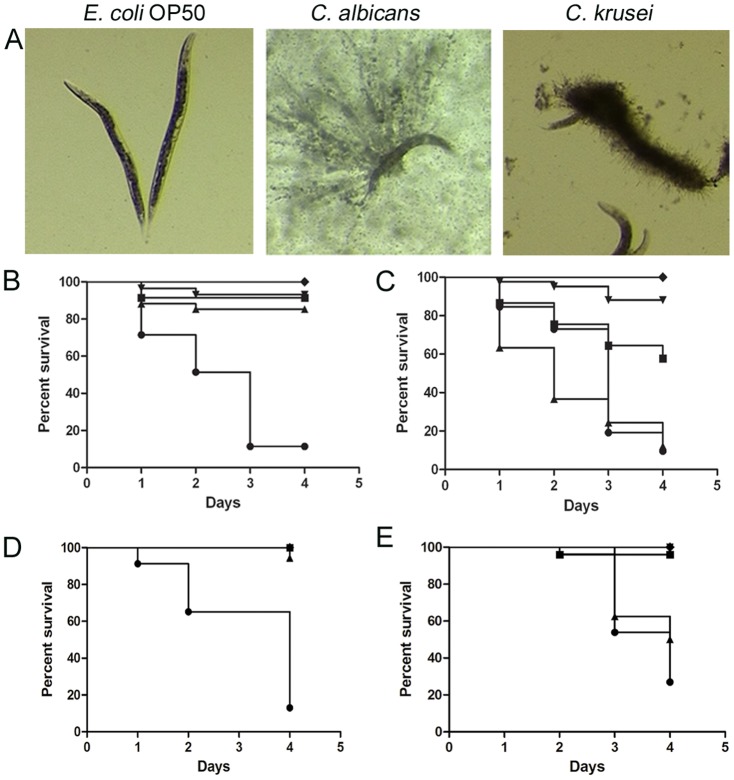
Figure 10. Virulence of C. krusei and C. albicans in C. elegans and antifungal efficacy.
Caenorhabditis elegans was infected as described in material and methods with C. krusei (ATCC 6258), C. albicans (SC5314) and E. coli OP50. (A) Visual appearance of infected worms (50× magnification). (B) Antifungal efficacy in C. elegans infected with C. albicans. ♦ OP50, • C. albicans, ▪ C. albicans and treated with 2 µg/mL amphotericin B (p<0.0001), ▴ Fluconazole 12 µg/mL (p<0.0001); ▾Caspofungin 2 µg/mL (p<0.0001). (C) Antifungal efficacy during C. krusei infection ♦ OP50; • C. krusei; ▪ C. krusei treated with amphotericin B 2 µg/mL; (p<0.0001); ▴Fluconazole 12 µg/mL (p = 0.1207); ▾Caspofungin 2 µg/mL (p<0.0001). (D) Effect of voriconazole on survival of C. elegans worms infected with C. albicans (•, C. albicans, ▴, voriconazole 0.25 mg/L (p<0.0001); ▪, voriconazole, 7.5 mg/L (p<0.0001); ▾ voriconazole 10 mg/L (p<0.0001)). (E), Efficacy of voriconazole during infection of C. elegans by C. krusei (•C. krusei; ▴voriconazole 0.25 mg/L (p = 0.1217); ▾ voriconazole 7.5 mg/L (9<0.0001); ▪ voriconazole 10 mg/L (p<0.0001)).

References

    1. Pfaller MA, Diekema DJ (2007) Epidemiology of invasive candidiasis: a persistent public health problem. Clin Microbiol Rev 20: 133–163. - PMC - PubMed
    1. Almirante B, Rodriguez D, Park BJ, Cuenca-Estrella M, Planes AM, et al. (2005) Epidemiology and predictors of mortality in cases of Candida bloodstream infection: results from population-based surveillance, barcelona, Spain, from 2002 to 2003. J Clin Microbiol 43: 1829–1835. - PMC - PubMed
    1. Chen S, Slavin M, Nguyen Q, Marriott D, Playford EG, et al. (2006) Active surveillance for candidemia, Australia. Emerg Infect Dis 12: 1508–1516. - PMC - PubMed
    1. Labelle AJ, Micek ST, Roubinian N, Kollef MH (2008) Treatment-related risk factors for hospital mortality in Candida bloodstream infections. Crit Care Med 36: 2967–2972. - PubMed
    1. Pfaller MA, Diekema DJ (2010) Epidemiology of invasive mycoses in North America. Crit Rev Microbiol 36: 1–53. - PubMed

Publication types

MeSH terms