


The efficacy of initial hydrocortisone administration at preventing posttraumatic distress in adult trauma patients: a randomized trial
- PMID: 23557627
- PMCID: PMC5981864
- DOI: 10.1017/S1092852913000096
The efficacy of initial hydrocortisone administration at preventing posttraumatic distress in adult trauma patients: a randomized trial
Abstract
OBJECTIVE/INTRODUCTION: Secondary pharmacological interventions have shown promise at reducing the development of posttraumatic stress disorder symptoms (PTSS) in preclinical studies. The present study examined the preliminary efficacy of a 10-day low-dose (20 mg bid) course of hydrocortisone at preventing PTSS in traumatic injury victims.
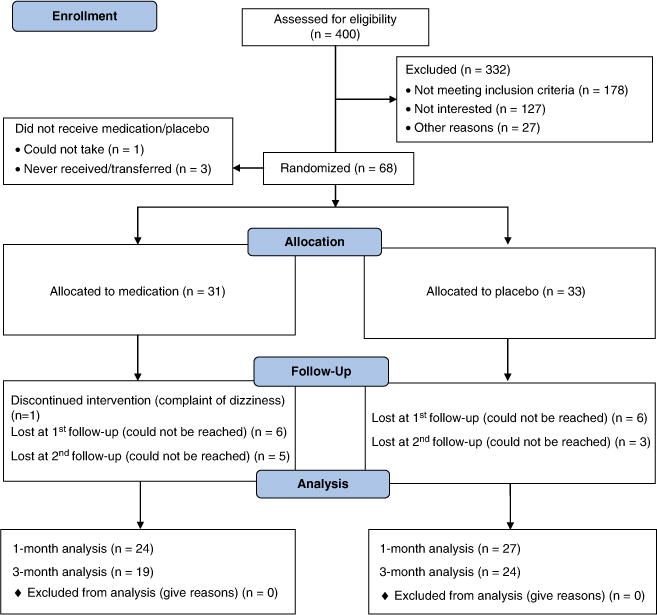
Methods: Sixty-four traumatic injury patients (34% female) were randomly assigned in a double-blind protocol to receive either a 10-day course of hydrocortisone or placebo initiated within 12 hours of the trauma. One-month and 3-months posttrauma participants completed an interview to assess PTSS and self-report measures of depression and health-related quality of life.
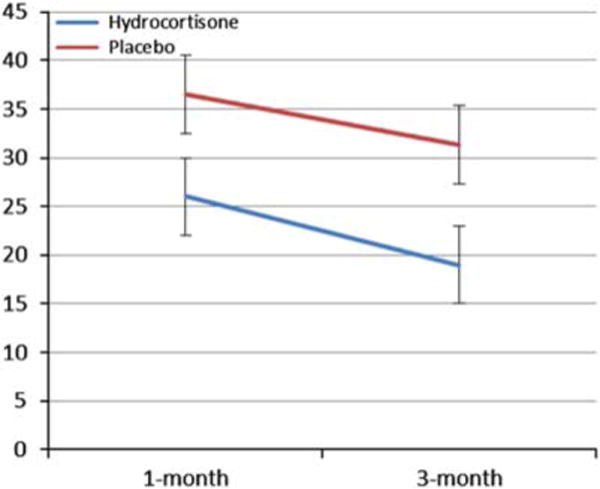
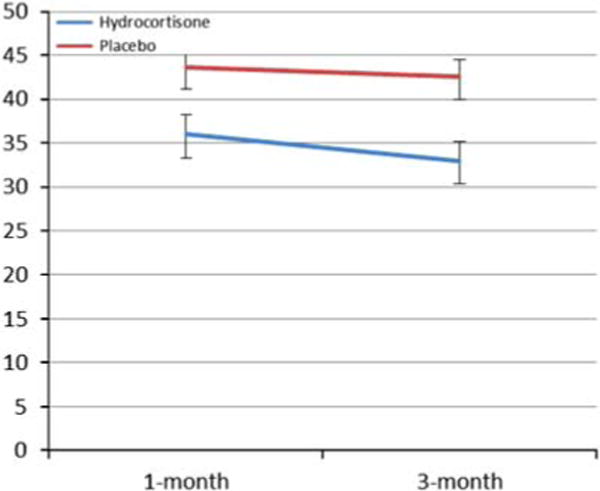
Results: Hydrocortisone recipients reported fewer PTSD and depression symptoms, and had greater improvements in health-related quality of life during the first 3 months posttrauma than did placebo recipients. Hydrocortisone recipients who had never received prior mental health treatment had the lowest PTSD scores.
Conclusion: Low-dose hydrocortisone may be a promising approach to the prevention of PTSD in acutely injured trauma patients, and may be particularly efficacious in acutely injured trauma victims without a history of significant psychopathology.
Figures
References
-
- Pietrzak RH, Goldstein RB, Southwick SM, Grant BF. Prevalence and Axis I comorbidity of full and partial posttraumatic stress disorder in the United States: results from Wave 2 of the National Epidemiologic Survey on Alcohol and Related Conditions. J Anxiety Disord. 2011;25(3):456–465. - PMC - PubMed
-
- Friedman MJ, Yehuda R. Post-traumatic stress disorder and comorbidity: psychobiological approaches to differential diagnosis. In: Friedman MJ, Charney DS, Deutch AY, editors. Neurobiological and Clinical Consequences of Stress: From Normal Adaptation to Post-Traumatic Stress Disorder. Philadelphia: Lippincott Williams & Wilkins Publishers; 1995. pp. 429–445.
-
- Deering CG, Glover SG, Ready D, Eddleman HC, Alarcon RD. Unique patterns of comorbidity in posttraumatic stress disorder from different sources of trauma. Compr Psychiatry. 1996;37(5):336–346. - PubMed
-
- Tucker P, Pfefferbaum B, Doughty DE, et al. Body handlers after terrorism in Oklahoma City: predictors of posttraumatic stress and other symptoms. Am J Orthopsychiatry. 2002;72(4):469–475. - PubMed
Publication types
MeSH terms
Substances
Grants and funding
LinkOut - more resources
Full Text Sources
Other Literature Sources
Medical
