


The relation between cancer patient treatment decision-making roles and quality of life
- PMID: 23558408
- PMCID: PMC4043125
- DOI: 10.1002/cncr.28046
The relation between cancer patient treatment decision-making roles and quality of life
Abstract
Background: The objective of this study was to explore relations between patient role preferences during the cancer treatment decision-making process and quality of life (QOL).
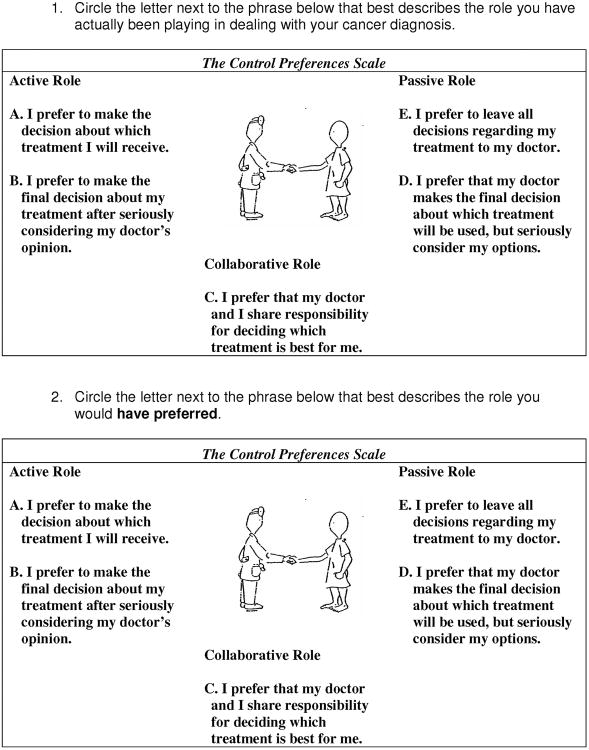
Methods: One-year cancer survivors completed a survey in 2000 as part of a larger survey conducted by the American Cancer Society. The current report was based on survey respondents from Minnesota (response rate, 37.4%). Standardized measures included the Profile of Mood States (scores were converted to have a range, from 0 to 100, with 100 indicating the best mood), the Medical Outcomes Survey 36-item short-form health survey (SF-36) (standardized scores), and the Control Preferences Scale. Patients' actual and preferred role preference distributions and concordance between roles were compared with QOL scores using 2-sample t test methodology.
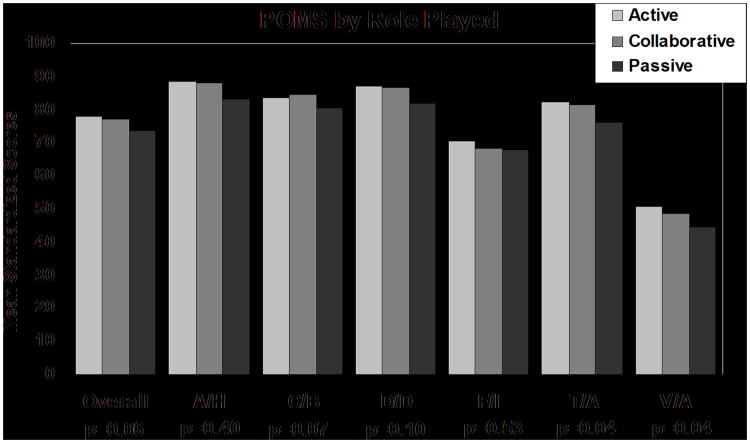
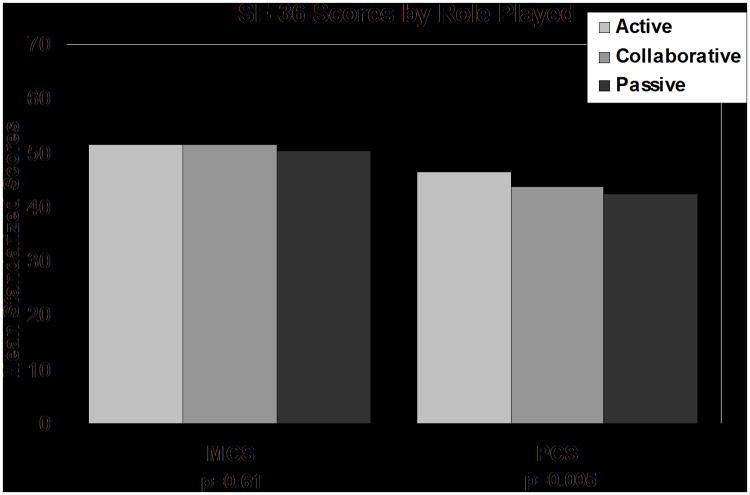
Results: The actual role of survivors (n = 594) in cancer care was 33% active, 50% collaborative, and 17% passive. Their preferred role was 35% active, 53% collaborative, and 13% passive. Overall, 88% of survivors had concordant preferred and actual roles. Survivors who had concordant roles had higher SF-36 Physical Component Scale (PCS) scores (P < .01), higher vitality (P = .01), less fatigue (P < .01), less confusion (P = .01), less anger (P = .046), and better overall mood (P = .01). These results were similar among both women and younger individuals (aged <60 years). Survivors who had active actual roles had higher PCS scores (P < .01), less tension (P = .04), and higher vitality (P = .04) than survivors who were either collaborative or passive. No differences existed in QOL scores according to preferred role.
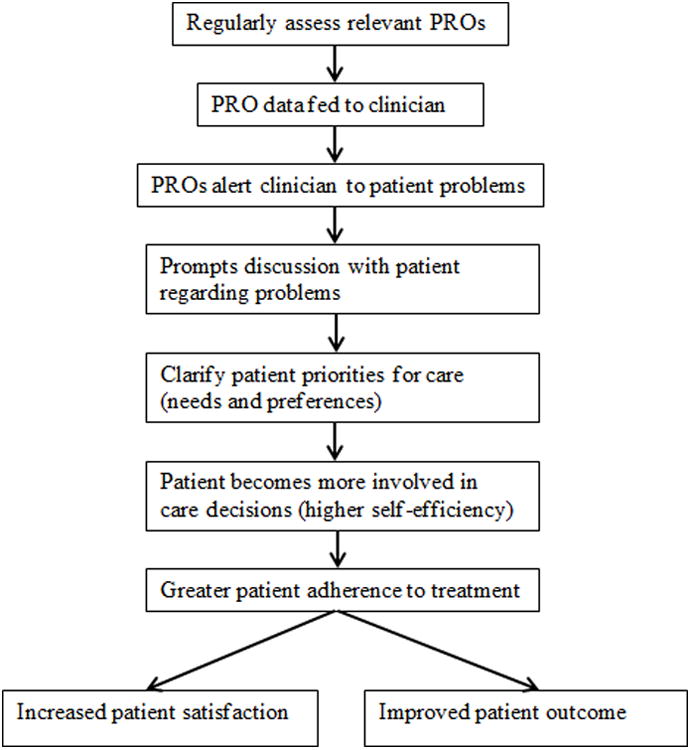
Conclusions: Survivors who experienced discordance between their actual role and their preferred role reported substantial QOL deficits in both physical and emotional domains. These results indicate the need to support patient preferences.
Copyright © 2013 American Cancer Society.
Figures
References
-
- Epstein RM, Street RL., Jr . Patient-Centered Communication in Cancer Care: Promoting Healing and Reducing Suffering. National Cancer Institute, NIH Publication No. 07-6225; Bethesda, MD: 2007.
-
- Thorne SE, Robinson CA. Health care relationships: The chronic illness perspective. Res Nurs Health. 1988;11(5):293–300. - PubMed
-
- Street RL, Jr, Gordon HS, Ward MM, Krupat E, Kravitz RL. Patient participation in medical consultations: why some patients are more involved than others. Med Care. 2005;43:960–969. - PubMed
-
- Street RL, Jr, Makoul G, Arora NK, Epstein RM. How does communication heal? Pathways linking clinician-patient communication to health outcomes. Patient Education and Counseling. 2009;74(3):295–301. - PubMed
Publication types
MeSH terms
Grants and funding
LinkOut - more resources
Full Text Sources
Other Literature Sources
