. 2013 Jun;3(6):636-47.
doi: 10.1158/2159-8290.CD-13-0050. Epub 2013 Apr 4.

Identification of targetable FGFR gene fusions in diverse cancers

Affiliations

Identification of targetable FGFR gene fusions in diverse cancers

Yi-Mi Wu et al. Cancer Discov. 2013 Jun.

Abstract

Through a prospective clinical sequencing program for advanced cancers, four index cases were identified which harbor gene rearrangements of FGFR2, including patients with cholangiocarcinoma, breast cancer, and prostate cancer. After extending our assessment of FGFR rearrangements across multiple tumor cohorts, we identified additional FGFR fusions with intact kinase domains in lung squamous cell cancer, bladder cancer, thyroid cancer, oral cancer, glioblastoma, and head and neck squamous cell cancer. All FGFR fusion partners tested exhibit oligomerization capability, suggesting a shared mode of kinase activation. Overexpression of FGFR fusion proteins induced cell proliferation. Two bladder cancer cell lines that harbor FGFR3 fusion proteins exhibited enhanced susceptibility to pharmacologic inhibition in vitro and in vivo. Because of the combinatorial possibilities of FGFR family fusion to a variety of oligomerization partners, clinical sequencing efforts, which incorporate transcriptome analysis for gene fusions, are poised to identify rare, targetable FGFR fusions across diverse cancer types.


Conflict of interest statement

Disclosure of Potential Conflicts Of Interest

A.M.C. is a consultant to Life Technologies, co-founder of Compendia Biosciences, which is now owned by Life Technologies, and advisor to Ventana/Roche and Gen-Probe/Hologic.

Figures

Figure 1
Figure 1. Integrative sequencing and mutational analysis of four index cancer patients found to harbor FGFR fusions
A CT-guided biopsy was employed to obtain tumor specimens from cancer patients enrolled in the MI-ONCOSEQ protocol. A sample of their normal tissue (blood or buccal swab) was also obtained for germline studies. The samples were subjected to integrative sequencing and analyzed for mutations. For each patient, a diagram summarizing the cancer type, histopathology, number of nonsynonymous somatic point mutations and gene fusions detected, and gene copy number landscape is presented. The predicted structure of the FGFR fusion protein identified in each case is illustrated. FGFR gene fusions were validated by quantitative RT-PCR followed by gel electrophoresis or outlier expression assessed by RNA-seq is provided. The four index cases shown are A, MO_1036, cholangiocarcinoma, B, MO_1039, cholangiocarcinoma, C, MO_1051, breast cancer, and D, MO_1081, prostate cancer. QPCR results for each case are compared to a set of 6 cDNA controls from unrelated patient tumors (C1-C6). For the prostate cancer patient, an expression of FGFR2 is shown (in RPKPM) relative to a compendium of 84 prostate cancer samples.
Figure 2
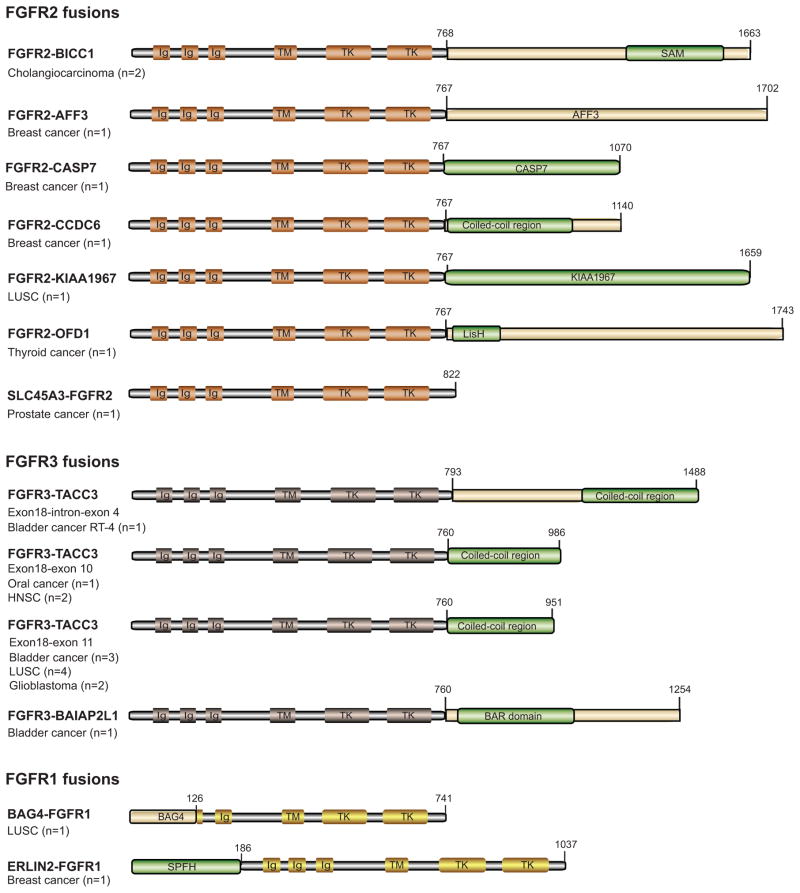
Figure 2. Schematic representations of the predicted FGFR gene fusions identified by transcriptome sequencing of human cancers
Data utilized includes RNA sequencing results from the 4 index patients, our internal tumor cohort and the TCGA compendium. Out of 4 FGFR receptor family members, FGFR1, FGFR2, and FGFR3 are involved in gene fusions with various partners located on several chromosomes. Eleven distinct fusion partners of FGFRs were identified. Exon and codon numberings are based on the reference accessions in Supplementary Table 13. LUSC, Lung squamous cell carcinoma; HNSC, Head and Neck squamous cell carcinoma.
Figure 3
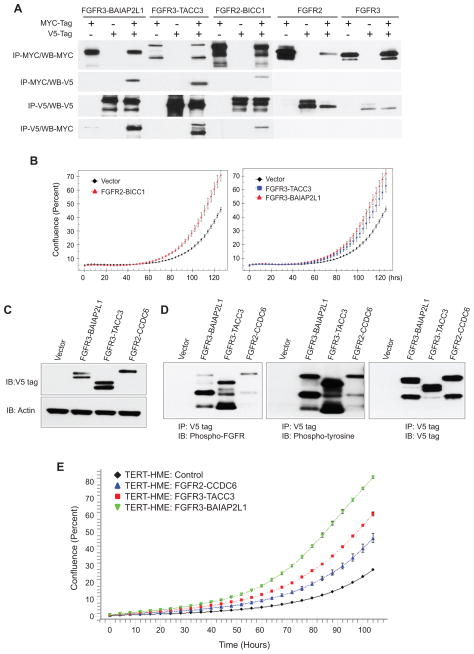
Figure 3. Functional characterization of FGFR fusion proteins
A, Oligomerization of FGFR fusion proteins demonstrated by immunoprecipitation (IP)-Western Blotting (WB). HEK 293T cells were transfected with respective Myc- and V5-tagged FGFR wild-type or fusion proteins and reciprocal IP-Western blots were carried out. B, Cell proliferation assays as determined by live-cell imaging of 293T cells over-expressing various FGFR fusion proteins. Data shown are cell confluence vs. time at 3 hour intervals. Each data point is the mean of quadruplicates. C. Stable expression of FGFR fusion proteins in TERT-HME cells. Cell lysates were prepared from various stable lines and expression of chimeric proteins was detected by anti-V5 antibody. D. FGFR fusion protein activity in TERT-HME cells. Cell lysates from various stable lines were immunoprecipitated (IP) and immunoblotted (IB) with the antibodies indicated. E. Overexpression of FGFR fusions induces cell proliferation in TERT-HME cells. Cell proliferation assays were performed by Incucyte live-cell imaging. Data shown are cell confluence vs. time at 3-hour intervals. Each data point is the mean of quadruplicates.
Figure 4
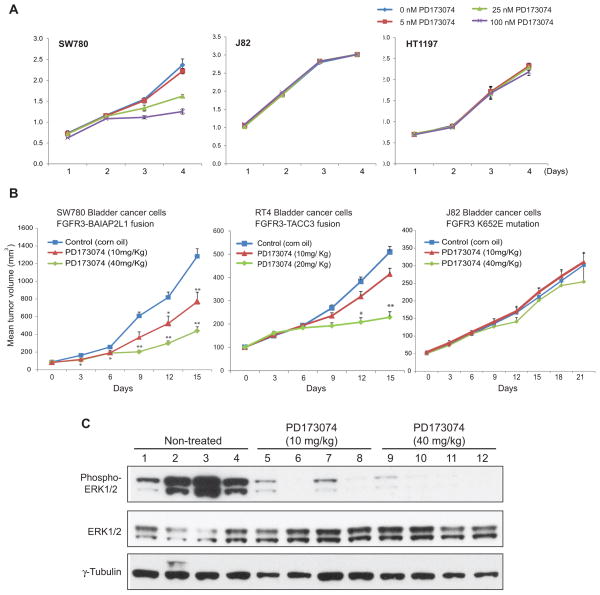
Figure 4. Inhibition of FGFR fusion kinase activity repressed tumor growth in a mouse xenograft model
A, Inhibition of cell proliferation by FGFR inhibitor PD173074. The FGFR3-BAIAP2L1 bladder cell line SW780, and two control bladder cell lines J82 (K652E mutation) and HT-1197 (S249C mutation), were tested for the effects of PD173074 at three concentrations on cell proliferation, assessed by the WST-1 method at the indicated times. Data shown are the means of triplicates. B, Differential sensitivity of FGFR fusion positive versus FGFR mutant bladder cancer xenograft growth to PD173074. Mice xenografted with bladder cancer SW780 cells (FGFR3-BAIAP2L1 fusion), RT4 (FGFR3-TACC3 fusion), or J82 cells (K652E mutation) were treated daily with PD173074 after tumors were formed. The tumor size was monitored over a time course of 3 weeks. *p<0.05; **p<0.005. C. Inhibition of FGFR signaling pathway by FGFR inhibitor PD173074 in mouse xenograft tumors. Bladder cancer SW780 cells were implanted in mice and treated with PD173074 after tumor formation as shown in B. Protein lysates of tumor tissues were prepared and immunoblotted with antibodies against phospho-ERK1/2, pan-ERK1/2, and γ-tubulin.

References

    1. Chin L, Andersen JN, Futreal PA. Cancer genomics: from discovery science to personalized medicine. Nat Med. 2011;17:297–303. - PubMed
    1. Meyerson M, Gabriel S, Getz G. Advances in understanding cancer genomes through second-generation sequencing. Nat Rev Genet. 2010;11:685–96. - PubMed
    1. Roychowdhury S, Iyer MK, Robinson DR, Lonigro RJ, Wu YM, Cao X, et al. Personalized oncology through integrative high-throughput sequencing: a pilot study. Sci Transl Med. 2011;3:111ra21. - PMC - PubMed
    1. Welch JS, Westervelt P, Ding L, Larson DE, Klco JM, Kulkarni S, et al. Use of whole-genome sequencing to diagnose a cryptic fusion oncogene. JAMA. 2011;305:1577–84. - PMC - PubMed
    1. Rowley JD. Letter: A new consistent chromosomal abnormality in chronic myelogenous leukaemia identified by quinacrine fluorescence and Giemsa staining. Nature. 1973;243:290–3. - PubMed

Publication types

MeSH terms

Substances