


MicroRNA-93 controls perfusion recovery after hindlimb ischemia by modulating expression of multiple genes in the cell cycle pathway
- PMID: 23559675
- PMCID: PMC3856290
- DOI: 10.1161/CIRCULATIONAHA.112.000860
MicroRNA-93 controls perfusion recovery after hindlimb ischemia by modulating expression of multiple genes in the cell cycle pathway
Abstract
Background: MicroRNAs are key regulators of gene expression in response to injury, but there is limited knowledge of their role in ischemia-induced angiogenesis, such as in peripheral arterial disease. Here, we used an unbiased strategy and took advantage of different phenotypic outcomes that follow surgically induced hindlimb ischemia between inbred mouse strains to identify key microRNAs involved in perfusion recovery from hindlimb ischemia.
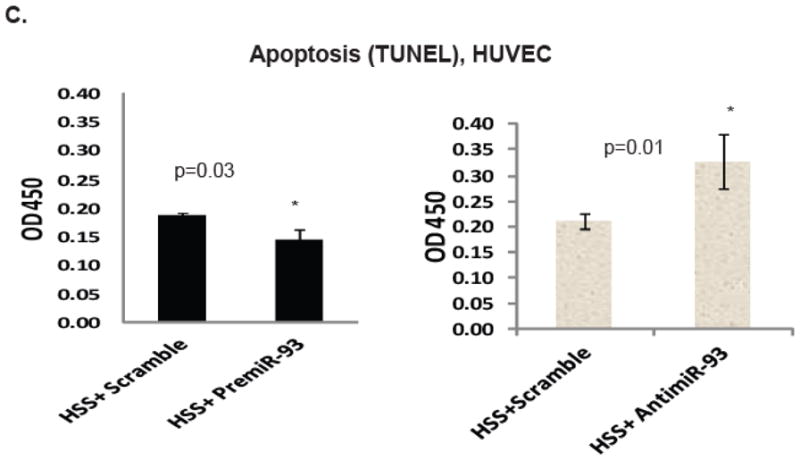
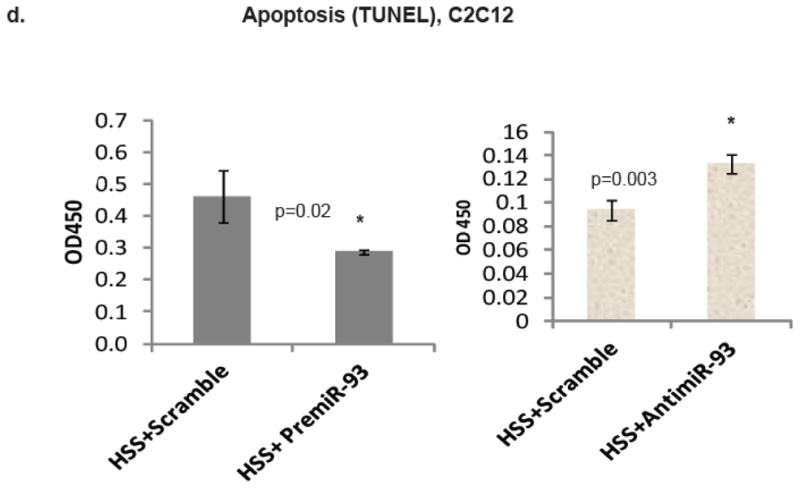
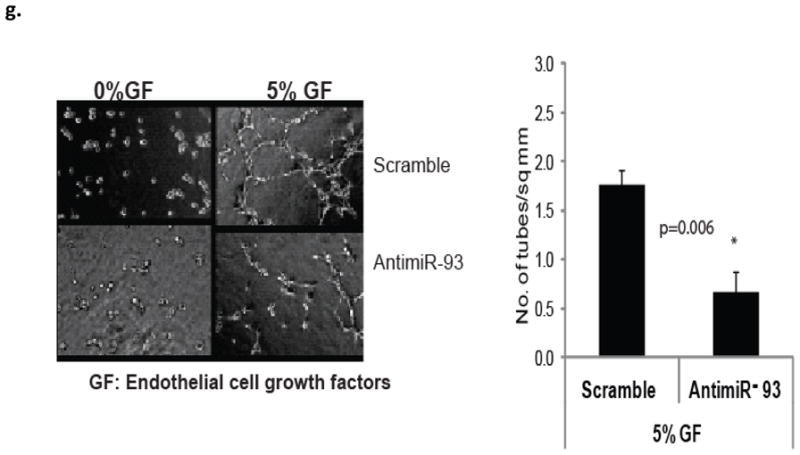
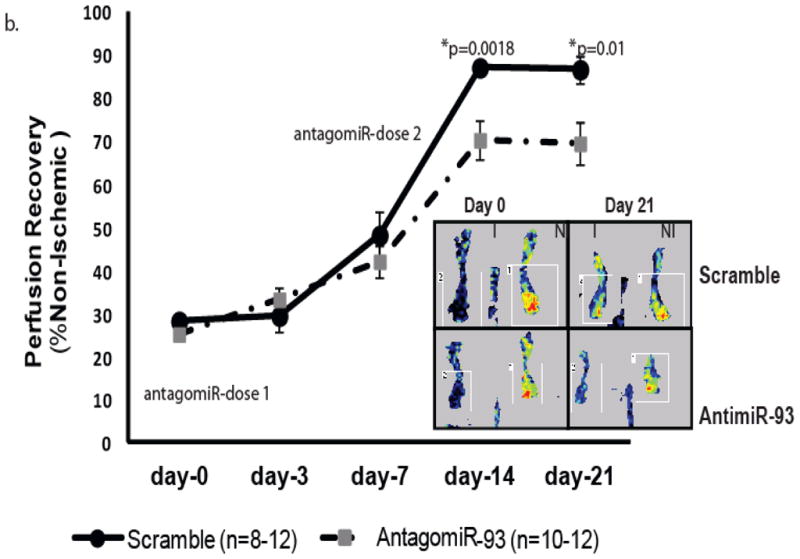
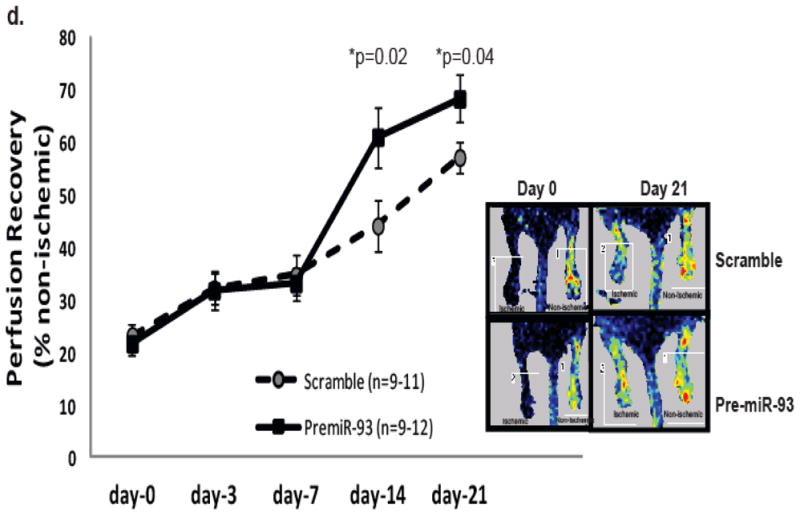
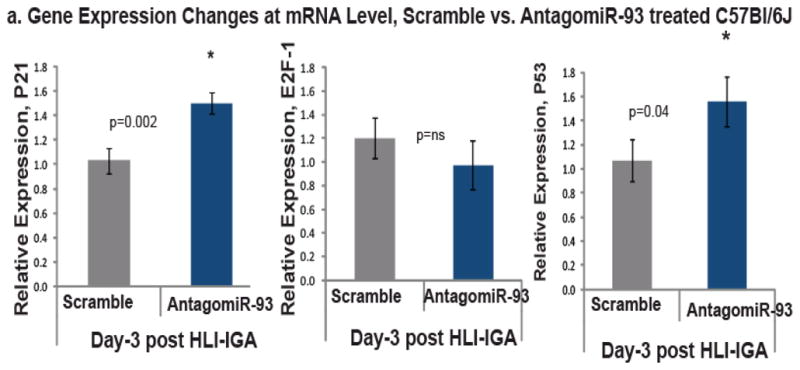
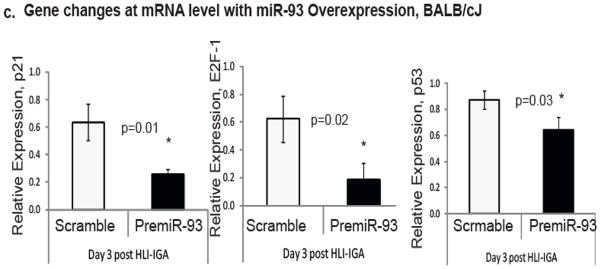
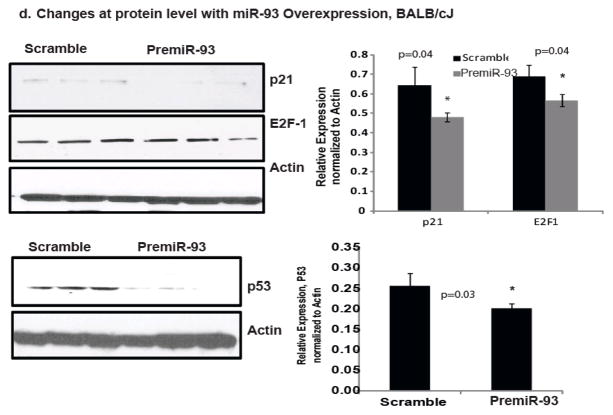
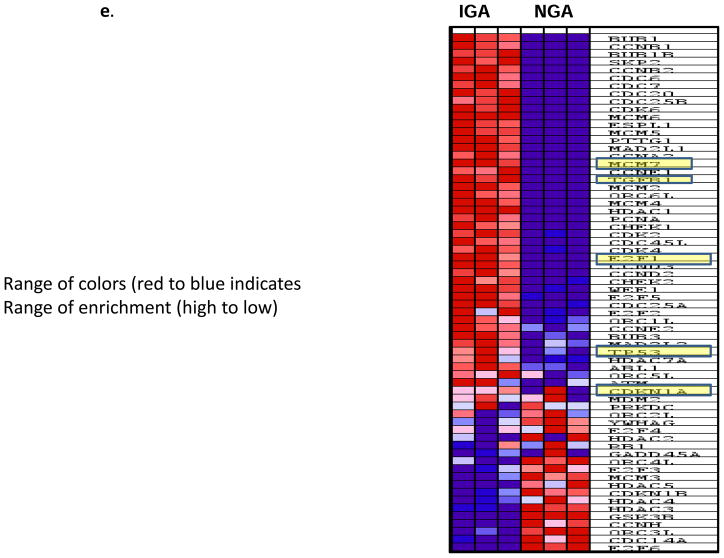
Methods and results: From comparative microRNA profiling between inbred mouse strains that display profound differences in their extent of perfusion recovery after hindlimb ischemia, we found that the mouse strain with higher levels of microRNA-93 (miR-93) in hindlimb muscle before ischemia and the greater ability to upregulate miR-93 in response to ischemia had better perfusion recovery. In vitro, overexpression of miR-93 attenuated hypoxia-induced apoptosis in both endothelial and skeletal muscle cells and enhanced proliferation in both cell types. In addition, miR-93 overexpression enhanced endothelial cell tube formation. In vivo, miR-93 overexpression enhanced capillary density and perfusion recovery from hindlimb ischemia, and antagomirs to miR-93 attenuated perfusion recovery. Both in vitro and in vivo modulation of miR-93 resulted in alterations in the expression of >1 cell cycle pathway gene in 2 different cell types.
Conclusions: Our data indicate that miR-93 enhances perfusion recovery from hindlimb ischemia by modulation of multiple genes that coordinate the functional pathways of cell proliferation and apoptosis. Thus, miR-93 is a strong potential target for pharmacological modulation to promote angiogenesis in ischemic tissue.
Conflict of interest statement
Figures








References
-
- He L, Hannon GJ. MicroRNAs: small RNAs with a big role in gene regulation. Nat Rev Genet. 2004;5:522–531. - PubMed
-
- Sun W, Julie Li YS, Huang HD, Shyy JY, Chien S. microRNA: a master regulator of cellular processes for bioengineering systems. Annu Rev Biomed Eng. 2010;12:1–27. - PubMed
-
- Yang WJ, Yang DD, Na S, Sandusky GE, Zhang Q, Zhao G. Dicer is required for embryonic angiogenesis during mouse development. J Biol Chem. 2005;280:9330–9335. - PubMed
-
- Lee KH, Chen YL, Yeh SD, Hsiao M, Lin JT, Goan YG, Lu PJ. MicroRNA-330 acts as tumor suppressor and induces apoptosis of prostate cancer cells through E2F1-mediated suppression of Akt phosphorylation. Oncogene. 2009;28:3360–3370. - PubMed
Publication types
MeSH terms
Substances
Grants and funding
LinkOut - more resources
Full Text Sources
Other Literature Sources
Molecular Biology Databases
