


Comparison of Enterococcus faecium and Enterococcus faecalis Strains isolated from water and clinical samples: antimicrobial susceptibility and genetic relationships
- PMID: 23560050
- PMCID: PMC3613387
- DOI: 10.1371/journal.pone.0059491
Comparison of Enterococcus faecium and Enterococcus faecalis Strains isolated from water and clinical samples: antimicrobial susceptibility and genetic relationships
Abstract
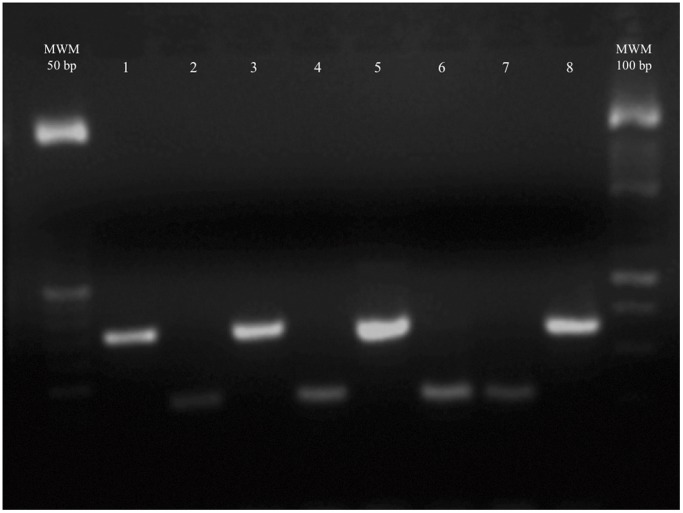
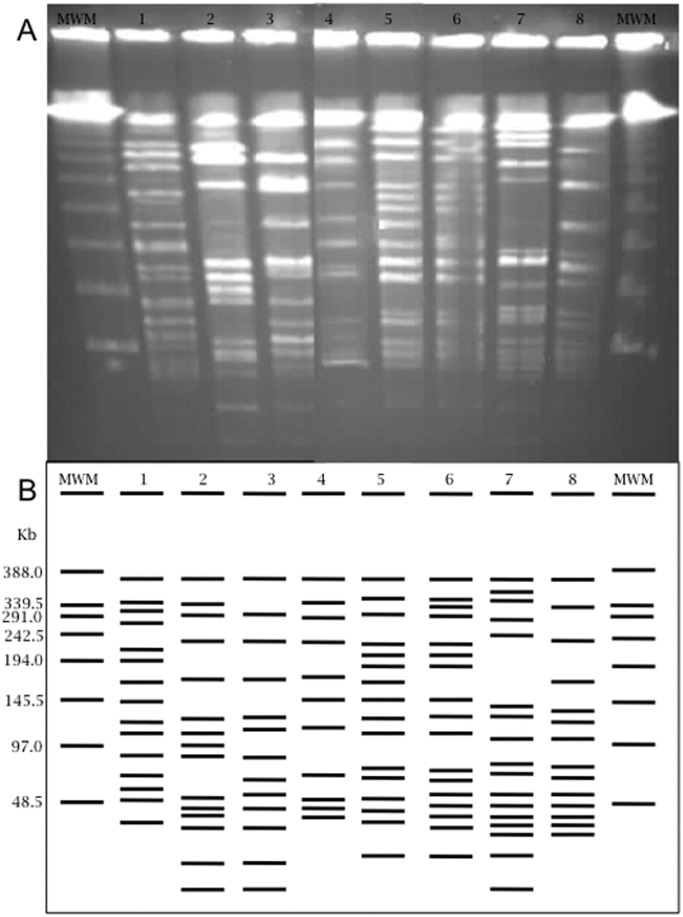
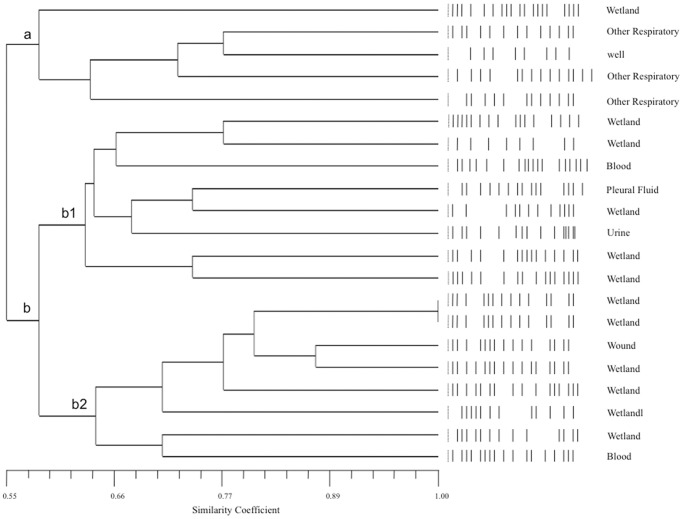
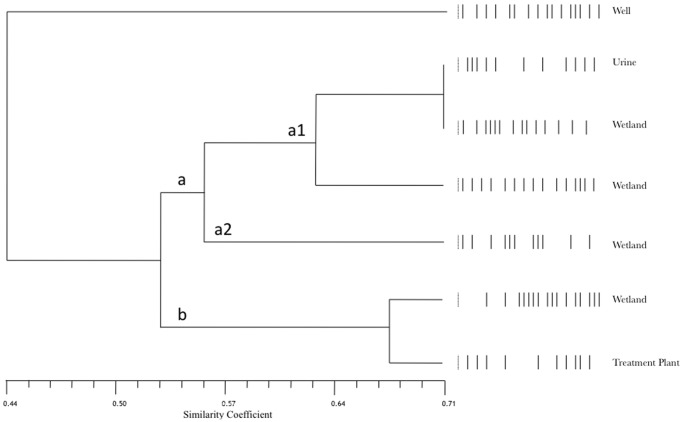
Enterococci are part of the normal intestinal flora in a large number of mammals, and these microbes are currently used as indicators of fecal contamination in water and food for human consumption. These organisms are considered one of the primary causes of nosocomial and environmental infections due to their ability to survive in the environment and to their intrinsic resistance to antimicrobials. The aims of this study were to determine the biochemical patterns and antimicrobial susceptibilities of Enterococcus faecalis and E. faecium isolates from clinical samples and from water (groundwater, water from the Xochimilco wetland, and treated water from the Mexico City Metropolitan Area) and to determine the genetic relationships among these isolates. A total of 121 enterococcus strains were studied; 31 and 90 strains were isolated from clinical samples and water (groundwater, water from the Xochimilco wetland, and water for agricultural irrigation), respectively. Identification to the species level was performed using a multiplex PCR assay, and antimicrobial profiles were obtained using a commercial kit. Twenty-eight strains were analyzed by pulsed-field gel electrophoresis (PFGE). E. faecium strains isolated from water showed an atypical biochemical pattern. The clinical isolates showed higher resistance to antibiotics than those from water. Both the enterococci isolated from humans, and those isolated from water showed high genetic diversity according to the PFGE analysis, although some strains seemed to be closely related. In conclusion, enterococci isolated from humans and water are genetically different. However, water represents a potential route of transmission to the community and a source of antimicrobial resistance genes that may be readily transmitted to other, different bacterial species.
Conflict of interest statement
Figures
References
-
- Teixeira L, Carvalho M, Facklan R (2007) Enterococcus. In: Murray P, Baron E, Landry M, Jorgensen J, Pfaller M, editors. Manual of Clinical Microbiology. 9th ed. Washington, DC: ASM Press. 430–442.
-
- Graves AK, Weaver RW (2010) Characterization of enterococci populations collected from a subsurface flow constructed wetland. J Appl Microbiol 108: 1226–1234. - PubMed
-
- Franzetti L, Pompei M, Scarpellini M, Galli A (2004) Phenotypic and genotypic characterization of Enterococcus spp. of different origins. Curr Microbiol 49: 255–260. - PubMed
-
- Devriese LA, Kerckhove AVD, Kilpper-Bälz R, Schleifer KH (1987) Characterization and Identification of Enterococcus Species Isolated from the Intestines of Animals. International Journal of Systematic Bacteriology 37: 257–259.
Publication types
MeSH terms
Substances
LinkOut - more resources
Full Text Sources
Other Literature Sources
Medical
