


Regional cardiac dysfunction and dyssynchrony in a murine model of afterload stress
- PMID: 23560059
- PMCID: PMC3613376
- DOI: 10.1371/journal.pone.0059915
Regional cardiac dysfunction and dyssynchrony in a murine model of afterload stress
Abstract
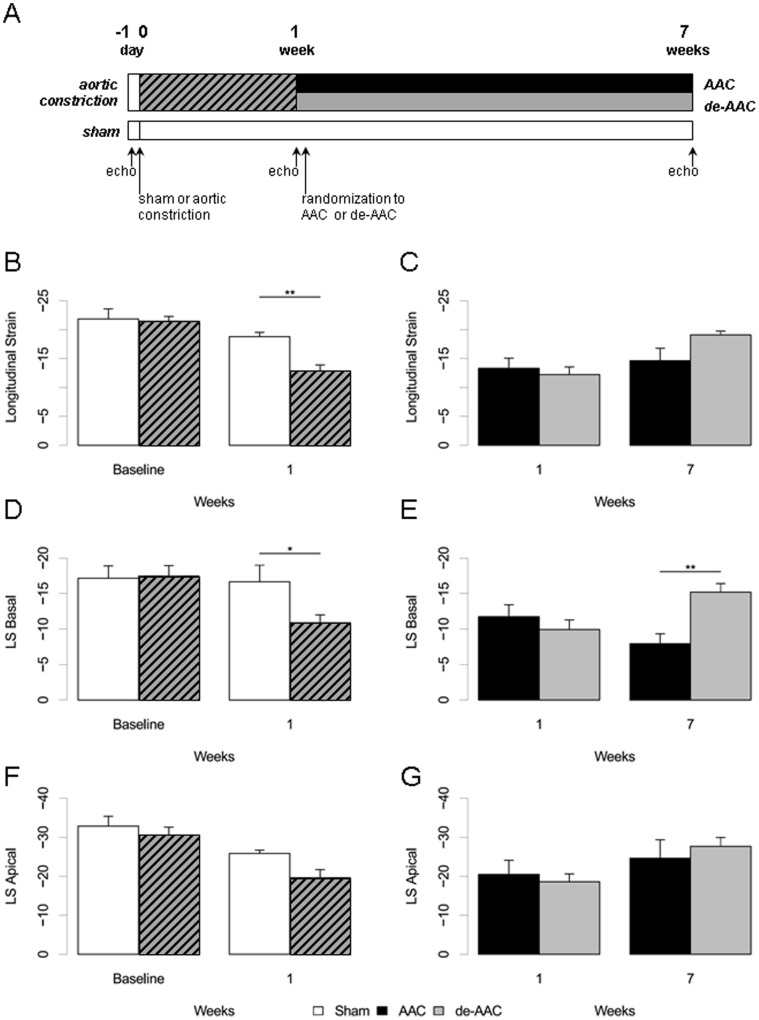
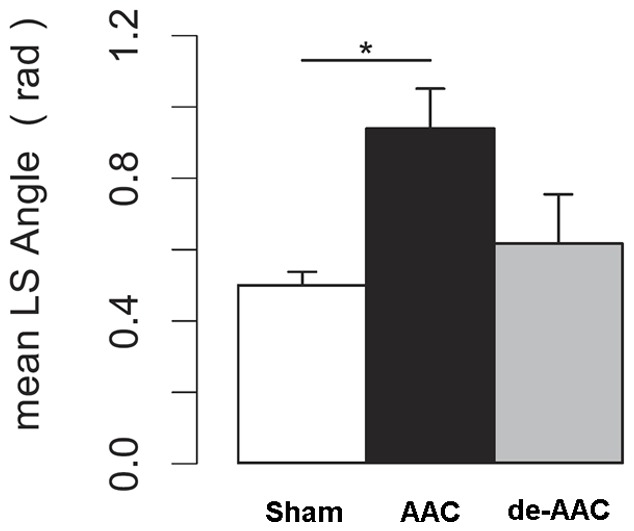
Small animal models of afterload stress have contributed much to our present understanding of the progression from hypertension to heart failure. High-sensitivity methods for phenotyping cardiac function in vivo, particular in the setting of compensated cardiac hypertrophy, may add new information regarding alterations in cardiac performance that can occur even during the earliest stages of exposure to pressure overload. We have developed an echocardiographic analytical method, based on speckle-tracking-based strain analyses, and used this tool to rapidly phenotype cardiac changes resulting from afterload stress in a small animal model. Adult mice were subjected to ascending aortic constriction, with and without subsequent reversal of the pressure gradient. In this model of compensated hypertrophic cardiac remodeling, conventional echocardiographic measurements did not detect changes in left ventricular (LV) function at the early time points examined. Strain analyses, however, revealed a decrement in basal longitudinal myofiber shortening that was induced by aortic constriction and improved following relief of the pressure gradient. Furthermore, we observed that pressure overload resulted in LV segmental dyssynchrony that was attenuated with return of the afterload to baseline levels. Herein, we describe the use of echocardiographic strain analyses for cardiac phenotyping in a mouse model of pressure overload. This method provides evidence of dyssynchrony and regional myocardial dysfunction that occurs early with compensatory hypertrophy, and improves following relief of aortic constriction. Importantly, these findings illustrate the utility of a rapid, non-invasive method for characterizing early cardiac dysfunction, not detectable by conventional echocardiography, following afterload stress.
Conflict of interest statement
Figures
References
-
- Drazner MH (2011) The progression of hypertensive heart disease. Circulation 123: 327–334. - PubMed
-
- Pavlopoulos H, Grapsa J, Stefanadi E, Philippou E, Dawson D, et al. (2008) Is it only diastolic dysfunction? Segmental relaxation patterns and longitudinal systolic deformation in systemic hypertension. Eur J Echocardiogr 9: 741–747. - PubMed
-
- Mor-Avi V, Lang RM, Badano LP, Belohlavek M, Cardim NM, et al. (2011) Current and evolving echocardiographic techniques for the quantitative evaluation of cardiac mechanics: ASE/EAE consensus statement on methodology and indications endorsed by the Japanese Society of Echocardiography. J Am Soc Echocardiogr 24: 277–313. - PubMed
-
- Popovic ZB, Benejam C, Bian J, Mal N, Drinko J, et al. (2007) Speckle-tracking echocardiography correctly identifies segmental left ventricular dysfunction induced by scarring in a rat model of myocardial infarction. Am J Physiol Heart Circ Physiol 292: H2809–2816. - PubMed
Publication types
MeSH terms
Grants and funding
LinkOut - more resources
Full Text Sources
Other Literature Sources
