


Community knowledge, behaviours and attitudes about the 2009 H1N1 Influenza pandemic: a systematic review
- PMID: 23560537
- PMCID: PMC4634241
- DOI: 10.1111/irv.12103
Community knowledge, behaviours and attitudes about the 2009 H1N1 Influenza pandemic: a systematic review
Abstract
Background: Effectiveness of pandemic plans and community compliance was extensively researched following the H1N1 pandemic. This systematic review examined community response studies to determine whether behavioural responses to the pandemic were related to level of knowledge about the pandemic, perceived severity of the pandemic and level of concern about the pandemic.
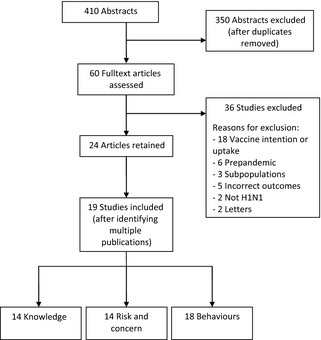
Methods: Literature databases were searched from March 2009 to August 2011 and included cross-sectional or repeated population surveys undertaken during or following the H1N1 pandemic which reported on community response to the pandemic. Studies using population subgroups and other respiratory diseases were excluded, as were mathematical modelling and qualitative studies.
Results: Nineteen unique studies were included. Fourteen reported pandemic knowledge, 14 reported levels of concern and risk perception and 18 reported pandemic behaviours. Awareness of the pandemic was high, and knowledge was moderate. Levels of concern and risk were low moderate and precautionary behavioural actions lower than intentions. The most commonly reported factors influencing adopting recommended behaviours were increased risk perception and older age, increased pandemic knowledge and being female.
Conclusions: Important implications for future pandemic planning were identified. A remarkable lack of intercountry variability in responses existed; however, differences between populations within a single country suggest one-size-fits-all plans may be ineffective. Secondly, differences between reported precautionary intentions and preventive behaviours undertaken may be related to people's perceived risk of infection.
Keywords: H1N1 influenza; pandemic; systematic review.
© 2013 John Wiley & Sons Ltd.
References
-
- NHMRC guidelines . Available at http://www.nhmrc.gov.au/guidelines/resources-guideline-developers (Accessed 1 May 2011).
-
- NIHCE UK guidelines . Available at http://www.nice.org.uk/aboutnice/howwework/developingniceclinicalguideli... (Accessed 3 June 2011).
Publication types
MeSH terms
LinkOut - more resources
Full Text Sources
Other Literature Sources
Medical
