


Do snoring sounds arouse the snorer?
- PMID: 23565002
- PMCID: PMC3612258
- DOI: 10.5665/sleep.2546
Do snoring sounds arouse the snorer?
Abstract
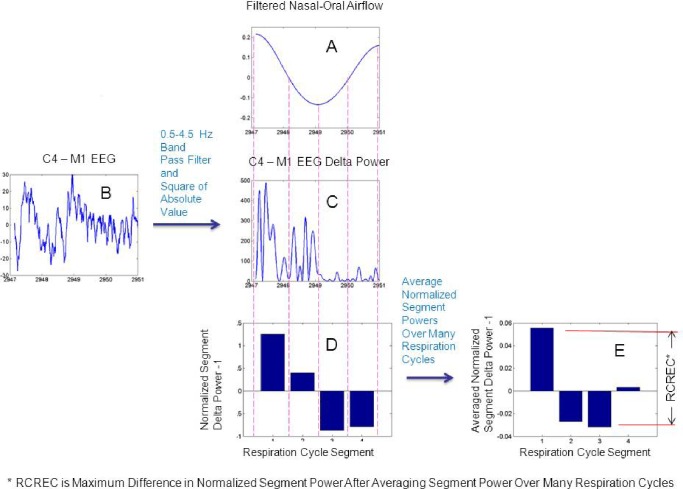
Study objectives: Respiratory cycle-related electroencephalographic (EEG) changes (RCREC), especially in delta and sigma frequencies, are thought to reflect subtle, breath-to-breath inspiratory microarousals that are exacerbated in association with increased work of breathing in obstructive sleep apnea (OSA). We wondered whether snoring sounds could create these microarousals, and investigated whether earplugs, anticipated to alter snoring perception, might affect RCREC.
Design: Randomized controlled trial.
Setting: An accredited, academic sleep laboratory.
Patients: Adults (n = 400) referred for suspected OSA.
Interventions: Subjects were randomly assigned to use earplugs or not during a night of diagnostic polysomnography.
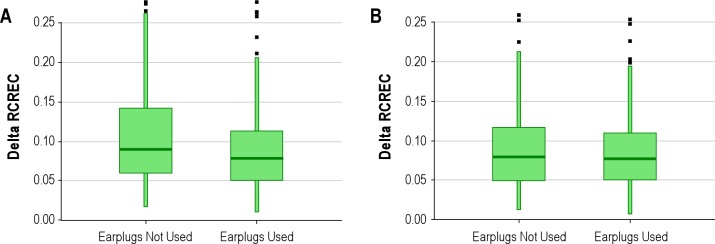
Results: Two hundred three of the participants were randomized to use earplugs. Earplug use was associated with lower RCREC in delta EEG frequencies (0.5-4.5 Hz), although not in other frequencies, after controlling for potential confounds (P = 0.048). This effect of earplug use was larger among men in comparison with women (interaction term P = 0.046), and possibly among nonobese subjects in comparison with obese subjects (P = 0.081). However, the effect of earplug use on delta RCREC did not differ significantly based on apnea severity or snoring prominence as rated by sleep technologists (P > 0.10 for each).
Conclusions: This randomized controlled trial is the first study to show that perception of snoring sounds, as modulated by earplugs, can influence the cortical EEG during sleep. However, the small magnitude of effect, lack of effect on RCREC in EEG frequencies other than delta, and absence of effect modulation by apnea severity or snoring prominence suggest that perception of snoring is not the main explanation for RCREC.
Keywords: Polysomnography; RCREC; computer-assisted signal processing; earplugs; obstructive sleep apnea; respiratory cycle-related EEG changes; snoring; sound.
Figures
References
-
- Partinen M, Hublin C. Epidemiology of sleep disorders. In: Kryger MH, Roth T, Dement WC, editors. Principles and practice of sleep medicine. 5th ed. St. Louis: Elsevier Saunders; 2011. pp. 694–715.
-
- Gottlieb DJ, Yao Q, Redline S, Ali T, Mahowald MW. Does snoring predict sleepiness independently of apnea and hypopnea frequency? Am J Respir Crit Care Med. 2000;162:1512–7. - PubMed
-
- McCormick DA, Bal T. Sensory gating mechanisms of the thalamus. Curr Opin Neurobiol. 1994;4:550–6. - PubMed
Publication types
MeSH terms
Grants and funding
LinkOut - more resources
Full Text Sources
Other Literature Sources
Medical
