


Will mothers of sick children help their husbands to stop smoking after receiving a brief intervention from nurses? Secondary analysis of a randomised controlled trial
- PMID: 23565835
- PMCID: PMC3626671
- DOI: 10.1186/1471-2431-13-50
Will mothers of sick children help their husbands to stop smoking after receiving a brief intervention from nurses? Secondary analysis of a randomised controlled trial
Abstract
Background: Second-hand smoke is a severe health hazard for children. Clinical guidelines suggest that nurses advise smoking parents to quit when they accompany their sick children to paediatric settings, but the guidelines did not mention what nurses can do if the parents are not with the children. This study examines the effectiveness of a low-intensity, nurse-led health instructional initiative for non-smoking mothers, to motivate them to take action to help their husbands stop smoking.
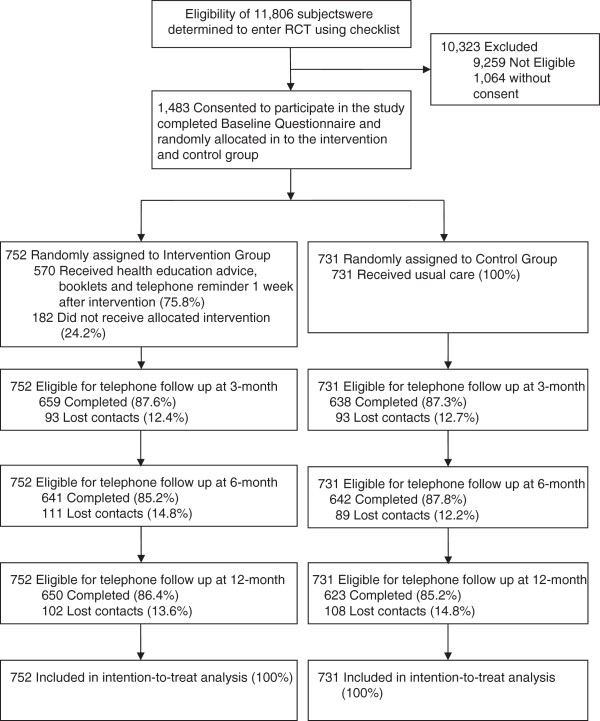
Methods: This was a randomised controlled trial and 1,483 non-smoking women, who were living with husbands who do smoke, were recruited when they accompanied with their sick children on hospital admission in general paediatic wards/outpatient departments of four hospitals in Hong Kong. The women were randomly allocated into intervention and control groups. The former received brief health education counselling from nurses, a purpose-designed health education booklet, a "no smoking" sticker, and a telephone reminder one week later; the control group received usual care. The primary outcome was the women"s action to help their smoking husbands stop smoking at 3-, 6- and 12-month follow-ups.
Results: A higher proportion of women in the intervention than the control group had taken action to help their husbands stop smoking at the 3-month (76% vs. 65%, P < .001), 6-month (66% vs. 49%, P < .001) and 12-month (52% vs. 40%, P < .001) follow-ups. Women who had received the intervention, had better knowledge of the health hazards of smoking, higher intention to take action, perceived their husbands' willingness to stop/reduce smoking, had previously advised their husbands to give up smoking, were aware of their husbands' history of smoking and, were aware that their husbands had made an earlier quit attempt and intended to help them stop smoking at the follow-ups.
Conclusions: A brief health education intervention by nurses in paediatric settings can be effective in motivating the mothers of sick children to take action to help their husbands quit smoking. We recommend adding the following to the clinical practice guidelines on treating tobacco use and dependence: 'Nurses should offer every non-smoking mother of a sick child brief advice to encourage their husbands to stop smoking'.
Trial registration: Current Controlled Trials ISRCTN72290421.
Figures
References
-
- Westmaas JL, Wild TC, Ferrence R. Effects of gender in social control of smoking cessation. Health Psychol. 2002;21:368–376. - PubMed
Publication types
MeSH terms
Associated data
LinkOut - more resources
Full Text Sources
Other Literature Sources
Medical
