


Relationship between red cell storage duration and outcomes in adults receiving red cell transfusions: a systematic review
- PMID: 23566599
- PMCID: PMC3672637
- DOI: 10.1186/cc12600
Relationship between red cell storage duration and outcomes in adults receiving red cell transfusions: a systematic review
Abstract
Introduction: The duration of red blood cell (RBC) storage before transfusion may alter RBC function and supernatant and, therefore, influence the incidence of complications or even mortality.
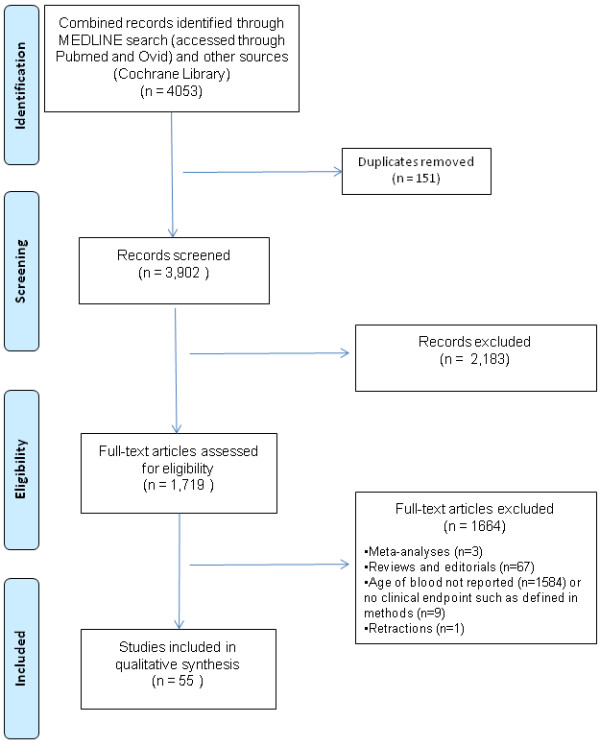
Methods: A MEDLINE search from 1983 to December 2012 was performed to identify studies reporting age of transfused RBCs and mortality or morbidity in adult patients.
Results: Fifty-five studies were identified; most were single-center (93%) and retrospective (64%), with only a few, small randomized studies (eight studies, 14.5%). The numbers of subjects included ranged from eight to 364,037. Morbidity outcomes included hospital and intensive care unit (ICU) length of stay (LOS), infections, multiple organ failure, microcirculatory alterations, cancer recurrence, thrombosis, bleeding, vasospasm after subarachnoid hemorrhage, and cognitive dysfunction. Overall, half of the studies showed no deleterious effects of aged compared to fresh blood on any endpoint. Eleven of twenty-two (50%) studies reported no increased mortality, three of nine (33%) showed no increased LOS with older RBCs and eight of twelve (66%) studies showed no increased risks of organ failure. Ten of eighteen (55%) studies showed increased infections with transfusion of older RBCs. The considerable heterogeneity among studies and numerous methodological flaws precluded a formal meta-analysis.
Conclusions: In this systematic review, we could find no definitive argument to support the superiority of fresh over older RBCs for transfusion.
References
Publication types
MeSH terms
LinkOut - more resources
Full Text Sources
Other Literature Sources
