


Majority of differentially expressed genes are down-regulated during malignant transformation in a four-stage model
- PMID: 23569271
- PMCID: PMC3637701
- DOI: 10.1073/pnas.1216436110
Majority of differentially expressed genes are down-regulated during malignant transformation in a four-stage model
Erratum in
-
Correction to Supporting Information for Danielsson et al., Majority of differentially expressed genes are down-regulated during malignant transformation in a four-stage model.Proc Natl Acad Sci U S A. 2015 Dec 22;112(51):E7158. doi: 10.1073/pnas.1522746112. Epub 2015 Dec 14. Proc Natl Acad Sci U S A. 2015. PMID: 26668388 Free PMC article. No abstract available.
Abstract
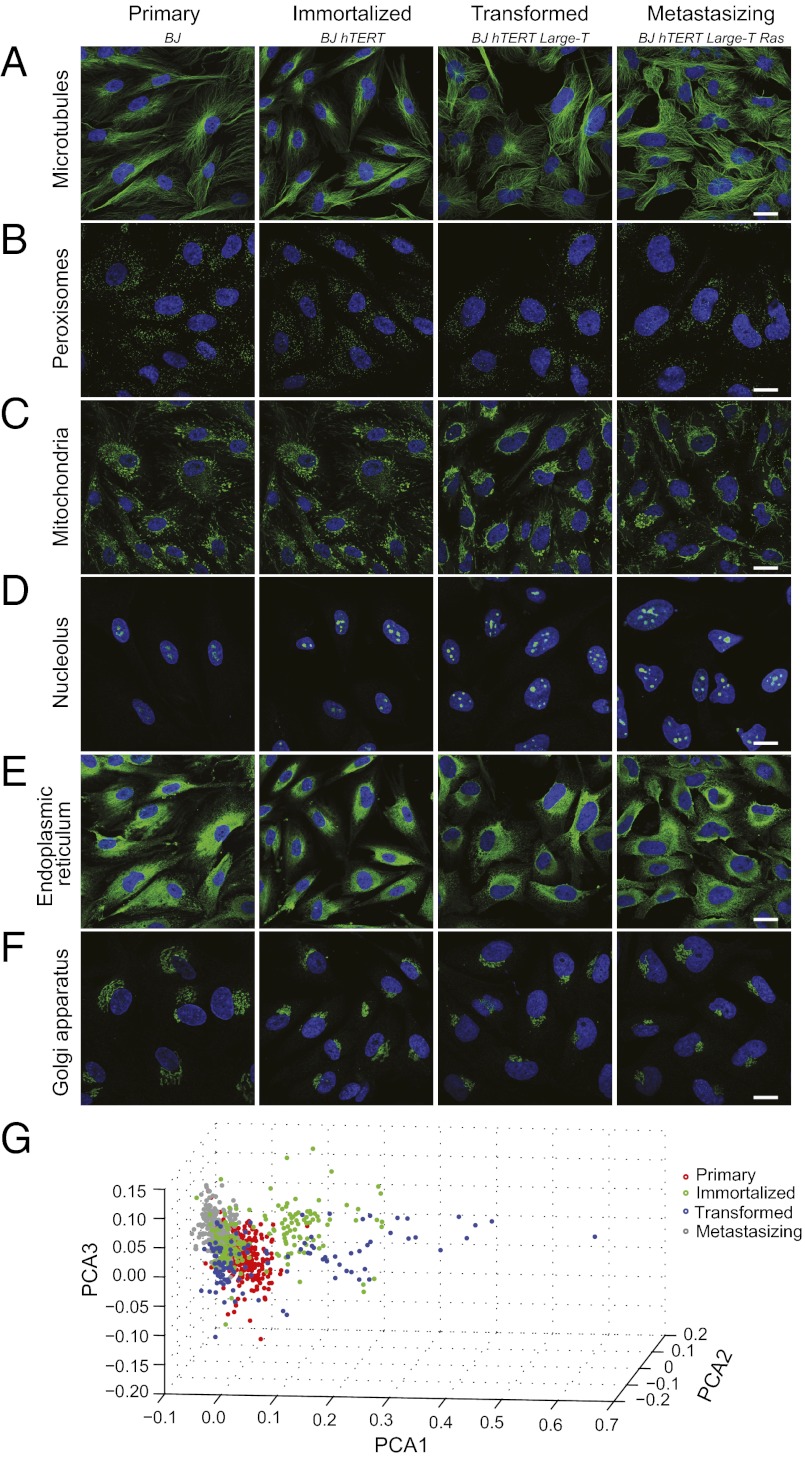
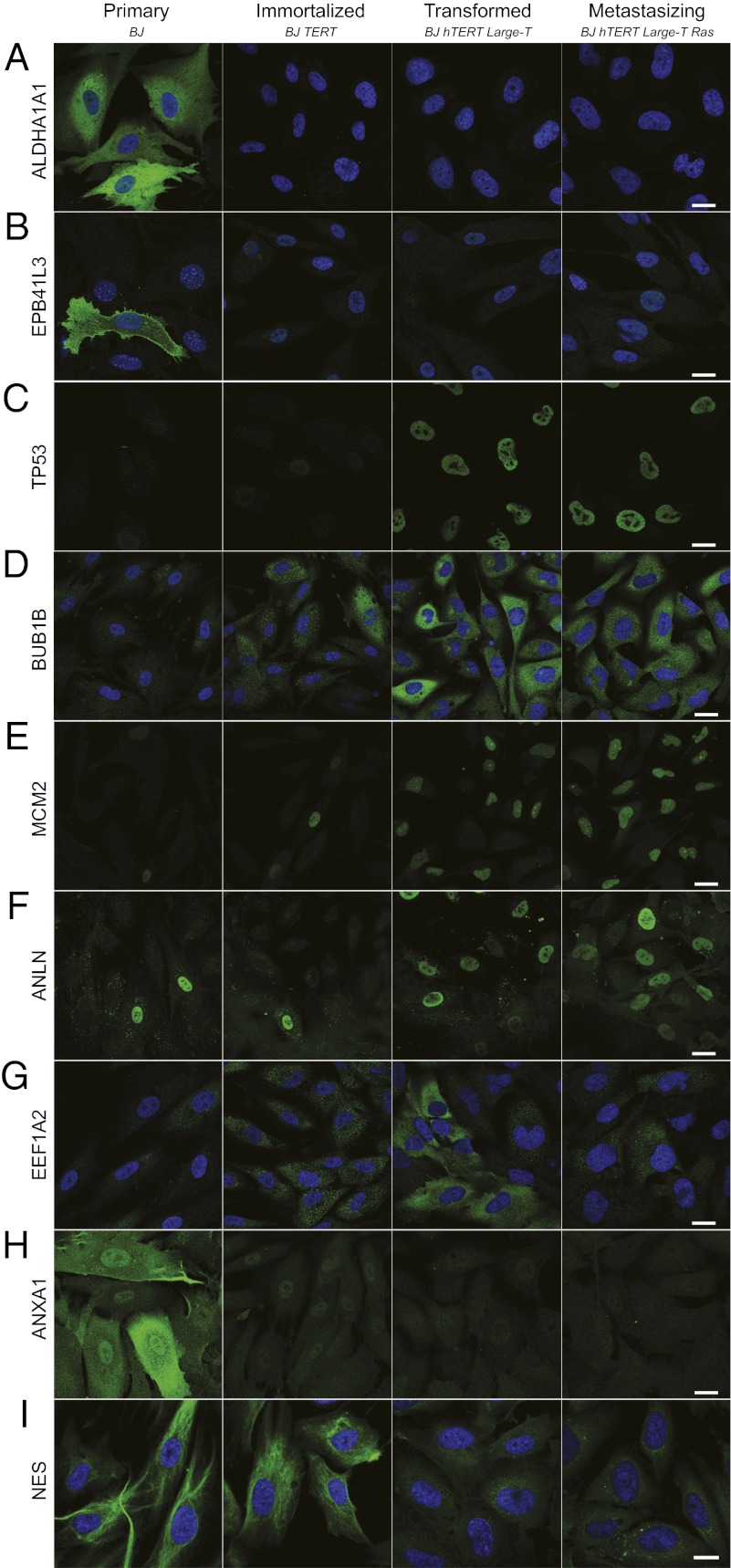
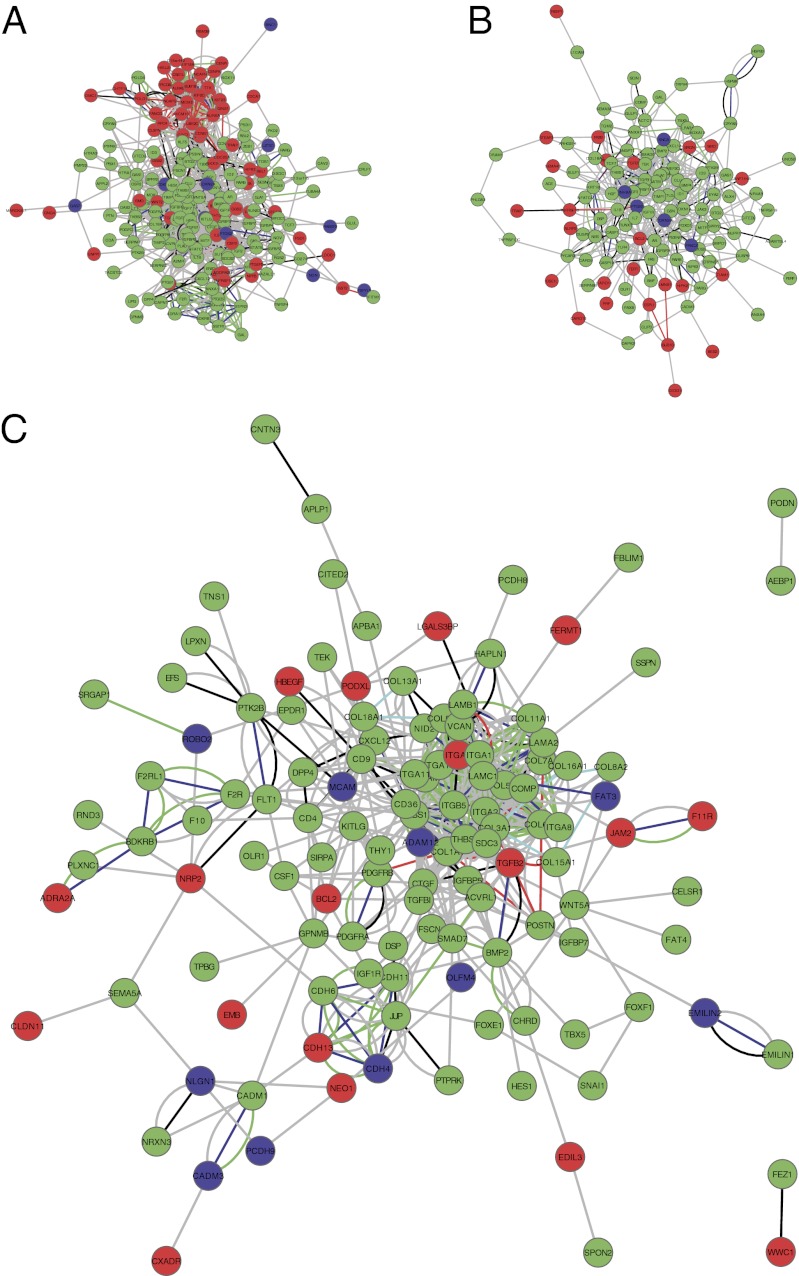
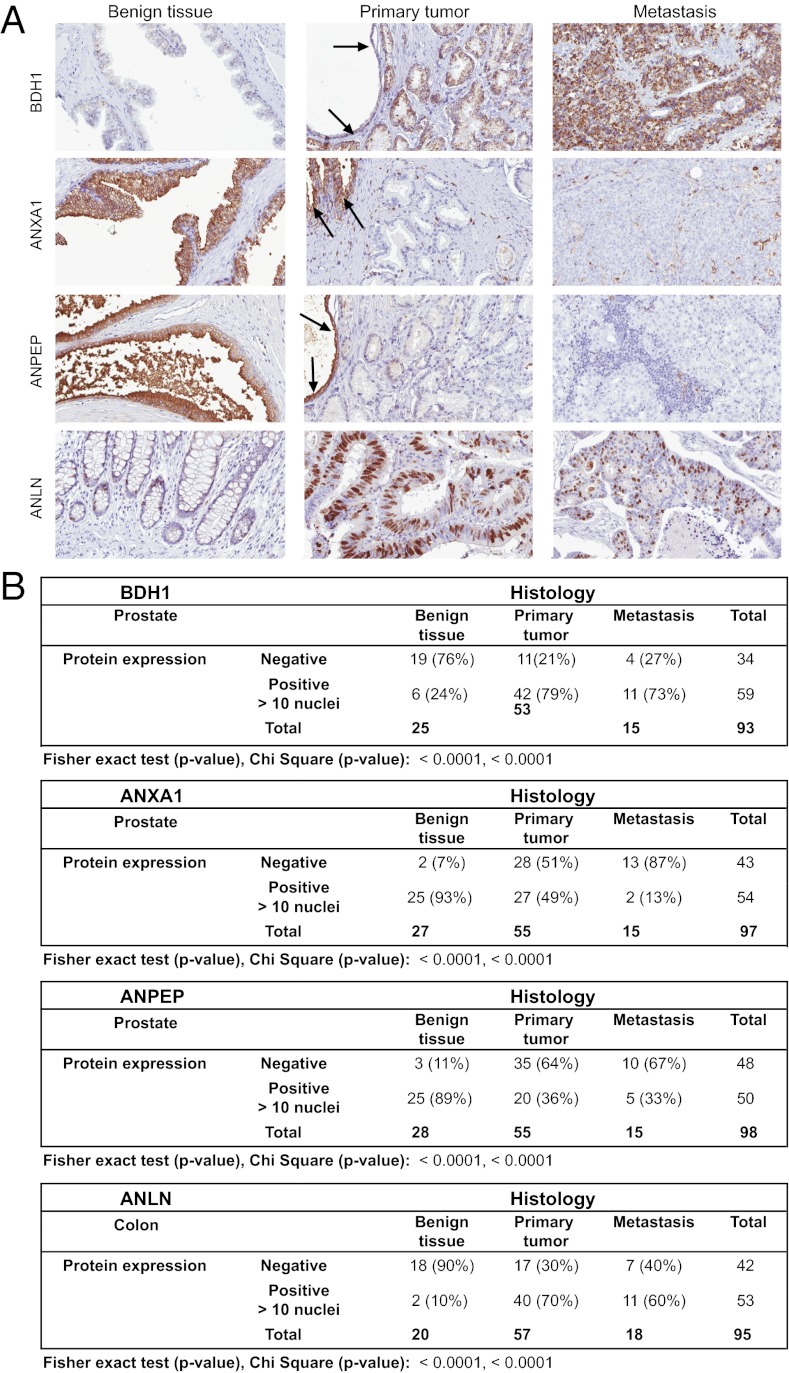
The transformation of normal cells to malignant, metastatic tumor cells is a multistep process caused by the sequential acquirement of genetic changes. To identify these changes, we compared the transcriptomes and levels and distribution of proteins in a four-stage cell model of isogenically matched normal, immortalized, transformed, and metastatic human cells, using deep transcriptome sequencing and immunofluorescence microscopy. The data show that ∼6% (n = 1,357) of the human protein-coding genes are differentially expressed across the stages in the model. Interestingly, the majority of these genes are down-regulated, linking malignant transformation to dedifferentiation. The up-regulated genes are mainly components that control cellular proliferation, whereas the down-regulated genes consist of proteins exposed on or secreted from the cell surface. As many of the identified gene products control basic cellular functions that are defective in cancers, the data provide candidates for follow-up studies to investigate their functional roles in tumor formation. When we further compared the expression levels of four of the identified proteins in clinical cancer cohorts, similar differences were observed between benign and cancer cells, as in the cell model. This shows that this comprehensive demonstration of the molecular changes underlying malignant transformation is a relevant model to study the process of tumor formation.
Conflict of interest statement
The authors declare no conflict of interest.
Figures

References
-
- Fearon ER, Vogelstein B. A genetic model for colorectal tumorigenesis. Cell. 1990;61(5):759–767. - PubMed
-
- Land H, Parada LF, Weinberg RA. Cellular oncogenes and multistep carcinogenesis. Science. 1983;222(4625):771–778. - PubMed
-
- Hanahan D, Weinberg RA. The hallmarks of cancer. Cell. 2000;100(1):57–70. - PubMed
-
- Hanahan D, Weinberg RA. Hallmarks of cancer: The next generation. Cell. 2011;144(5):646–674. - PubMed
Publication types
MeSH terms
Substances
LinkOut - more resources
Full Text Sources
Other Literature Sources
Research Materials
