


Dietary sources of lutein and zeaxanthin carotenoids and their role in eye health
- PMID: 23571649
- PMCID: PMC3705341
- DOI: 10.3390/nu5041169
Dietary sources of lutein and zeaxanthin carotenoids and their role in eye health
Abstract
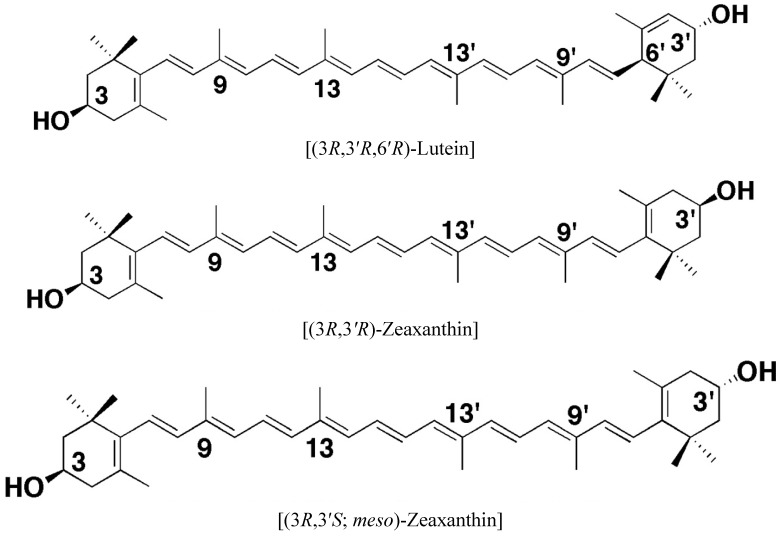
The eye is a major sensory organ that requires special care for a healthy and productive lifestyle. Numerous studies have identified lutein and zeaxanthin to be essential components for eye health. Lutein and zeaxanthin are carotenoid pigments that impart yellow or orange color to various common foods such as cantaloupe, pasta, corn, carrots, orange/yellow peppers, fish, salmon and eggs. Their role in human health, in particular the health of the eye, is well established from epidemiological, clinical and interventional studies. They constitute the main pigments found in the yellow spot of the human retina which protect the macula from damage by blue light, improve visual acuity and scavenge harmful reactive oxygen species. They have also been linked with reduced risk of age-related macular degeneration (AMD) and cataracts. Research over the past decade has focused on the development of carotenoid-rich foods to boost their intake especially in the elderly population. The aim of this article is to review recent scientific evidences supporting the benefits of lutein and zexanthin in preventing the onset of two major age-related eye diseases with diets rich in these carotenoids. The review also lists major dietary sources of lutein and zeaxanthin and refers to newly developed foods, daily intake, bioavailability and physiological effects in relation to eye health. Examples of the newly developed high-lutein functional foods are also underlined.
Figures
References
-
- World Health Organization. Global data on visual impairments, 2012. [(accessed on 17 October 2012)]. Available online: http://www.WHO.int/blindness/GLOBALDATAFINALforweb.pdf.
-
- Mogk L. The differences between wet and dry age-related macular degeneration, 2013. [(accessed on 7 March 2013)]. Available online: http://www.visionaware.org/section.aspx?FolderID=6&SectionID=134&Documen....
Publication types
MeSH terms
Substances
LinkOut - more resources
Full Text Sources
Other Literature Sources
Medical
Miscellaneous
