


Deficiency of ATP-binding cassette transporters A1 and G1 in macrophages increases inflammation and accelerates atherosclerosis in mice
- PMID: 23572498
- PMCID: PMC3839866
- DOI: 10.1161/CIRCRESAHA.113.301086
Deficiency of ATP-binding cassette transporters A1 and G1 in macrophages increases inflammation and accelerates atherosclerosis in mice
Abstract
Rationale: Plasma high-density lipoprotein levels are inversely correlated with atherosclerosis. Although it is widely assumed that this is attributable to the ability of high-density lipoprotein to promote cholesterol efflux from macrophage foam cells, direct experimental support for this hypothesis is lacking.
Objective: To assess the role of macrophage cholesterol efflux pathways in atherogenesis.
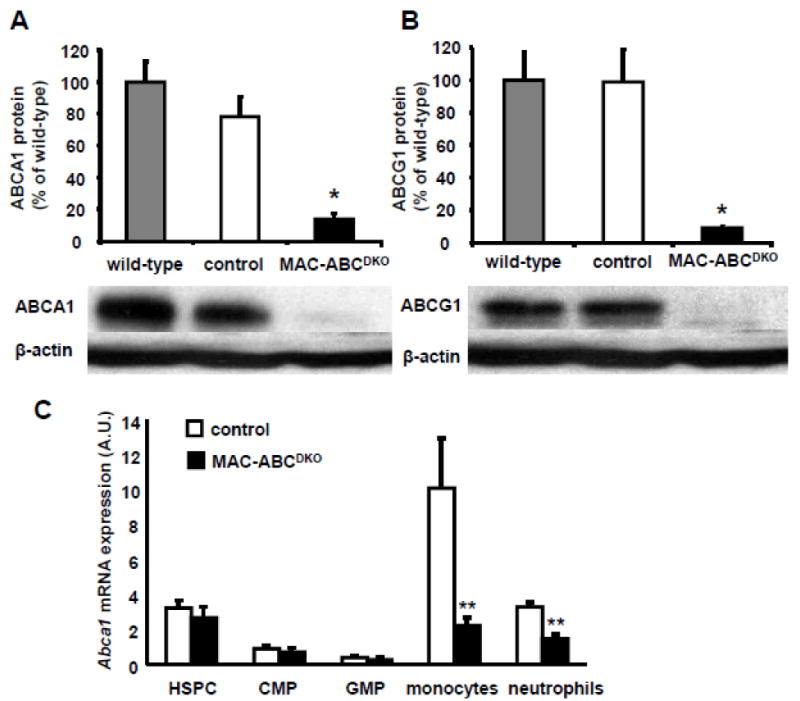
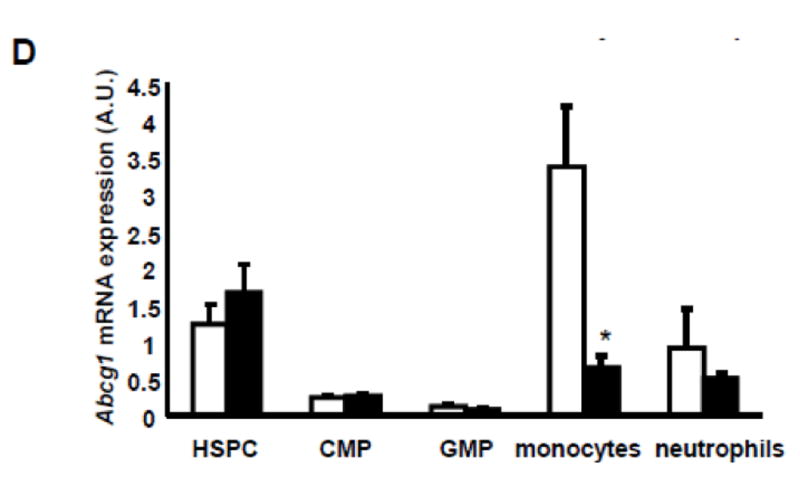
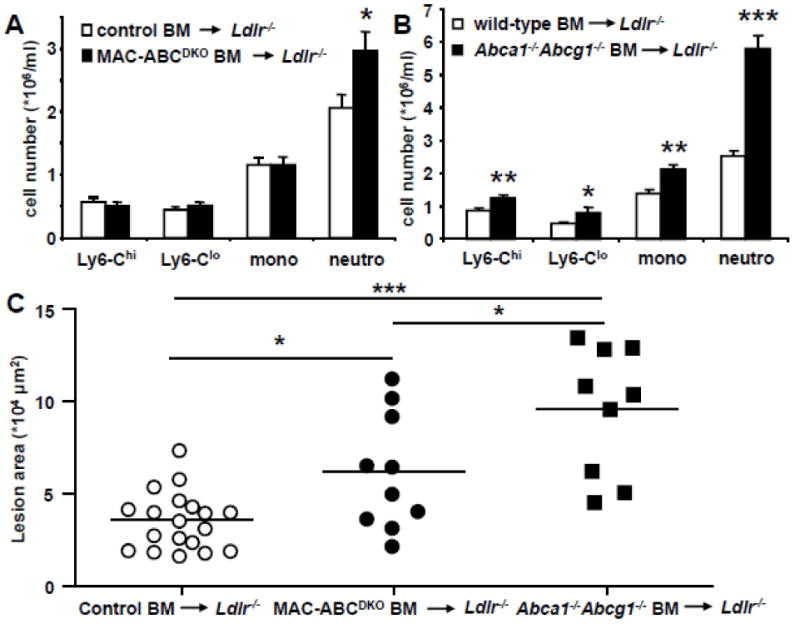
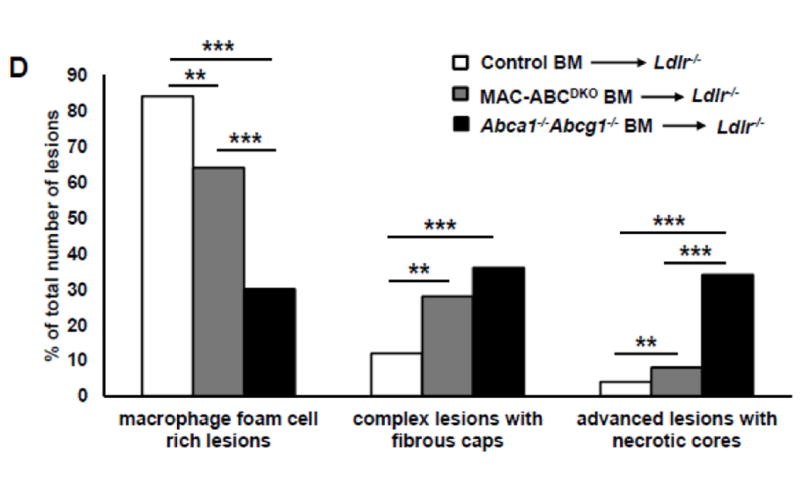
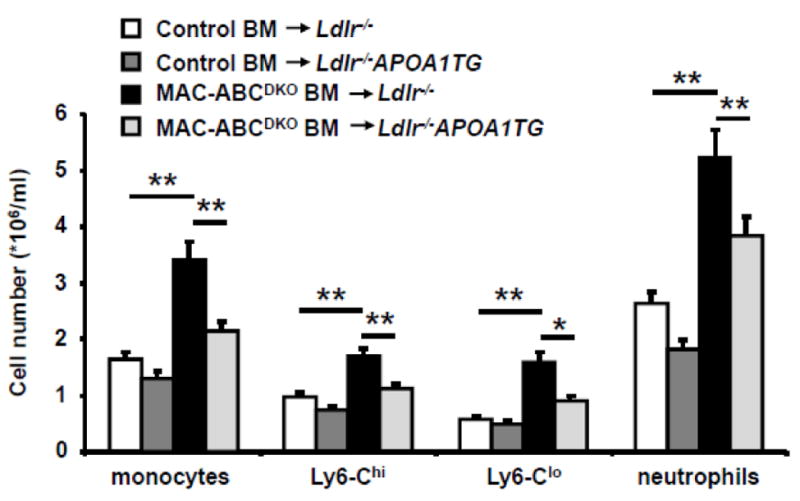
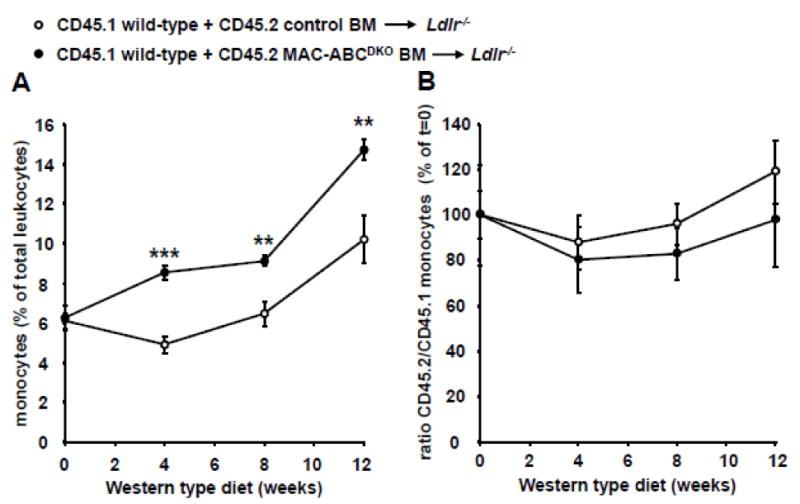
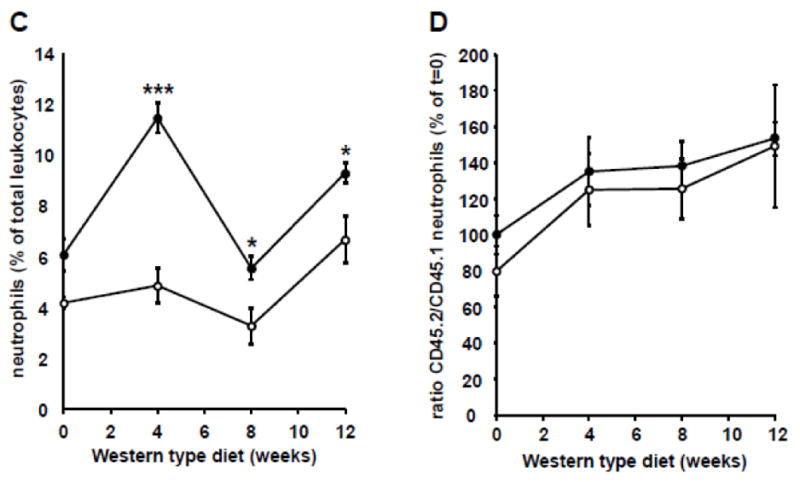
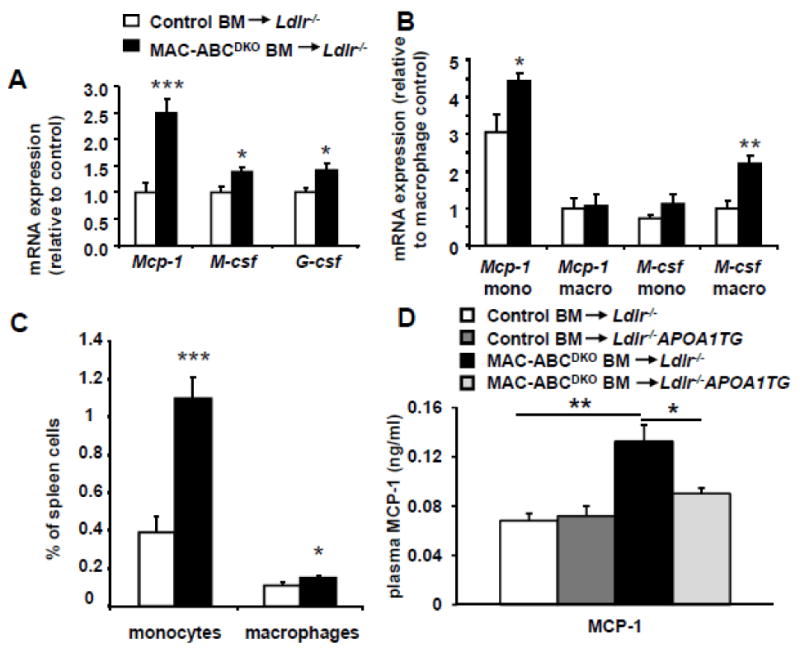
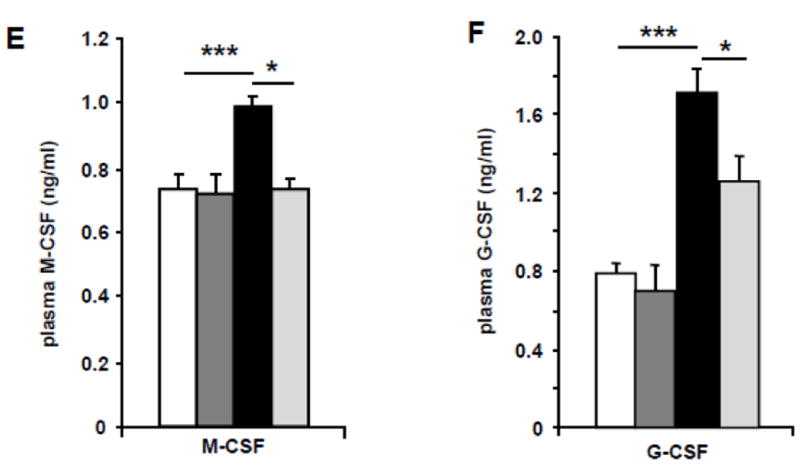
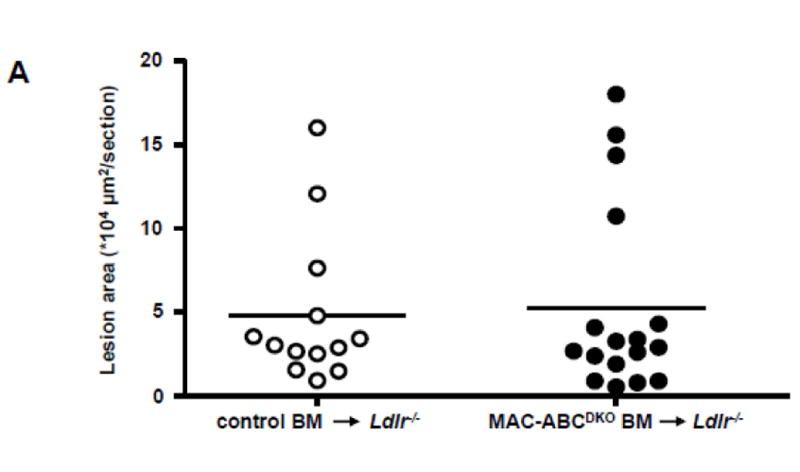
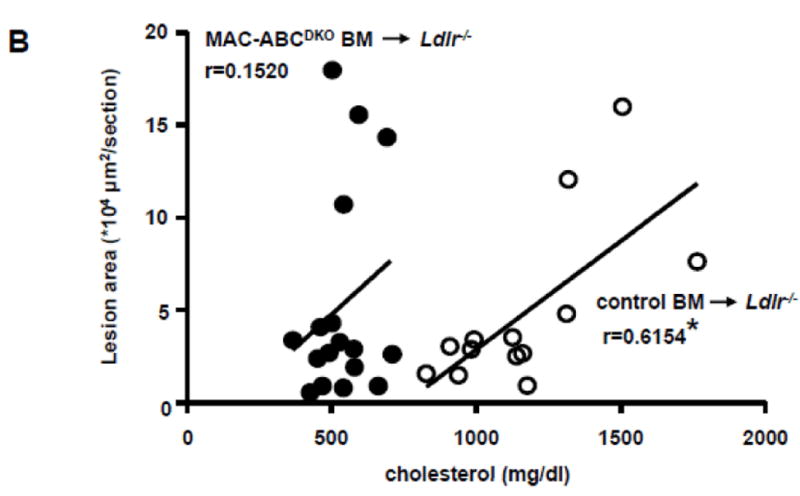
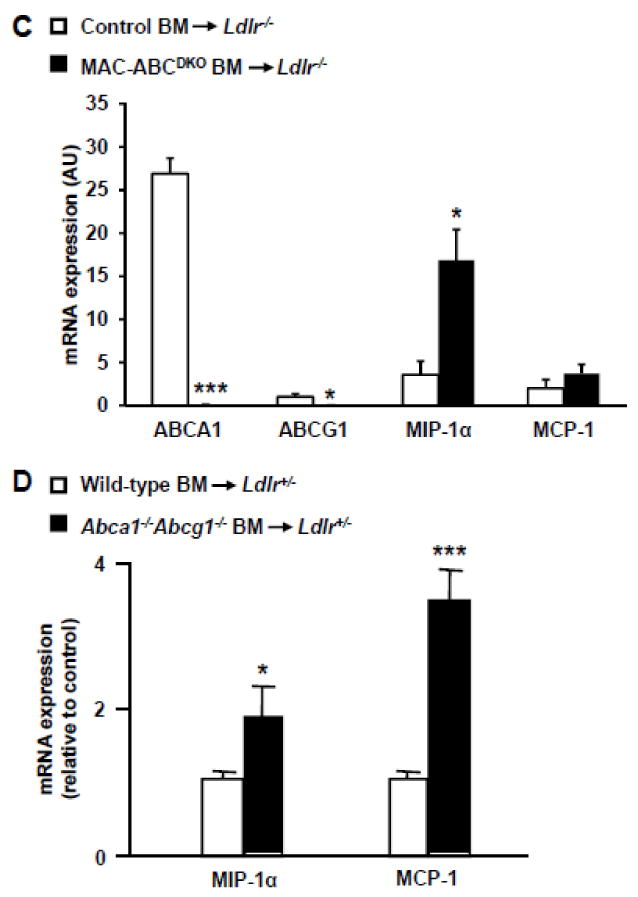
Methods and results: We developed mice with efficient deletion of the ATP-binding cassette transporters A1 and G1 (ABCA1 and ABCG1) in macrophages (MAC-ABC(DKO) mice) but not in hematopoietic stem or progenitor populations. MAC-ABC(DKO) bone marrow (BM) was transplanted into Ldlr(-/-) recipients. On the chow diet, these mice had similar plasma cholesterol and blood monocyte levels but increased atherosclerosis compared with controls. On the Western-type diet, MAC-ABC(DKO) BM-transplanted Ldlr(-/-) mice had disproportionate atherosclerosis, considering they also had lower very low-density lipoprotein/low-density lipoprotein cholesterol levels than controls. ABCA1/G1-deficient macrophages in lesions showed increased inflammatory gene expression. Unexpectedly, Western-type diet-fed MAC-ABC(DKO) BM-transplanted Ldlr(-/-) mice displayed monocytosis and neutrophilia in the absence of hematopoietic stem and multipotential progenitor cells proliferation. Mechanistic studies revealed increased expressions of machrophage colony stimulating factor and granulocyte colony stimulating factor in splenic macrophage foam cells, driving BM monocyte and neutrophil production.
Conclusions: These studies show that macrophage deficiency of ABCA1/G1 is proatherogenic likely by promoting plaque inflammation and uncover a novel positive feedback loop in which cholesterol-laden splenic macrophages signal BM progenitors to produce monocytes, with suppression by macrophage cholesterol efflux pathways.
Keywords: atherosclerosis; high-density lipoprotein; inflammation; macrophages; monocytes.
Figures
References
-
- Gordon T, Castelli WP, Hjortland MC, Kannel WB, Dawber TR. High density lipoprotein as a protective factor against coronary heart disease. The framingham study. Am J Med. 1977;62:707–714. - PubMed
-
- Barter PJ, Caulfield M, Eriksson M, Grundy SM, Kastelein JJ, Komajda M, Lopez-Sendon J, Mosca L, Tardif JC, Waters DD, Shear CL, Revkin JH, Buhr KA, Fisher MR, Tall AR, Brewer B, Investigators I. Effects of torcetrapib in patients at high risk for coronary events. N Engl J Med. 2007;357:2109–2122. - PubMed
-
- Investigators AH, Boden WE, Probstfield JL, Anderson T, Chaitman BR, Desvignes-Nickens P, Koprowicz K, McBride R, Teo K, Weintraub W. Niacin in patients with low hdl cholesterol levels receiving intensive statin therapy. N Engl J Med. 2011;365:2255–2267. - PubMed
-
- Tardif JC, Gregoire J, L’Allier PL, Ibrahim R, Lesperance J, Heinonen TM, Kouz S, Berry C, Basser R, Lavoie MA, Guertin MC, Rodes-Cabau J. Effect of r HDLoA-S, Efficacy I. Effects of reconstituted high-density lipoprotein infusions on coronary atherosclerosis: A randomized controlled trial. JAMA. 2007;297:1675–1682. - PubMed
Publication types
MeSH terms
Substances
Grants and funding
LinkOut - more resources
Full Text Sources
Other Literature Sources
Medical
Molecular Biology Databases
