


Telling lies: the irrepressible truth?
- PMID: 23573277
- PMCID: PMC3616109
- DOI: 10.1371/journal.pone.0060713
Telling lies: the irrepressible truth?
Abstract
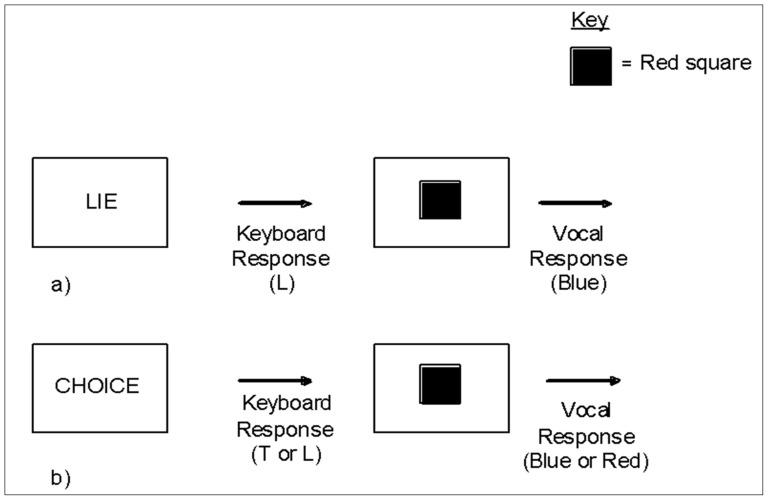
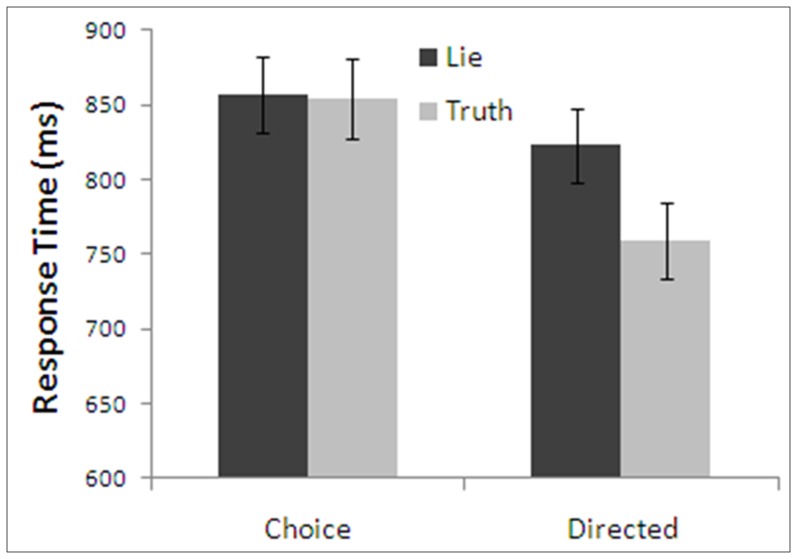
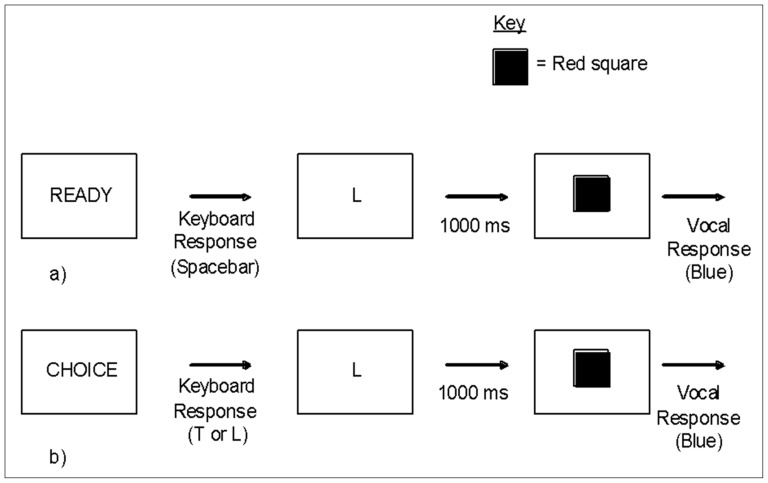
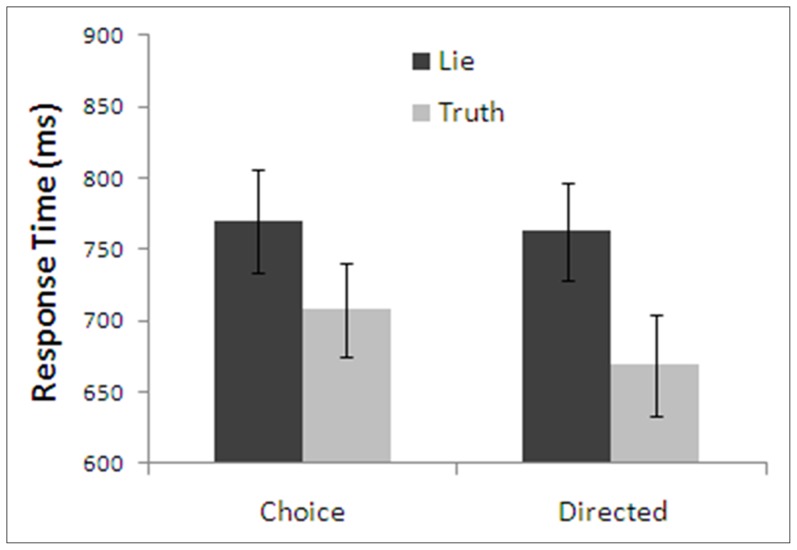
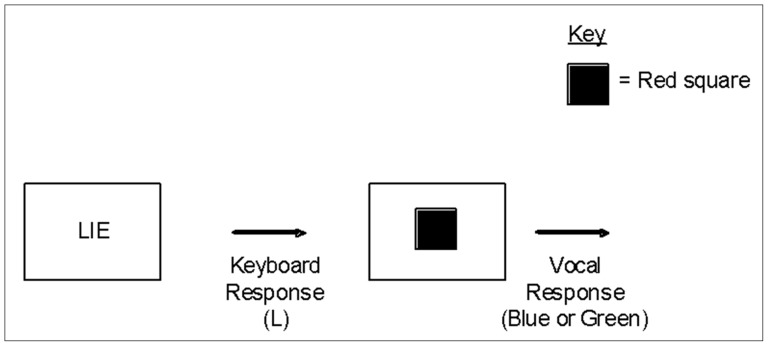
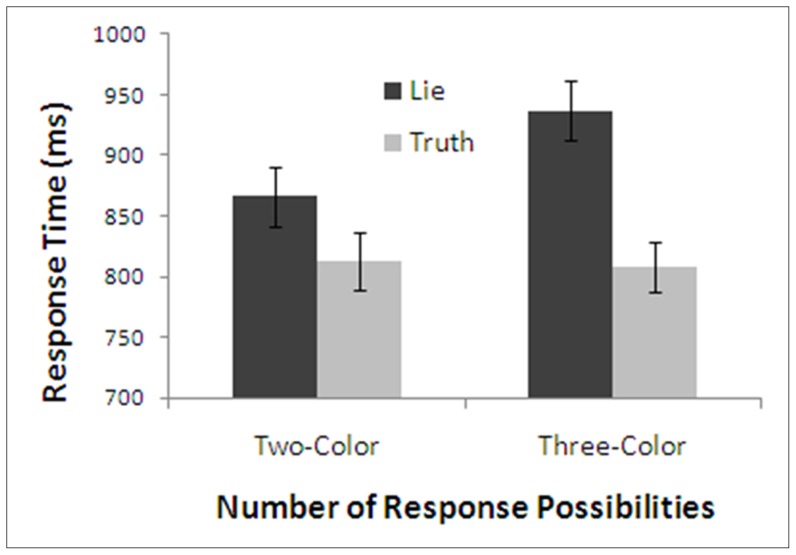
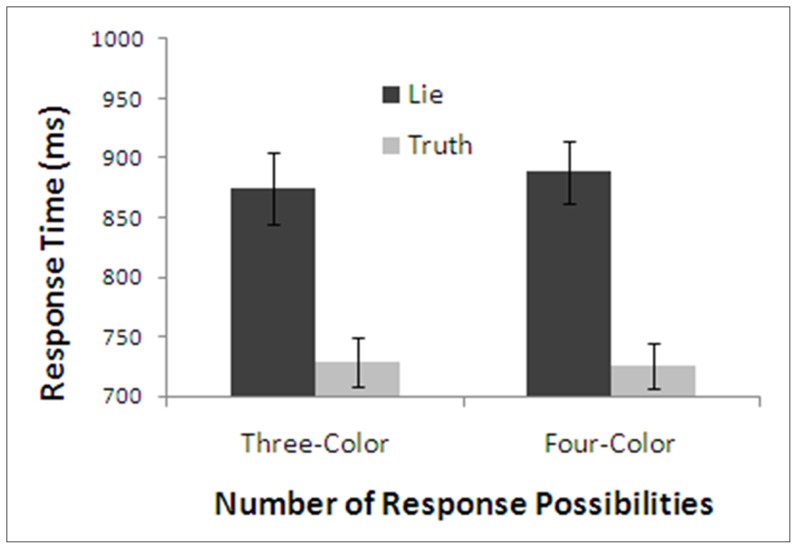
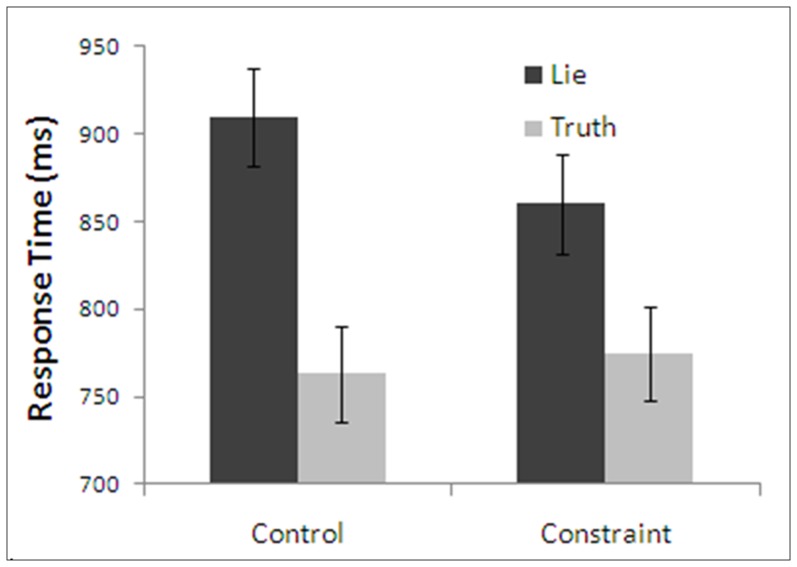
Telling a lie takes longer than telling the truth but precisely why remains uncertain. We investigated two processes suggested to increase response times, namely the decision to lie and the construction of a lie response. In Experiments 1 and 2, participants were directed or chose whether to lie or tell the truth. A colored square was presented and participants had to name either the true color of the square or lie about it by claiming it was a different color. In both experiments we found that there was a greater difference between lying and telling the truth when participants were directed to lie compared to when they chose to lie. In Experiments 3 and 4, we compared response times when participants had only one possible lie option to a choice of two or three possible options. There was a greater lying latency effect when questions involved more than one possible lie response. Experiment 5 examined response choice mechanisms through the manipulation of lie plausibility. Overall, results demonstrate several distinct mechanisms that contribute to additional processing requirements when individuals tell a lie.
Conflict of interest statement
Figures
References
-
- Walczyk JJ, Roper KS, Seemann E, Humphrey AM (2003) Cognitive mechanisms underlying lying to questions: Response time as a cue to deception. Applied Cognitive Psychology 17: 755–774.
-
- Serota KB, Levine TR, Boster FJ (2010) The prevalence of lying in America: Three studies of self-reported lies. Human Communication Research 36: 2–25.
-
- Cole T (2001) Lying to the one you love: The use of deception in romantic relationships. Journal of Social and Personal Relationships 18: 107–129.
-
- DePaulo BM, Kashy DA (1998) Everyday lies in close and casual relationships. Journal of Personality and Social Psychology 74: 63–79. - PubMed
-
- Seiter JS, Bruschke J, Bai C (2002) The acceptability of deception as a function of perceivers' culture, deceiver's intention, and deceiver-deceived relationship. Western Journal of Communication 66: 158–180.
Publication types
MeSH terms
LinkOut - more resources
Full Text Sources
Other Literature Sources
