


Autism and phthalate metabolite glucuronidation
- PMID: 23575644
- PMCID: PMC3797149
- DOI: 10.1007/s10803-013-1822-y
Autism and phthalate metabolite glucuronidation
Abstract
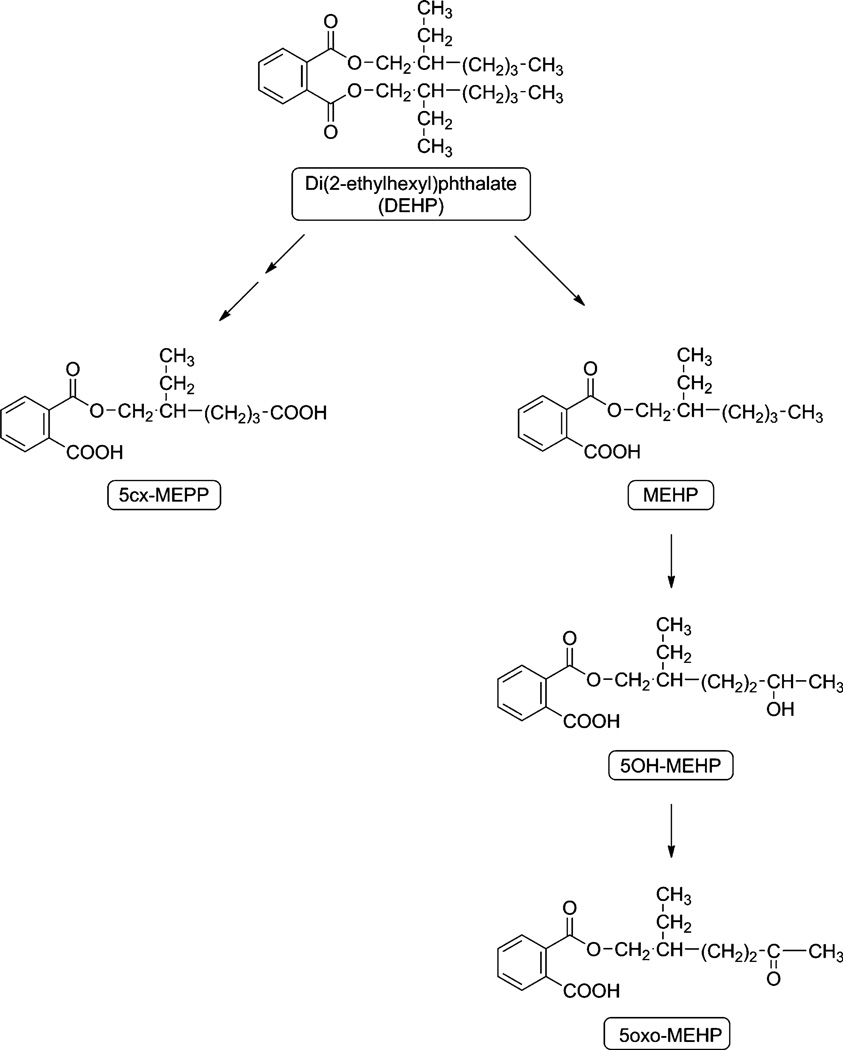
Exposure to environmental chemicals may precipitate autism spectrum disorders (ASD) in genetically susceptible children. Differences in the efficiency of the glucuronidation process may substantially modulate substrate concentrations and effects. To determine whether the efficiency of this pathway is compromised in children with ASD, we measured the efficiency of glucuronidation for a series of metabolites derived from the commonly used plasticizer, diethylhexyl phthalate. Spot urines were collected and analyzed for the fraction of each metabolite conjugated by isotope dilution-liquid chromatography mass spectrometry-mass spectrometry. The degree of glucuronidation was lower with the ASD group. The glucuronidation pathway may differ in some children with ASD.
Figures
References
-
- Alberti A, Pirrone P, Elia M, Waring RH, Romano C. Sulphation deficit in “low-functioning” autistic children: A pilot study. Biological Psychiatry. 1999;46:420–424. - PubMed
-
- Argikar UA, Iwuchukwu OF, Nagar S. Update on tools for evaluation of uridine diphosphoglucuronosyltransferase polymorphisms. Expert Opinion On Drug Metabolism & Toxicology. 2008;4:879–894. - PubMed
-
- Armstrong RN. Structure, catalytic mechanism and evolution of the glutathione transferase. Chemical Research in Toxicology. 1997;10:2–18. - PubMed
-
- Baio J, et al. Prevalence of autism spectrum disorders— autism and developmental disabilities monitoring network, 14 sites, United States, 2008 Surveillance summaries. Morbidity and Mortality Weekly Report (MMWR) 2012;61:1–19. - PubMed
MeSH terms
Substances
Grants and funding
LinkOut - more resources
Full Text Sources
Other Literature Sources
