


Has the rate of in-hospital infections after total joint arthroplasty decreased?
- PMID: 23575808
- PMCID: PMC3773128
- DOI: 10.1007/s11999-013-2949-z
Has the rate of in-hospital infections after total joint arthroplasty decreased?
Abstract
Background: Although infections are a major cause of morbidity and mortality after total joint arthroplasty (TJA), little is known about nationwide epidemiology and trends of infections after TJA.
Questions/purposes: We therefore determined (1) trends of postoperative pneumonia, urinary tract infection (UTI), surgical site infection (SSI), sepsis, and severe sepsis after TJA; (2) risk factors of these infections; (3) effect of these infections on length of stay (LOS) and hospital charges; and (4) the infection-related mortality rate and its predictors.
Methods: The International Classification of Diseases, 9th Revision codes were used to identify patients who underwent TJA and were diagnosed with aforementioned infections during hospitalization in the Nationwide Inpatient Sample database from 2002 to 2010. Multivariate analysis was performed to identify risk factors of these infections.
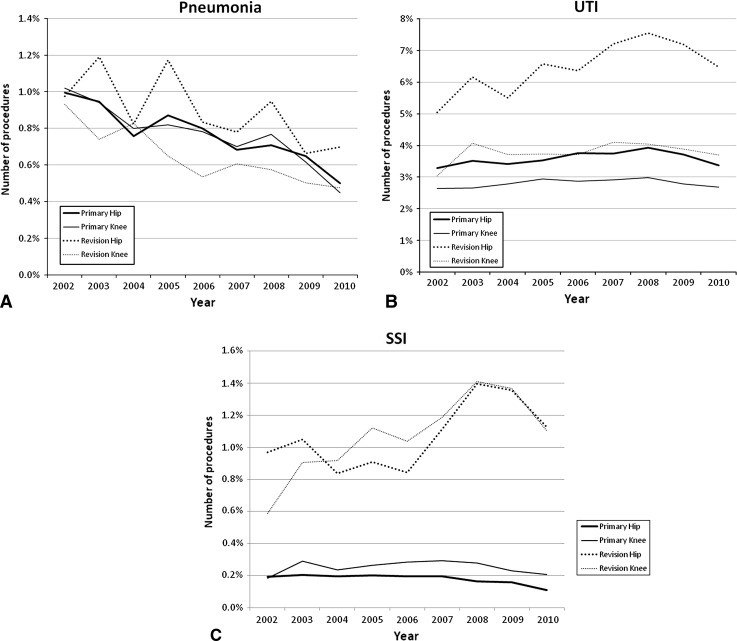
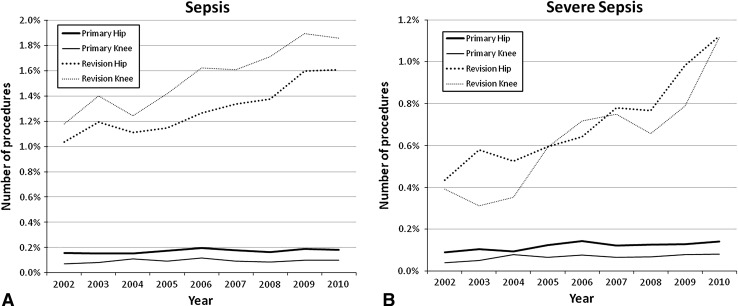
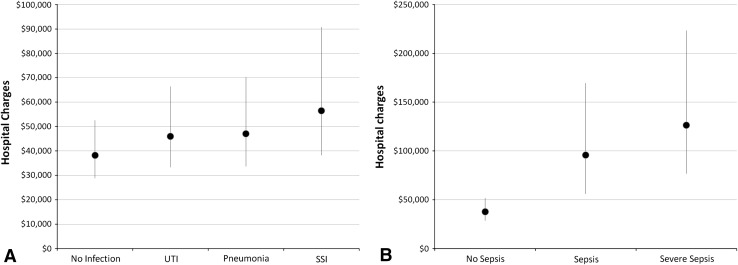
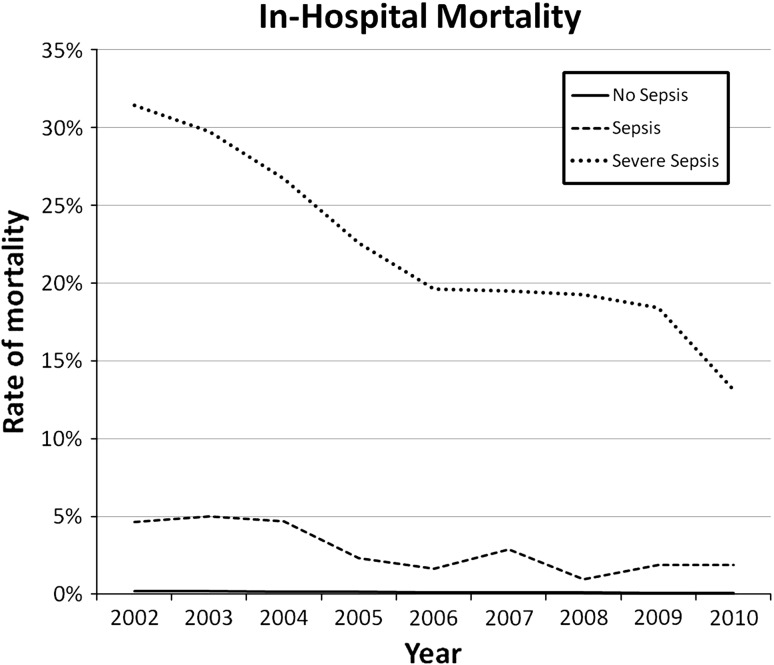
Results: Rates of pneumonia, UTI, SSI, sepsis, and severe sepsis were 0.74%, 3.26%, 0.31%, 0.25%, and 0.15%, respectively. Number of comorbidities and type of TJA were independent predictors of infection. Mortality decreased during the study period (odds ratio, 0.87; 95% confidence interval, 0.86-0.89). The median LOS was 3 days without complications but increased in the presence of SSI (median, 7 days), sepsis (median, 12 days), and severe sepsis (median, 15 days). Occurrence of pneumonia, sepsis, and severe sepsis increased risk of mortality 5.2, 8.5, and 66.2 times, respectively.
Conclusions: Rates of UTI, pneumonia, and SSI but not sepsis and severe sepsis are apparently decreasing. The likelihood of infection is increasing with number of comorbidities and revision surgeries. Rate of sepsis-related mortality is also decreasing.
Level of evidence: Level II, prognostic study. See Guidelines for Authors for a complete description of levels of evidence.
Figures
References
-
- Barnes CL. Overview: the health care burden and financial costs of surgical site infections. Am J Orthop (Belle Mead NJ). 2011;40:2–5. - PubMed
MeSH terms
LinkOut - more resources
Full Text Sources
Other Literature Sources
Medical
Research Materials
