


Circle of Willis Variants: Fetal PCA
- PMID: 23577277
- PMCID: PMC3618940
- DOI: 10.1155/2013/105937
Circle of Willis Variants: Fetal PCA
Abstract
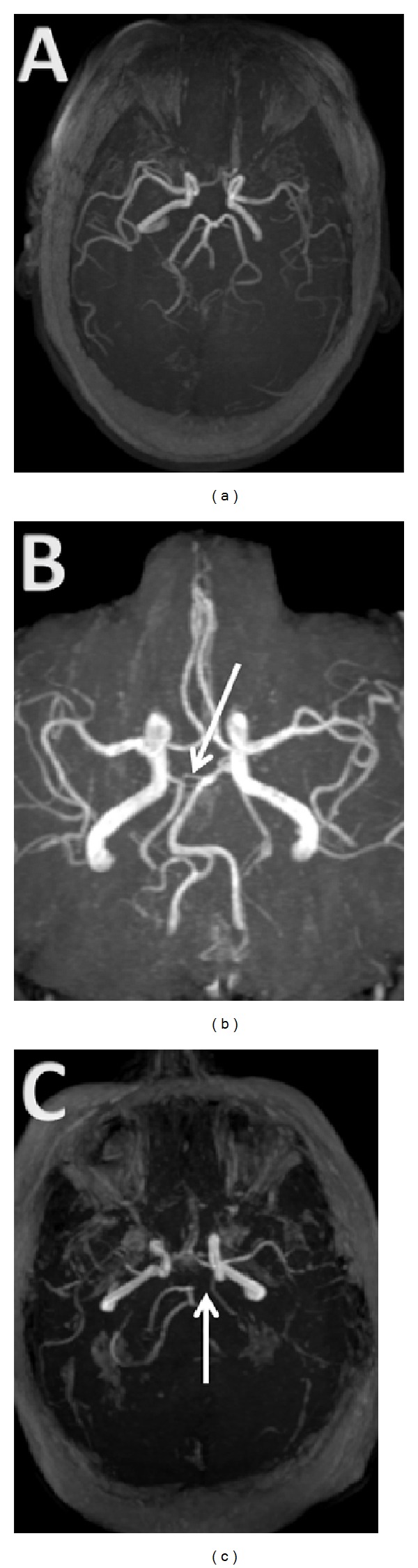
We sought to determine the prevalence of fetal posterior cerebral artery (fPCA) and if fPCA was associated with specific stroke etiology and vessel territory affected. This paper is a retrospective review of prospectively identified patients with acute ischemic stroke from July 2008 to December 2010. We defined complete fPCA as absence of a P1 segment linking the basilar with the PCA and partial fPCA as small segment linking the basilar with the PCA. Patients without intracranial vascular imaging were excluded. We compared patients with complete fPCA, partial fPCA, and without fPCA in terms of demographics, stroke severity, distribution, and etiology and factored in whether the stroke was ipsilateral to the fPCA. Of the 536 included patients, 9.5% (n = 51) had complete fPCA and 15.1% (n = 81) had partial fPCA. Patients with complete fPCA were older and more often female than partial fPCA and no fPCA patients, and significant variation in TOAST classification was detected across groups (P = 0.023). Patients with complete fPCA had less small vessel and more large vessel strokes than patients with no fPCA and partial fPCA. Fetal PCA may predispose to stroke mechanism, but is not associated with vascular distribution, stroke severity, or early outcome.
Figures
References
-
- van Raamt AF, Mali WP, van Laar PJ, van der Graaf Y. The fetal variant of the circle of Willis and its influence on the cerebral collateral circulation. Cerebrovascular Diseases. 2006;22(4):217–224. - PubMed
-
- Liebeskind DS. Collateral circulation. Stroke. 2003;34:2279–2284. - PubMed
-
- Kameyama M, Okinaka SH. Collateral circulation of the brain with special reference to atherosclerosis of the major cervial and cerebral arteries. Neurology. 1963;13:279–286. - PubMed
-
- Battacharji SK, Hutchinson EC, Mccall AJ. The circle of willis—the incidence of developmental abnormalities in normal and infarcted brains. Brain. 1967;90(4):747–758. - PubMed
-
- de Monyé C, Dippel DWJ, Siepman TAM, Dijkshoorn ML, Tanghe HLJ, van der Lugt A. Is a fetal origin of the posterior cerebral artery a risk factor for TIA or ischemic stroke? A study with 16-multidetector-row CT angiography. Journal of Neurology. 2008;255(2):239–245. - PubMed
Grants and funding
LinkOut - more resources
Full Text Sources
Other Literature Sources
