


Sequencing of NOTCH1, GATA5, TGFBR1 and TGFBR2 genes in familial cases of bicuspid aortic valve
- PMID: 23578328
- PMCID: PMC3637327
- DOI: 10.1186/1471-2350-14-44
Sequencing of NOTCH1, GATA5, TGFBR1 and TGFBR2 genes in familial cases of bicuspid aortic valve
Abstract
Background: The purpose of our study was to investigate the potential contribution of germline mutations in NOTCH1, GATA5 and TGFBR1 and TGFBR2 genes in a cohort of Italian patients with familial Bicuspid Aortic Valve (BAV).
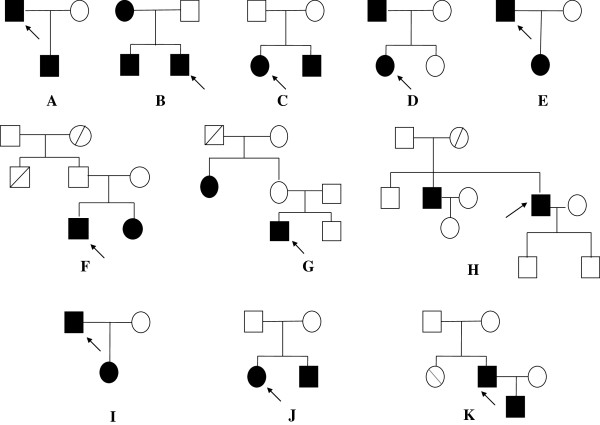
Methods: All the coding exons including adjacent intronic as well as 5' and 3' untranslated (UTR) sequences of NOTCH1, GATA5, TGFBR1 and TGFBR2 genes were screened by direct gene sequencing in 11 index patients (8 males; age = 42 ± 19 years) with familial BAV defined as two or more affected members.
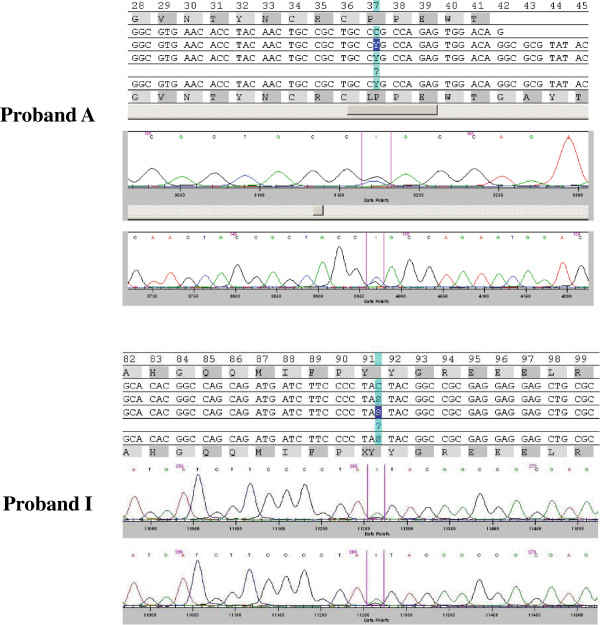
Results: Two novel mutations, a missense and a nonsense mutation (Exon 5, p.P284L; Exon 26, p.Y1619X), were found in the NOTCH1 gene in two unrelated families. The mutations segregated with the disease in these families, and they were not found on 200 unrelated chromosomes from ethnically matched controls. No pathogenetic mutation was identified in GATA5, TGFBR1 and TGFBR2 genes.
Conclusions: Two novel NOTCH1 mutations were identified in two Italian families with BAV, highlighting the role of a NOTCH1 signaling pathway in BAV and its aortic complications. These findings are of relevance for genetic counseling and clinical care of families presenting with BAV. Future studies are needed in order to unravel the still largely unknown genetics of BAV.
Figures
References
MeSH terms
Substances
LinkOut - more resources
Full Text Sources
Other Literature Sources
Medical
