


Time variability of C-reactive protein: implications for clinical risk stratification
- PMID: 23579782
- PMCID: PMC3620269
- DOI: 10.1371/journal.pone.0060759
Time variability of C-reactive protein: implications for clinical risk stratification
Abstract
Background: C-reactive protein (CRP) is proposed as a screening test for predicting risk and guiding preventive approaches in coronary artery disease (CAD). However, the stability of repeated CRP measurements over time in subjects with and without CAD is not well defined. We sought to determine the stability of serial CRP measurements in stable subjects with distinct CAD manifestations and a group without CAD while carefully controlling for known confounders.
Methods: We prospectively studied 4 groups of 25 stable subjects each 1) a history of recurrent acute coronary events; 2) a single myocardial infarction ≥7 years ago; 3) longstanding CAD (≥7 years) that had never been unstable; 4) no CAD. Fifteen measurements of CRP were obtained to cover 21 time-points: 3 times during one day; 5 consecutive days; 4 consecutive weeks; 4 consecutive months; and every 3 months over the year. CRP risk threshold was set at 2.0 mg/L. We estimated variance across time-points using standard descriptive statistics and Bayesian hierarchical models.
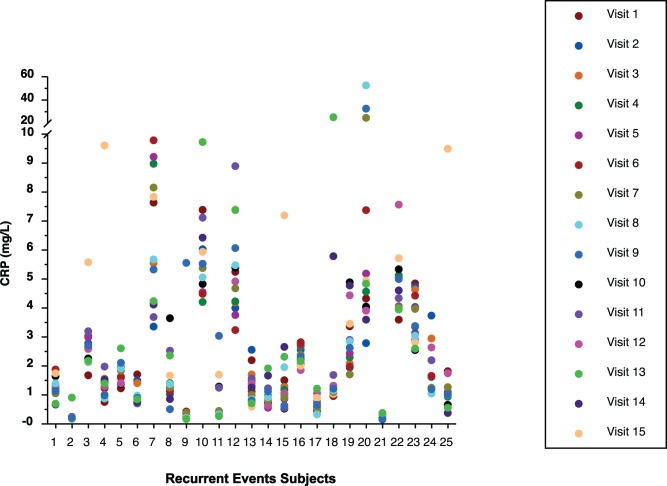
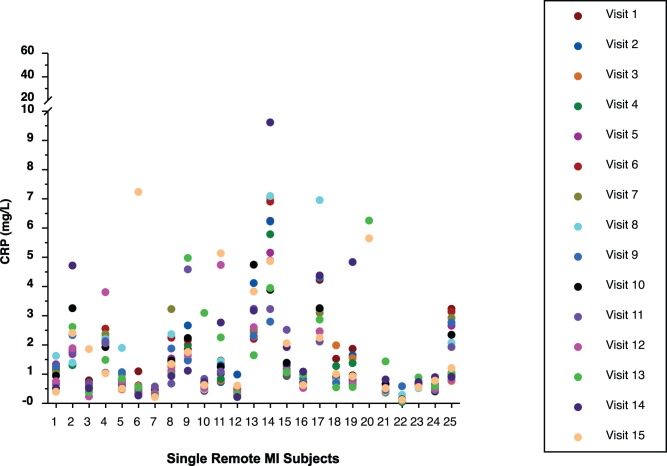
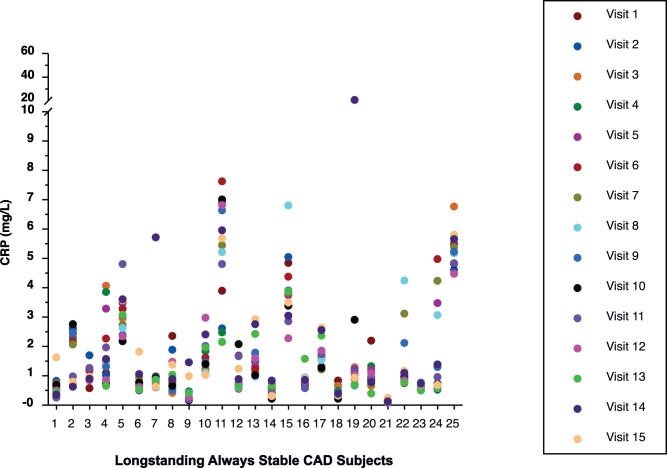
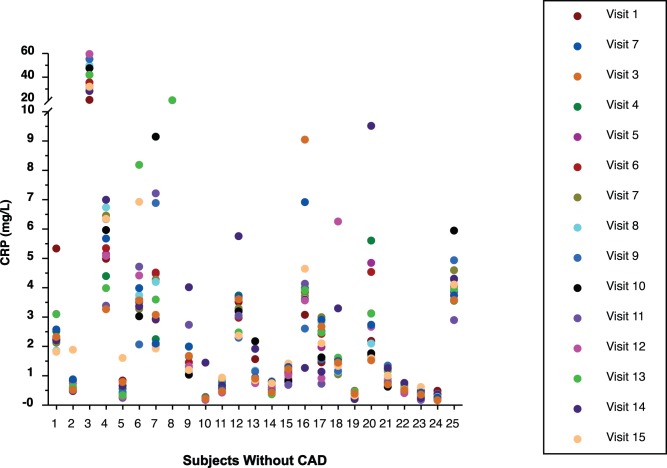
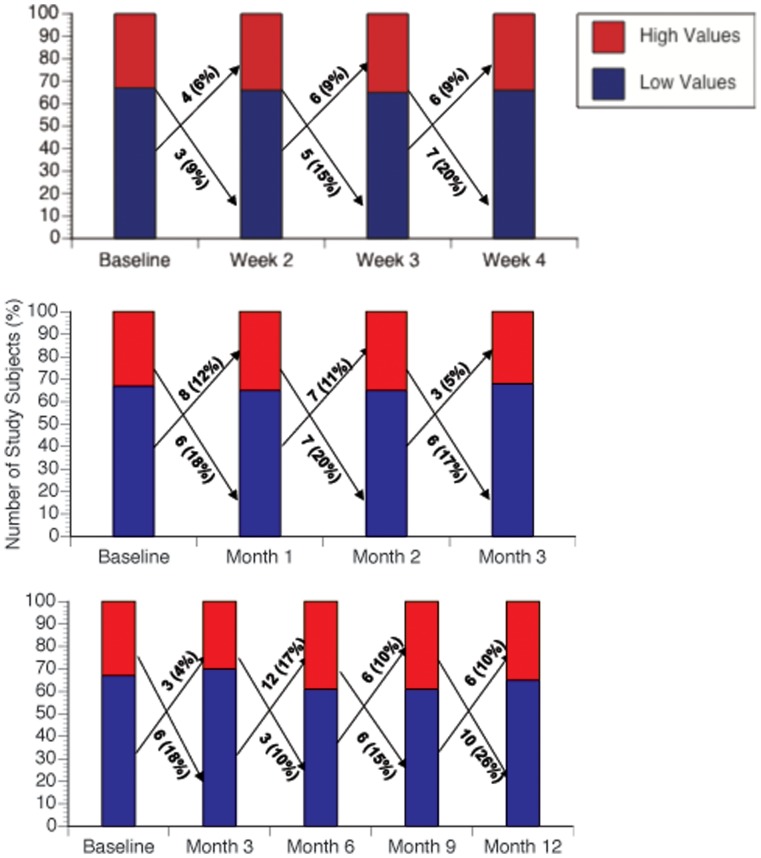
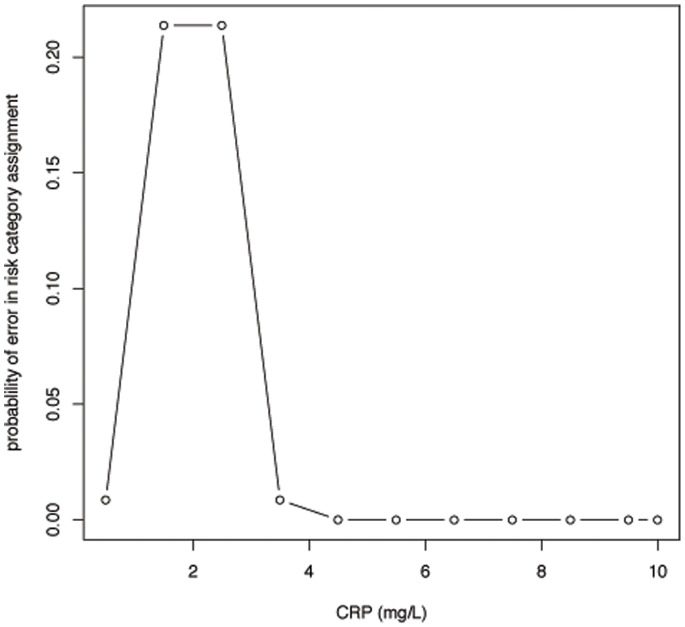
Results: Median CRP values of the 4 groups and their pattern of variability did not differ substantially so all subjects were analyzed together. The median individual standard deviation (SD) CRP values within-day, within-week, between-weeks and between-months were 0.07, 0.19, 0.36 and 0.63 mg/L, respectively. Forty-six percent of subjects changed CRP risk category at least once and 21% had ≥4 weekly and monthly CRP values in both low and high-risk categories.
Conclusions: Considering its large intra-individual variability, it may be problematic to rely on CRP values for CAD risk prediction and therapeutic decision-making in individual subjects.
Conflict of interest statement
Figures
References
-
- Ross R (1999) Atherosclerosis–an inflammatory disease. N Engl J Med 340: 115–126. - PubMed
-
- Libby P, Ridker PM, Maseri A (2002) Inflammation and atherosclerosis. Circulation 105: 1135–1143. - PubMed
-
- Ridker PM, Cushman M, Stampfer MJ, Tracy RP, Hennekens CH (1997) Inflammation, aspirin, and the risk of cardiovascular disease in apparently healthy men. N Engl J Med 336: 973–979. - PubMed
-
- Pai JK, Pischon T, Ma J, Manson JE, Hankinson SE, et al. (2004) Inflammatory markers and the risk of coronary heart disease in men and women. N Engl J Med 351: 2599–2610. - PubMed
Publication types
MeSH terms
Substances
Grants and funding
LinkOut - more resources
Full Text Sources
Other Literature Sources
Research Materials
Miscellaneous
