


Focus on: College drinking and related problems: magnitude and prevention of college drinking and related problems
- PMID: 23579935
- PMCID: PMC3887494
Focus on: College drinking and related problems: magnitude and prevention of college drinking and related problems
Abstract
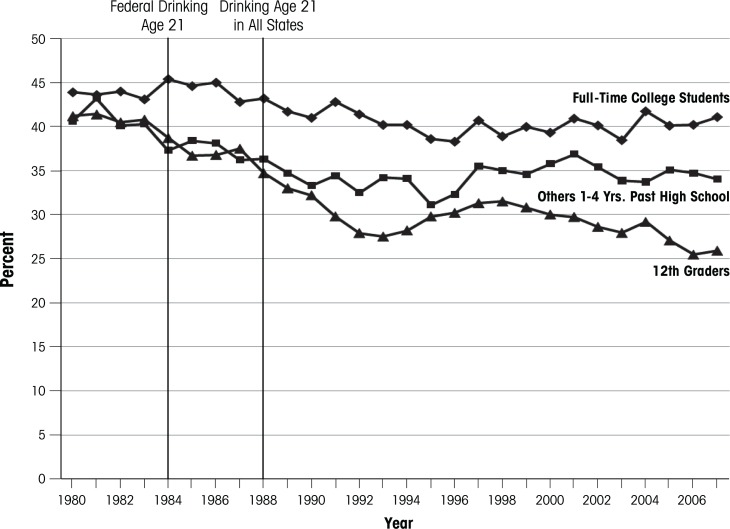
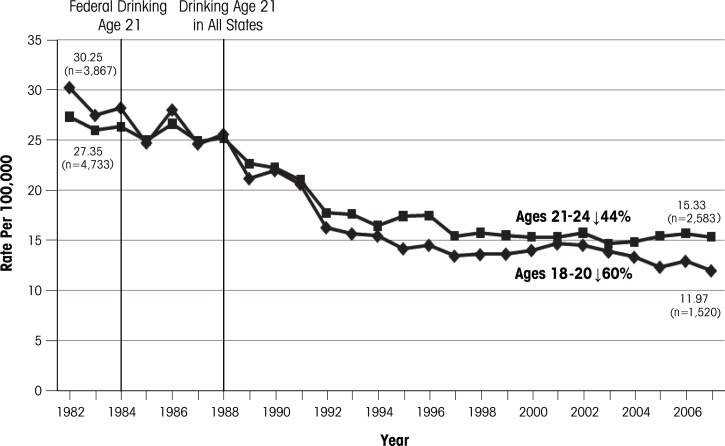
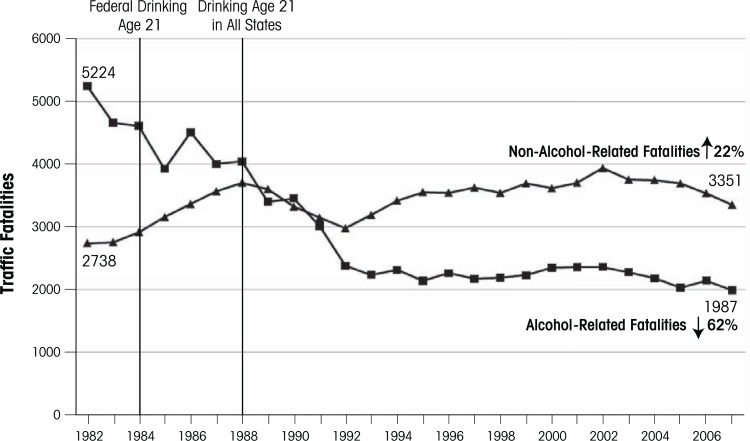
In 2002, the National Institute on Alcohol Abuse and Alcoholism (NIAAA) issued a report entitled A Call to Action: Changing the Culture of Drinking at U.S. Colleges. Data on the magnitude of college drinking problems in 1998 to 1999 were reported. From 1999 to 2005, the proportion of college students aged 18-24 who drank five or more drinks on a single occasion in the past month increased from 41.7 percent to 45.2 percent. The proportion who drove under the influence of alcohol increased from 26.1 percent to 29.2 percent. Higher percentages of 21- to 24-year-olds engaged in those behaviors than 18- to 20-year-olds, and between 1999 and 2005 the percentage increased among 21- to 24-year-olds but not among those aged 18-20. From 1998 to 2005, unintentional alcohol-related injury deaths increased 3 percent (from 1,442 to 1,825) per 100,000 college students aged 18-24. Alcohol misuse by college students often harms other people through traffic crashes and sexual/other assaults. Research regarding ways to reduce college drinking problems has shown that individual-oriented interventions, particularly screening and brief motivational counseling interventions, social norms interventions, environmental policy changes such as the minimum legal drinking age of 21 and drinking-and-driving laws, and comprehensive college-community programs, can reduce college drinking and related morbidity and mortality. There is a growing need for colleges and surrounding communities to implement interventions shown through research to reduce alcohol misuse among college-aged people.
Figures
References
-
- Butler LH, Correia CJ. Brief alcohol intervention with college student drinkers: Face-to face versus computerized feedback. Psychology of Addictive Behaviors. 2009;23(1):163–167. - PubMed
-
- Campbell CA, Hahn RA, Elder R, et al. The effectiveness of limiting alcohol outlet density as a means of reducing excessive alcohol consumption and alcohol-related harms. American Journal of Preventive Medicine. 2009;37(6):556–569. - PubMed
-
- Clapp JD, Johnson M, Voas RB, et al. Reducing DUI among US college students: Results of an environmental prevention trial. Addiction. 2005;100(3):327–334. - PubMed
-
- DeJong W, Schneider SK, Towvim LG, et al. A multisite randomized trial of social norms marketing campaigns to reduce college student drinking. Journal of Studies on Alcohol. 2006;67(6):868–879. - PubMed
Publication types
MeSH terms
LinkOut - more resources
Full Text Sources
Medical
Miscellaneous