


Effect of ghrelin and anamorelin (ONO-7643), a selective ghrelin receptor agonist, on tumor growth in a lung cancer mouse xenograft model
- PMID: 23579947
- PMCID: PMC3728440
- DOI: 10.1007/s00520-013-1800-0
Effect of ghrelin and anamorelin (ONO-7643), a selective ghrelin receptor agonist, on tumor growth in a lung cancer mouse xenograft model
Abstract
Purpose: Anamorelin (ONO-7643) is an orally active ghrelin receptor agonist in development for non-small cell lung cancer (NSCLC)-related anorexia/cachexia. It displays both orexigenic and anabolic properties via ghrelin mimetic activity and transient increases in growth hormone (GH). However, increasing GH and insulin-like growth factor-1 in cancer patients raises concerns of potentially stimulating tumor growth. Therefore, we investigated the effect of ghrelin and anamorelin on tumor growth in a murine NSCLC xenograft model.
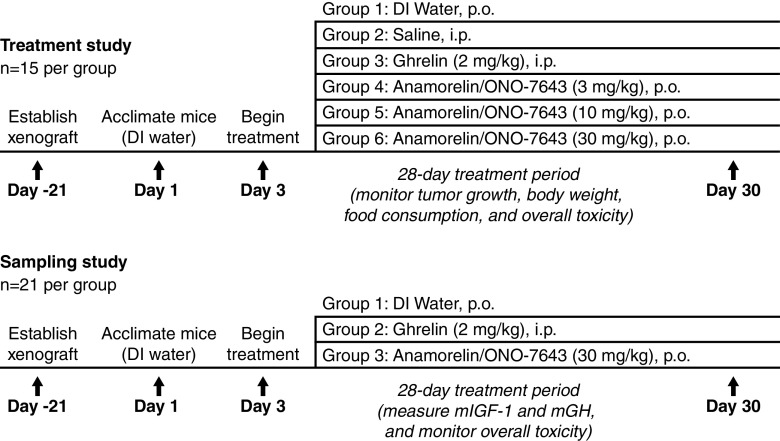
Methods: Female nude mice (15-21/group) with established A549 tumors were administered ghrelin (2 mg/kg i.p.), anamorelin (3, 10, or 30 mg/kg p.o.), or vehicle controls daily for 28 days. Tumor growth, food consumption, and body weight were monitored. Murine growth hormone (mGH) and murine insulin-like growth factor-1 (mIGF-1) were measured in plasma.
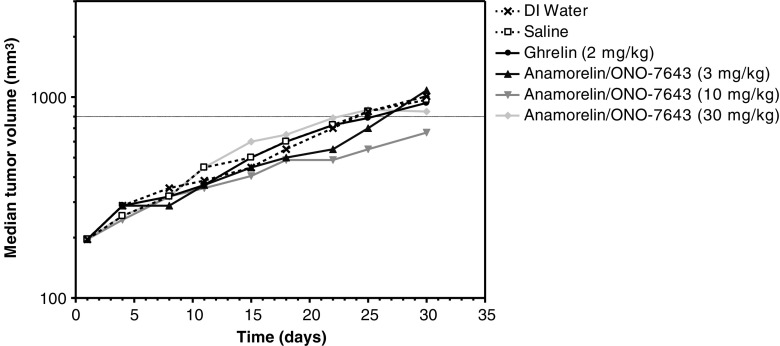
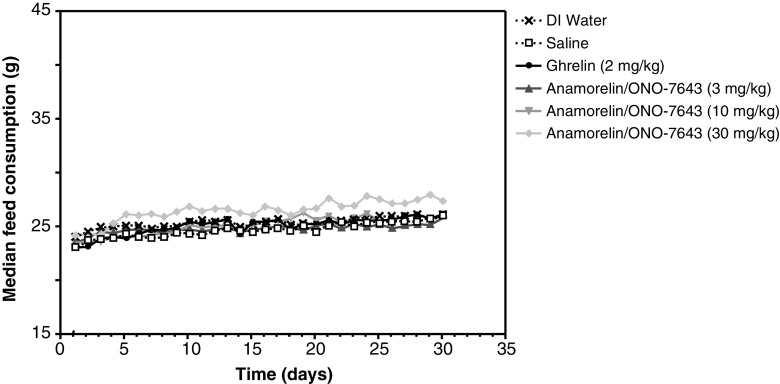
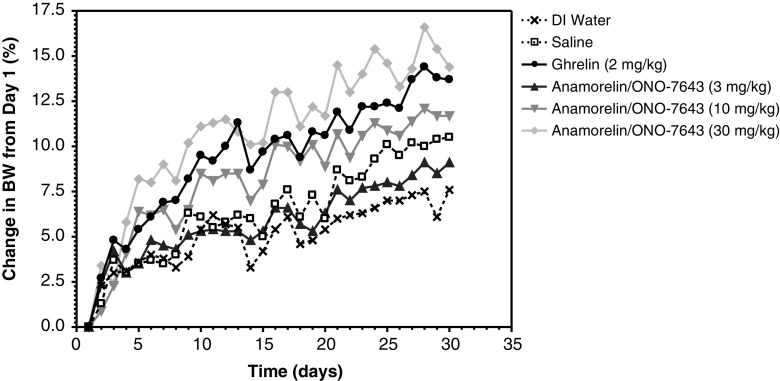
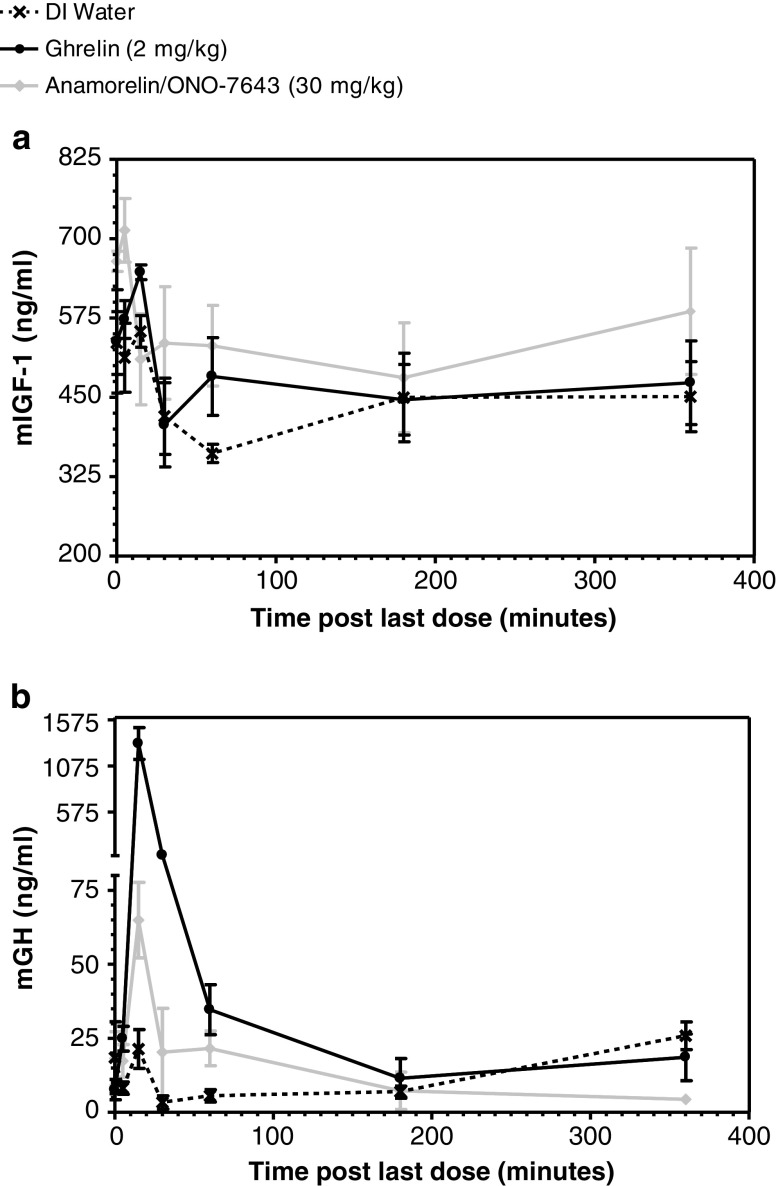
Results: Tumor growth progressed throughout the study, with no significant differences between treatment groups. Daily food consumption was also relatively unchanged, while the percentage of mean body weight gain at the end of treatment was significantly increased in animals administered 10 and 30 mg/kg compared with controls (p < 0.01). Peak mGH levels were significantly higher in ghrelin- and anamorelin-treated animals than in controls, while peak mIGF-1 levels were slightly elevated but not statistically significant. All regimens were well tolerated.
Conclusions: These findings demonstrate that neither anamorelin nor ghrelin promoted tumor growth in this model, despite increased levels of mGH and a trend of increased mIGF-1. Together with anamorelin's ability to increase body weight, these results support the clinical development of ghrelin receptor agonist treatments for managing NSCLC-related anorexia/cachexia.
Figures
References
-
- Fearon K, Strasser F, Anker SD, Bosaeus I, Bruera E, Fainsinger RL, Jatoi A, Loprinzi C, Macdonald N, Mantovani G, Davis M, Muscaritoli M, Ottery F, Radbruch L, Ravasco P, Walsh D, Wilcock A, Kaasa S, Baracos VE. Definition and classification of cancer cachexia: an international consensus. Lancet Oncol. 2011;12:489–495. doi: 10.1016/S1470-2045(10)70218-7. - DOI - PubMed
-
- Arrieta O, Michel Ortega RM, Villanueva-Rodríguez G, Serna-Thomé MG, Flores-Estrada D, Diaz-Romero C, Rodríguez CM, Martínez L, Sánchez-Lara K. Association of nutritional status and serum albumin levels with development of toxicity in patients with advanced non-small cell lung cancer treated with paclitaxel–cisplatin chemotherapy: a prospective study. BMC Cancer. 2010;10:50. doi: 10.1186/1471-2407-10-50. - DOI - PMC - PubMed
-
- Dewys WD, Begg C, Lavin PT, Band PR, Bennett JM, Bertino JR, Cohen MH, Douglass HO, Jr, Engstrom PF, Ezdinli EZ, Horton J, Johnson GJ, Moertel CG, Oken MM, Perlia C, Rosenbaum C, Silverstein MN, Skeel RT, Sponzo RW, Tormey DC. Prognostic effect of weight loss prior to chemotherapy in cancer patients. Eastern Cooperative Oncology Group. Am J Med. 1980;69:491–497. doi: 10.1016/S0149-2918(05)80001-3. - DOI - PubMed
Publication types
MeSH terms
Substances
LinkOut - more resources
Full Text Sources
Other Literature Sources
Medical
