


Prolonged inhibition of 5-HT₃ receptors by palonosetron results from surface receptor inhibition rather than inducing receptor internalization
- PMID: 23581504
- PMCID: PMC3831706
- DOI: 10.1111/bph.12204
Prolonged inhibition of 5-HT₃ receptors by palonosetron results from surface receptor inhibition rather than inducing receptor internalization
Abstract
Background and purpose: The 5-HT₃ receptor antagonist palonosetron is an important treatment for emesis and nausea during cancer therapy. Its clinical efficacy may result from its unique binding and clearance characteristics and receptor down-regulation mechanisms. We investigated the mechanisms by which palonosetron exerts its long-term inhibition of 5-HT₃ receptors for a better understanding of its clinical efficacy.
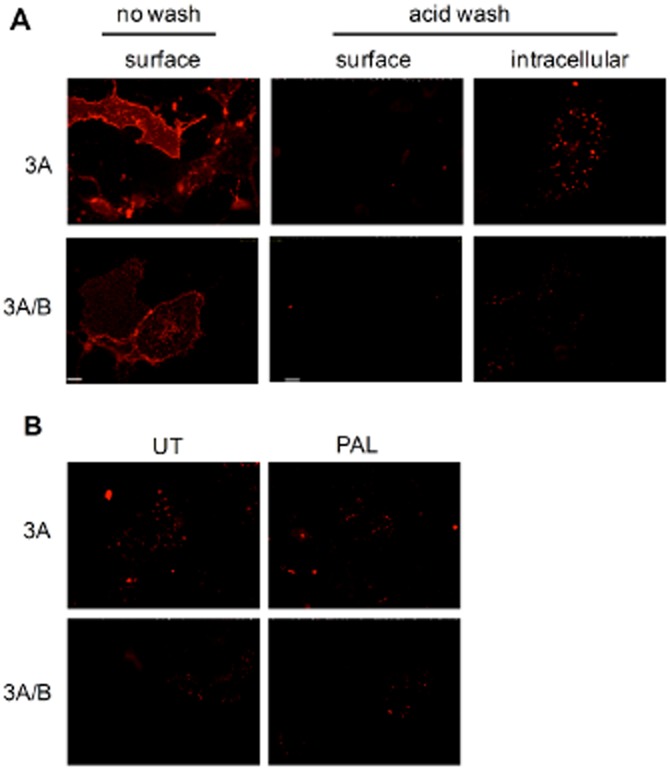
Experimental approach: Cell surface receptors (recombinantly expressed 5HT₃A or 5HT₃AB in COS-7 cells) were monitored using [³H]granisetron binding and ELISA after exposure to palonosetron. Receptor endocytosis was investigated using immunofluorescence microscopy.
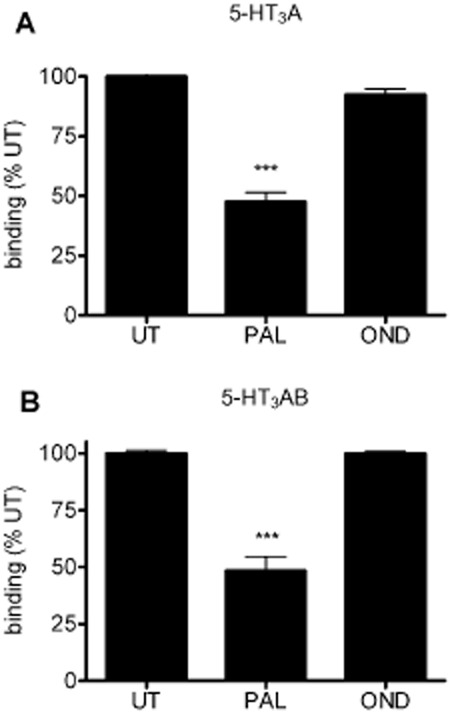
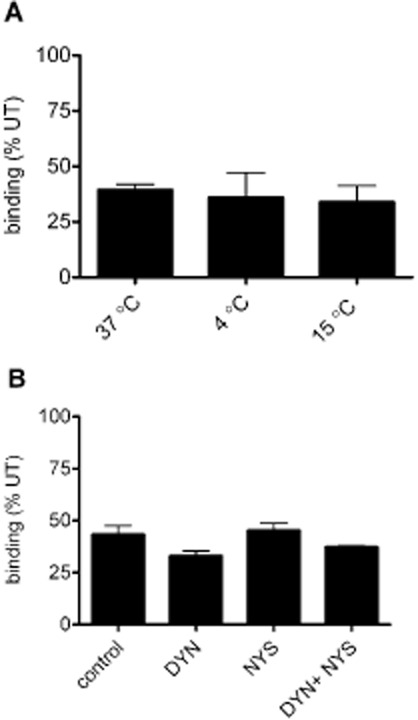
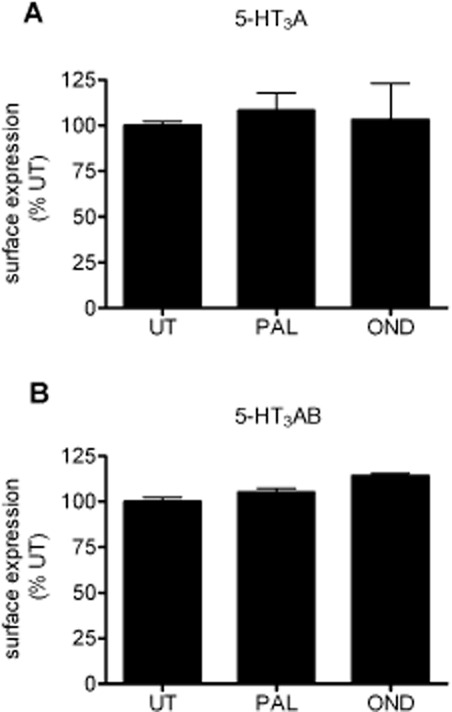
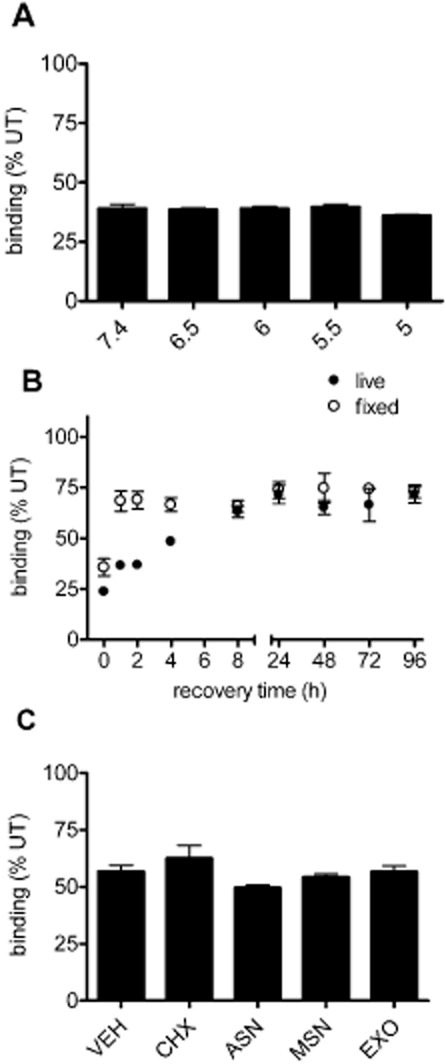
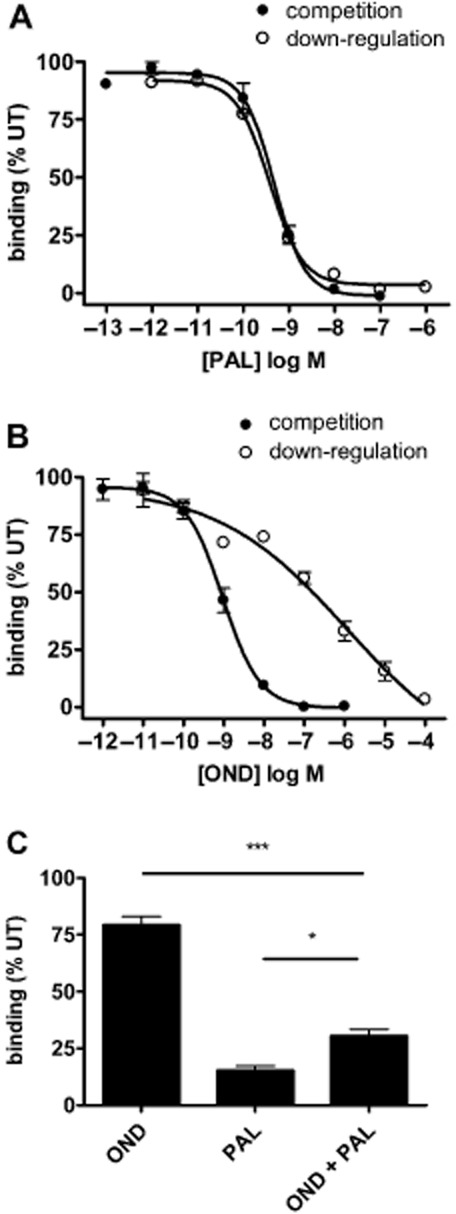
Key results: Chronic exposure to palonosetron reduced the number of available cell surface [³H]granisetron binding sites. This down-regulation was not sensitive to either low temperature or pharmacological inhibitors of endocytosis (dynasore or nystatin) suggesting that internalization did not play a role. This was corroborated by our observation that there was no change in cell surface 5-HT₃ receptor levels or increase in endocytic rate. Palonosetron exhibited slow dissociation from the receptor over many hours, with a significant proportion of binding sites being occupied for at least 4 days. Furthermore, our observations suggest that chronic receptor down-regulation involved interactions with an allosteric binding site.
Conclusions and implications: Palonosetron acts as a pseudo-irreversible antagonist causing prolonged inhibition of 5-HT₃ receptors due to its very slow dissociation. In addition, an irreversible binding mode persists for at least 4 days. Allosteric receptor interactions appear to play a role in this phenomenon.
© 2013 The British Pharmacological Society.
Figures
References
-
- Aapro MS, Grunberg SM, Manikhas GM, Olivares G, Suarez T, Tjulandin SA, et al. A phase III, double-blind, randomized trial of palonosetron compared with ondansetron in preventing chemotherapy-induced nausea and vomiting following highly emetogenic chemotherapy. Ann Oncol. 2006;17:1441–1449. - PubMed
-
- Bollan KA, Baur R, Hales TG, Sigel E, Connolly CN. The promiscuous role of the epsilon subunit in GABAA receptor biogenesis. Mol Cell Neurosci. 2008;37:610–621. - PubMed
Publication types
MeSH terms
Substances
Grants and funding
LinkOut - more resources
Full Text Sources
Other Literature Sources
