


Alcohol dependence, withdrawal, and relapse
- PMID: 23584009
- PMCID: PMC3860472
Alcohol dependence, withdrawal, and relapse
Abstract
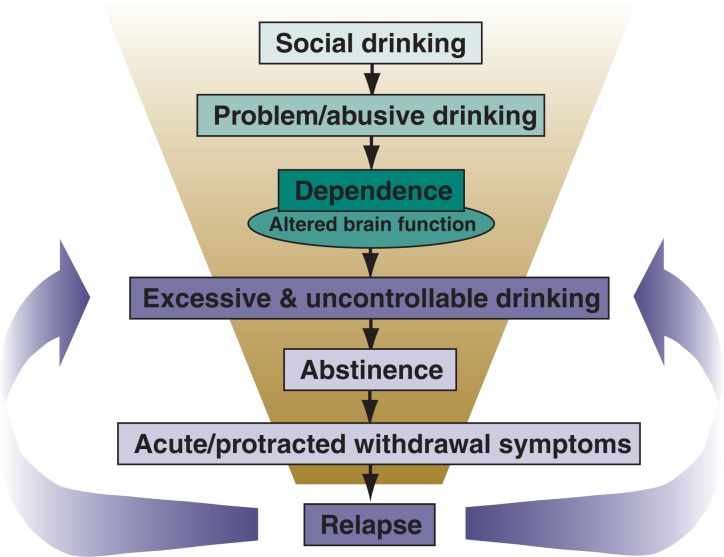
Continued excessive alcohol consumption can lead to the development of dependence that is associated with a withdrawal syndrome when alcohol consumption is ceased or substantially reduced. This syndrome comprises physical signs as well as psychological symptoms that contribute to distress and psychological discomfort. For some people the fear of withdrawal symptoms may help perpetuate alcohol abuse; moreover, the presence of withdrawal symptoms may contribute to relapse after periods of abstinence. Withdrawal and relapse have been studied in both humans and animal models of alcoholism. Clinical studies demonstrated that alcohol-dependent people are more sensitive to relapse-provoking cues and stimuli than nondependent people, and similar observations have been made in animal models of alcohol dependence, withdrawal, and relapse. One factor contributing to relapse is withdrawal-related anxiety, which likely reflects adaptive changes in the brain in response to continued alcohol exposure. These changes affect, for example, the body's stress response system. The relationship between withdrawal, stress, and relapse also has implications for the treatment of alcoholic patients. Interestingly, animals with a history of alcohol dependence are more sensitive to certain medications that impact relapse-like behavior than animals without such a history, suggesting that it may be possible to develop medications that specifically target excessive, uncontrollable alcohol consumption.
Figures
References
-
- American Psychiatric Association . Diagnostic and Statistical Manual of Mental Disorders. 4th Edition. Arlington, VA: American Psychiatric Association; 1994.
-
- Becker HC. Positive relationship between the number of prior ethanol withdrawal episodes and the severity of subsequent withdrawal seizures. Psychopharmacology. 1994;116:26–32. - PubMed
-
- Becker HC. Alcohol withdrawal: Neuroadaptation and sensitization. CNS Spectrums. 1999;4:38–65. - PubMed
-
- Becker HC, Baros AM. Effect of duration and pattern of chronic ethanol exposure on tolerance to the discriminative stimulus effects of ethanol in C57BL/6J mice. Journal of Pharmacology and Experimental Therapeutics. 2006;319:871–878. - PubMed
Publication types
MeSH terms
LinkOut - more resources
Full Text Sources
Other Literature Sources
Medical