


The genetics of alcohol and other drug dependence
- PMID: 23584813
- PMCID: PMC3860452
The genetics of alcohol and other drug dependence
Abstract
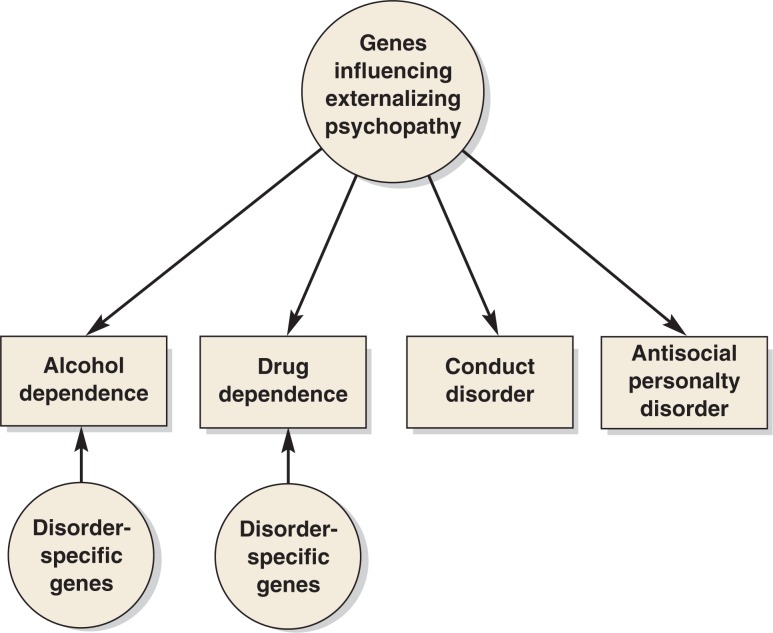
Alcohol dependence and dependence on other drugs frequently co-occur, and strong evidence suggests that both disorders are, at least in part, influenced by genetic factors. Indeed, studies using twins suggest that the overlap between dependence on alcohol and on other drugs largely results from shared genetic factors. This common genetic liability, which also extends to antisocial behavior, has been conceptualized as a general predisposition toward a variety of forms of psychopathology characterized by disinhibited behavior (i.e., externalizing psychopathology). Accordingly, many of the genetic factors affecting risk for dependence on alcohol or other drugs appear to act through a general externalizing factor; however, other genetic factors appear to be specific to a certain disorder. In recent years, researchers have identified numerous genes as affecting risk for dependence on alcohol and other drugs. These include genes involved in alcohol metabolism as well as in the transmission of nerve cell signals and modulation of nerve cell activity (i.e., γ-aminobutyric acid [GABA] and acetylcholinergic neurotransmission and the endogenous opioid and cannabinoid systems).
Figures
References
-
- Agrawal A, Lynskey M. The genetic epidemiology of cannabis use, abuse and dependence. Addiction. 2006;101:801–812. - PubMed
-
- Agrawal A, Edenberg HJ, Foroud T, et al. Association of GABRA2 with drug dependence in the Collaborative Study of the Genetics of Alcoholism sample. Behavior Genetics. 2006;36:640–650. - PubMed
-
- Arias A, Feinn R, Kranzler HR. Association of an Asn40Asp (A118G) polymorphism in the mu-opioid receptor gene with substance dependence: A meta-analysis. Drug and Alcohol Dependence. 2006;83:262–268. - PubMed
-
- Bart G, Kreek MJ, Ott J, et al. Increased attributable risk related to a functional mu-opioid receptor gene polymorphism in association with alcohol dependence in central Sweden. Neuropsychopharmacology. 2005;30:417–422. - PubMed
-
- Befort K, Filliol D, Decaillot FM, et al. A single nucleotide polymorphic mutation in the human mu-opioid receptor severely impairs receptor signaling. Journal of Biological Chemistry. 2001;276:3130–3137. - PubMed
Publication types
MeSH terms
Grants and funding
LinkOut - more resources
Full Text Sources
Other Literature Sources
Medical