. 2013 Apr;25(4):1430-44.
doi: 10.1105/tpc.113.111179. Epub 2013 Apr 12.

ACYL-LIPID DESATURASE2 is required for chilling and freezing tolerance in Arabidopsis

Affiliations

ACYL-LIPID DESATURASE2 is required for chilling and freezing tolerance in Arabidopsis

Mingjie Chen et al. Plant Cell. 2013 Apr.

Abstract

Fatty acid desaturation of membrane lipids is a strategy for plants to survive chilling or freezing temperature. To further characterize enzymes involved in this stress response pathway, ACYL-LIPID DESATURASE2 (ADS2; Enzyme Commission 1.14.99) was studied using genetic, cell, and biochemical approaches. ads2 mutant plants appear similar to the wild type under standard growth conditions but display a dwarf and sterile phenotype when grown at 6°C and also show increased sensitivity to freezing temperature. Fatty acid composition analysis demonstrated that ads2 mutant plants at 6°C have reduced levels of 16:1, 16:2, 16:3, and 18:3 and higher levels of 16:0 and 18:0 fatty acids compared with the wild type. Lipid profiling revealed that 34C species of phosphatidylglycerol (PG) and monogalactosyl diacylglycerol (MGDG) content in ads2 mutants were lower and phosphatidic acid, phosphatidylinositol, phosphatidylethanolamine, phosphatidylcholine, lyso-phosphatidylcholine, and phosphatidylserine were higher than the wild type. Subcellular localization of C- and N-terminal enhanced fluorescence fusion proteins indicated that ADS2 localized primarily to the endoplasmic reticulum, although signal was also confirmed in Golgi and plastids. A double mutation with a putative plastid ADS3 paralog exacerbates the growth defects of ads2 mutant plants under low temperature. These observations suggest that ADS2 encodes a 16:0 desaturase of MGDG and PG. We hypothesize that a low temperature-induced shift from the plastid to endoplasmic reticulum pathway for membrane lipid biosynthesis is required for the cold stress response in Arabidopsis thaliana, and ADS2 is essential to adjust the acyl composition of organelle membrane lipid composition in response to cold stress.


Figures
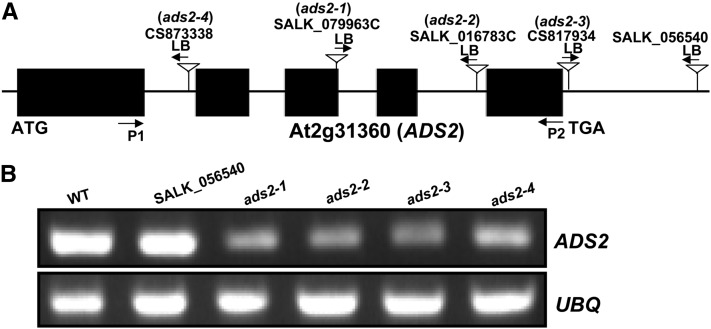
Figure 1.
Figure 1.
ads2 Mutant Identification. (A) Schematic representation of T-DNA insertion positions in the At2g31360 gene. LB, T-DNA left border. (B) ADS2 expression was highly reduced in SALK_079963c, SALK_016783c, CS817934, and CS873338, and was not affected in SALK_056540. RT-PCR was repeated three times to detect gene expression, with similar results. UBQ was used as loading control, primer pairs (P1 and P2) as indicated in (A) (arrows) were used to amplify ADS2 cDNA. WT, the wild type.
Figure 2.
Figure 2.
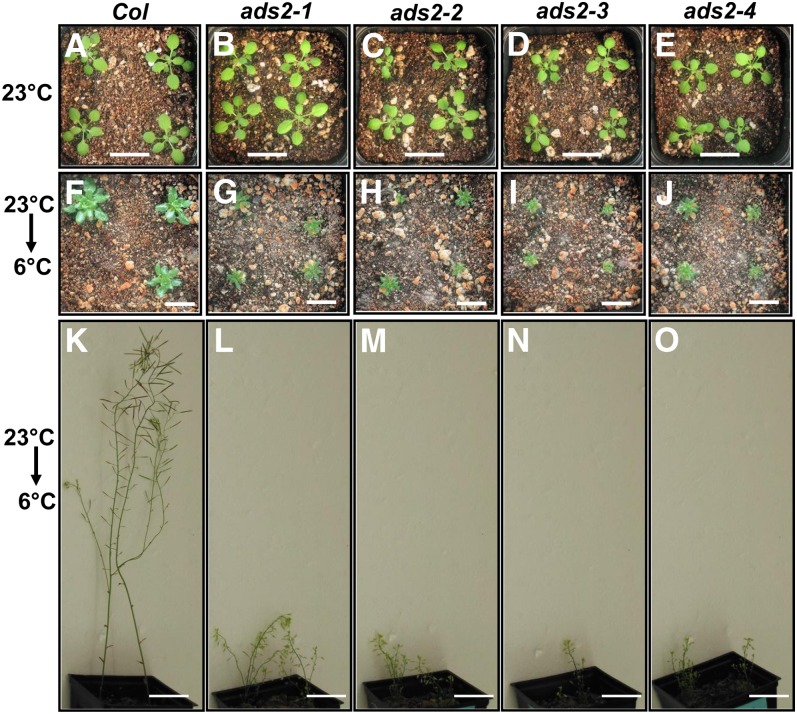
ads2 Mutant Plants Show Increased Chilling Sensitivity. (A) to (E) The wild type and mutants were grown at 23°C for 18 d under long-day conditions (bars = 2 cm). Col, Columbia. (F) to (J) Plants were first grown at 23°C under long-day conditions for 10 d and were then moved to a 6°C cold chamber and grown for an additional 82 d under continuous white light (bars = 1.8 cm). (K) to (O) Plants were first grown at 23°C under long-day conditions for 10 d and then were moved to 6°C under continuous white light conditions for 6 months (bars = 3 cm). [See online article for color version of this figure.]
Figure 3.
Figure 3.
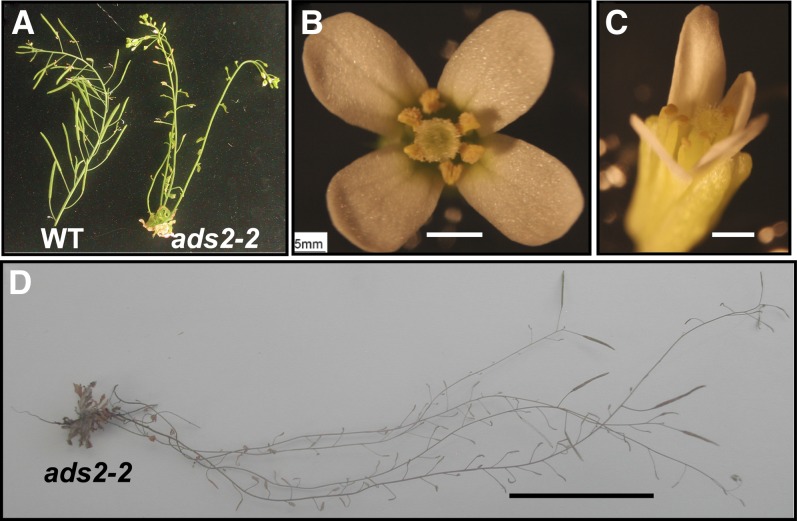
ads2 Mutant Plants Are Sterile under Chilling Condition. (A) Wild-type (WT) and ads2-2 mutant plants grown at 6°C for 6 months. (B) and (C) Wild-type and ads2-2 mutant flowers (bars = 0.5 mm). (D) ads2-2 mutant plants grown at 6°C until flowering and then moved to 23°C under continuous white light (bar = 3 cm). [See online article for color version of this figure.]
Figure 4.
Figure 4.
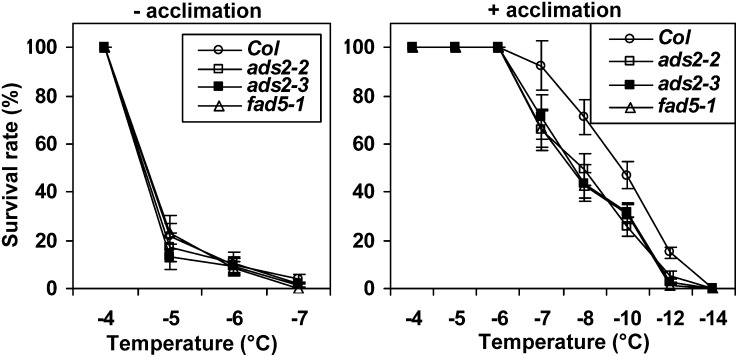
ads2 Mutant Plants Display Reduced Freezing Tolerance. Percentage of survival of nonacclimated and acclimated plants after freezing at different temperatures. The data are means ± se for triplicates. Col, Columbia.
Figure 5.
Figure 5.
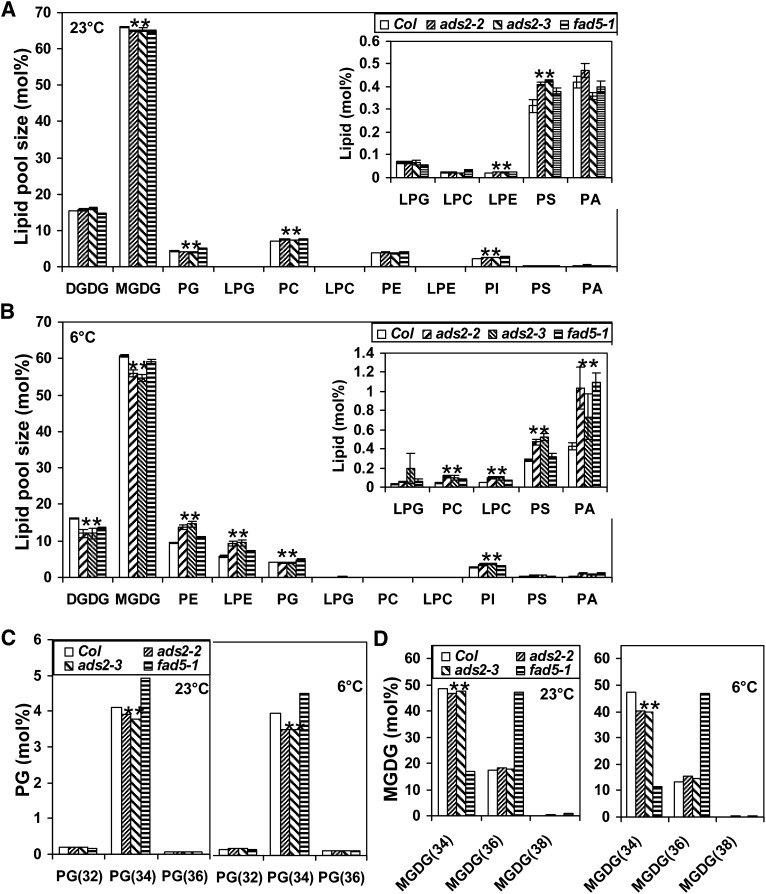
Lipidomic Analysis Reveal Membrane Lipid Change Pattern in ads2 Mutant Plants. (A) and (B) The relative total content (mol %) of different lipid species when plants were grown at 23 or 6°C. Col, Columbia. (C) The size of the PG subpool (mol %) when plants were grown at 23 or 6°C. (D) The size of the MGDG subpool (mol %) when plants were grown at 23 or 6°C. Wild-type, ads2-2, ads2-3, and fad5-1 mutant plants were grown in a growth chamber at 23°C for 25 d, and aerial leaf tissues were harvest for lipid extraction. For cold-grown Arabidopsis, plants were grown in a growth chamber at 23°C for 2 weeks and then moved to a 6°C cold room for an additional 37 d before aerial leaves were harvested for lipid extraction. Data are expressed as average ± se of mol % (n = 4), and statistically significant differences between wild-type and ads2 mutant plants are labeled with asterisks.
Figure 6.
Figure 6.
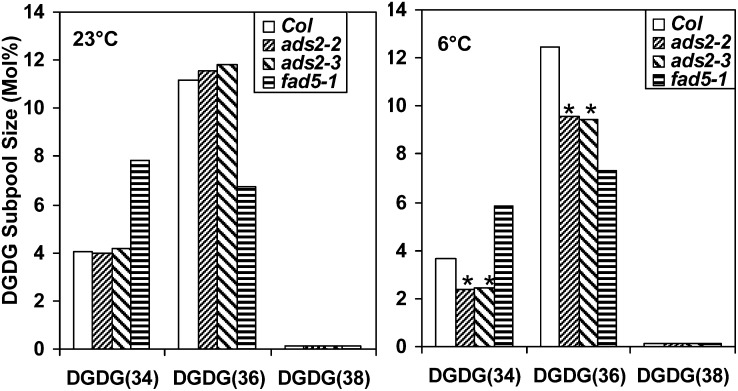
The DGDG Subpool Size Changed at Different Temperatures. Comparison of the size of leaf DGDG subpool among wild-type, ads2,, and fad5-1 mutant plants at 23°C (left) and 6°C (right). Plant growth conditions were the same as described in Figure 5. Statistically significant differences between wild-type and ads2 mutant plants are labeled with asterisks. Col, Columbia.
Figure 7.
Figure 7.
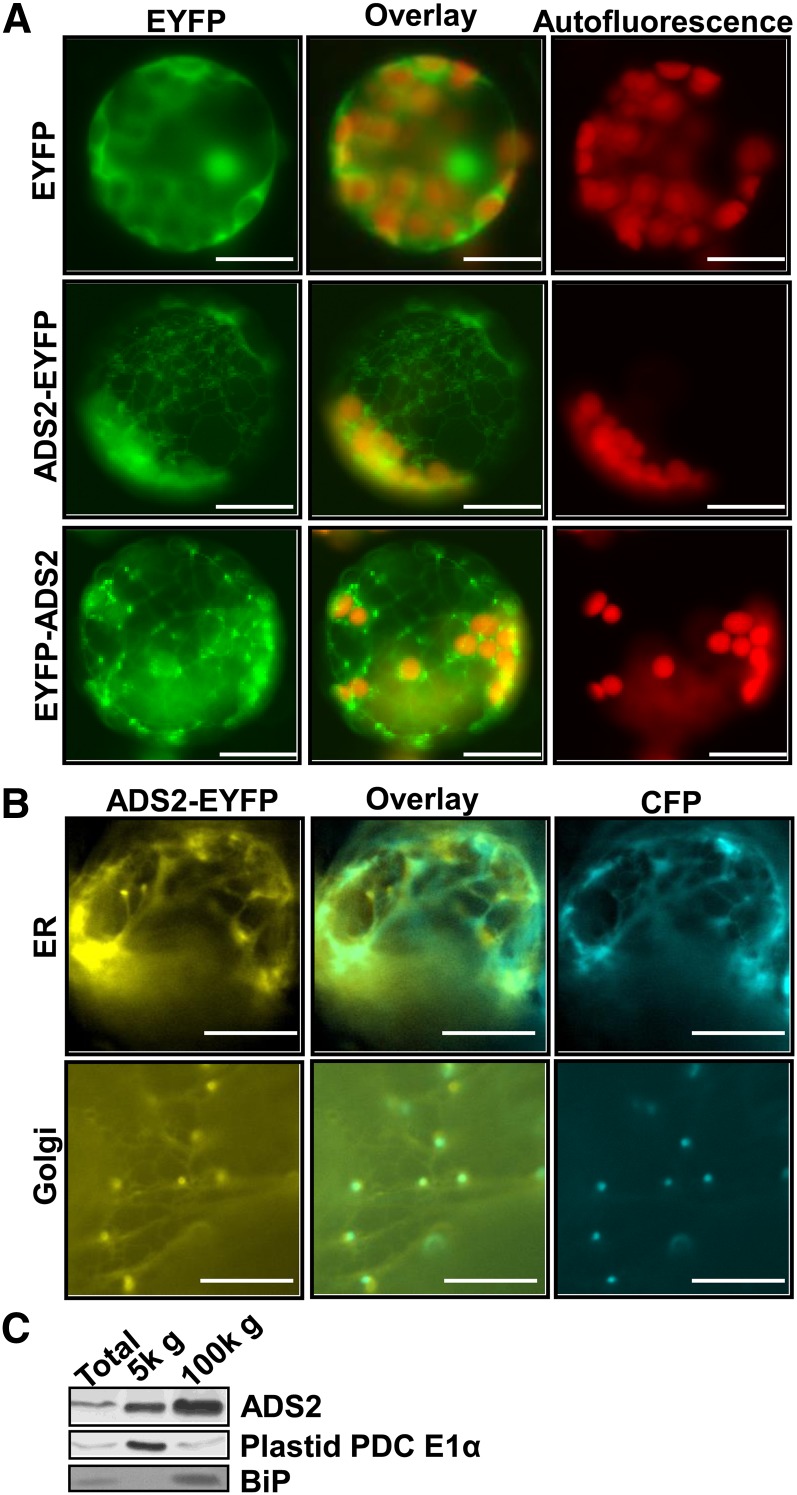
ADS2 Localizes to the Endoplasmic Reticulum, Golgi, and Plastid. (A) Fluorescence micrographs of stably transformed Arabidopsis cell expressing EYFP vector, ADS2-EYFP, and EYFP-ADS2 chimeric proteins. Top panel, plant cells transformed with binary vector only as control; middle panel, plant cells transformed with ADS2-EYFP chimeric protein; bottom panel, plant cells transformed with EYFP-ADS2 chimeric protein. Left column, EYFP; middle column, overlay of autofluorescence with EYFP signal; right column, chlorophyll autofluorescence. Bars =10 µm. (B) Transient coexpression of ADS2-EYFP protein with ER marker (CD3-953) or Golgi marker (CD3-961) in tobacco epidermal cells. EYFP was fused to the ADS2 C terminus, and the ER and Golgi markers were both fused with CFP. Bars =10 µm. (C) ads1 fad5-1 double mutant leaves were subfractionated and assayed by immunoblotting. 5k g = 5000 RCF. Antibodies to the plastid PDC E1α subunit were used to show plastid enrichment, and antibodies to BiP were used to show ER enrichment.
Figure 8.
Figure 8.
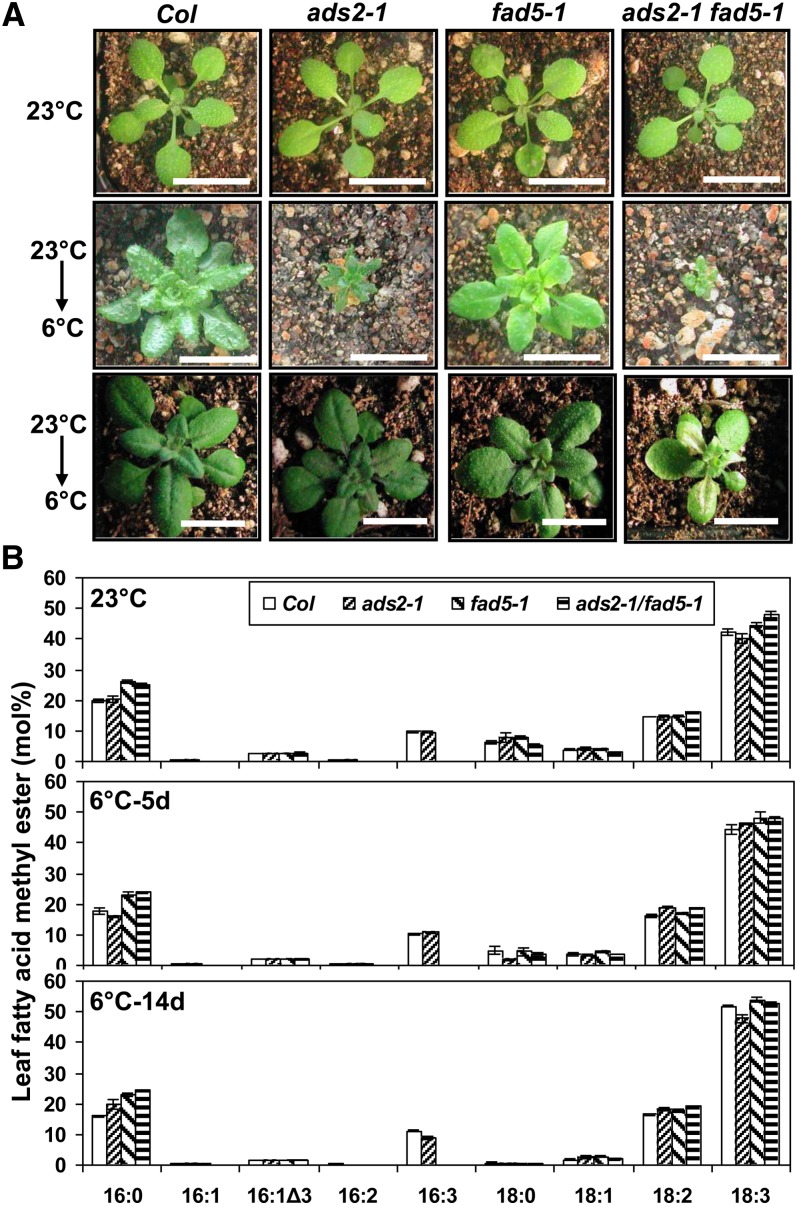
Mutation in ADS3 Enhances Growth Defects of ads2 Mutant Plants under Low Temperature. (A) Wild-type, ads2-1, fad5-1, and ads2-1 fad5-1 double mutant plants were grown at 23 or 6°C. Top panel, plants were grown at 23°C for 18 d; middle panel, plants were first grown at 23°C under long-day conditions for 9 d and were then moved into a 6°C chamber under continuous light for an additional 81 d; bottom panel, plants were first grown at 23°C under long-day conditions for 21 d and were then moved into a 6°C chamber under continuous light for an additional 14 d (bars = 1.2 cm). Col, Columbia. (B) FAME analysis of plants before and after cold treatment. Top, FA composition of plants grown at 23°C for 3 weeks; middle, FA composition of plants after exposure to cold for 5 d; bottom, FA composition of plants after exposure to cold for 14 d. [See online article for color version of this figure.]
Figure 9.
Figure 9.
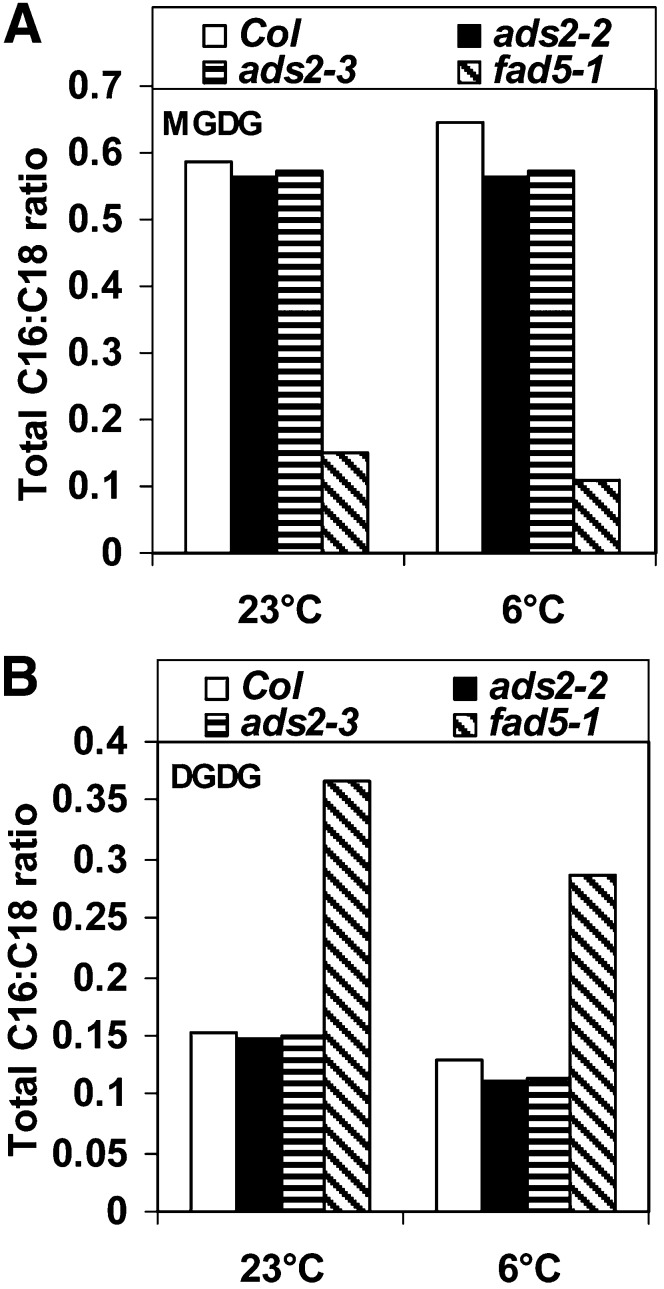
FA Composition of Galactolipids in Wild-Type, ads2, and fad5-1 Mutant Lines. (A) Ratio of total 16C to 18C FAs in MGDG. (B) Ratio of total 16C to 18C FAs in DGDG. The calculation is based on each MGDG(34) or DGDG(34) containing one 16C and one 18C FA and each MGDG(36) or DGDG(36) containing two 18C FAs. Col, Columbia.
Figure 10.
Figure 10.
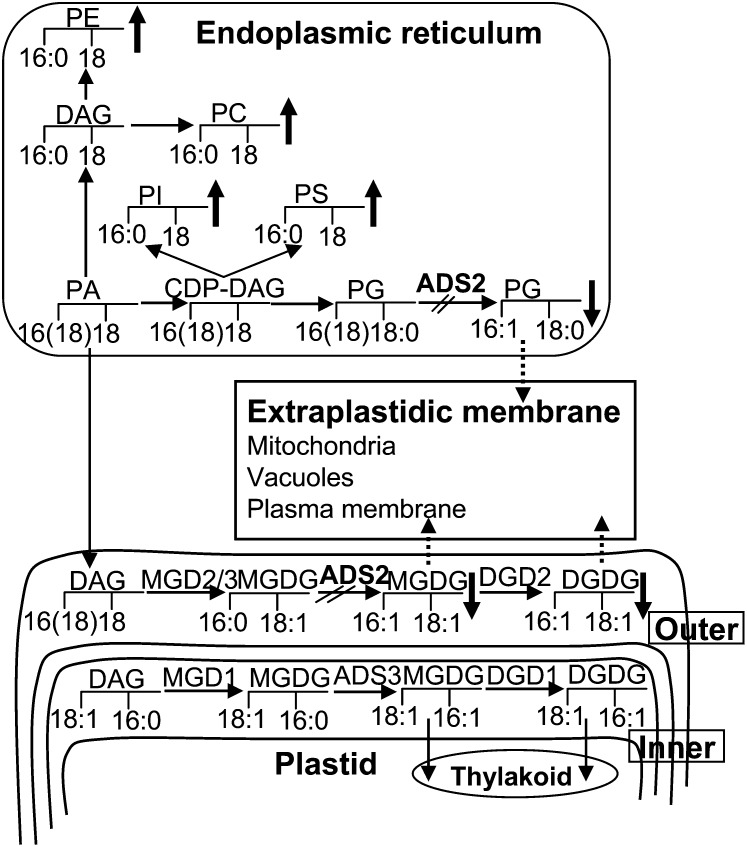
Schematic Representation of the Roles Played by ADS2 in MGDG and PG Biosynthesis in Arabidopsis Leaves. The glycerol backbones with the typical carbon length of FAs in the sn-1 and sn-2 positions are indicated to illustrate the main molecular species derived from each pathway. The head groups are always at the glycerol sn-3 position. The MGD1-DGD1 pathway represents the plastid pathway and contributes to the bulk of galactolipid synthesis at the inner envelope membranes of chloroplasts. These galactolipids are assumed to transport and integrate into the thylakoid. The alternative MGD2/3-DGD2 pathway (extraplastidic pathway) synthesizes galactolipid at the outer envelope membranes using precursor derived from the ER pathway, and these galactolipids are assumed to be transported out and integrated into extraplastidic membrane through unresolved mechanisms. ER-derived PG was assumed to integrate into multiple subcellular membranes. Reactions that are blocked in ads2 mutants are indicated. The arrow illustrates how the ads2 mutation affects carbon flux into different pathways of lipid biosynthesis. The upward-pointing arrow represents higher lipid content, and the downward-pointing arrow represents lower lipid content in ads2 mutant plants compared with the wild type. Dashed arrows represent reactions that have not been experimentally confirmed yet. DAG, diacylglycerol; CDP, cytidine-5′-diphosphate.

References

    1. Andersson M.X., Larsson K.E., Tjellström H., Liljenberg C., Sandelius A.S. (2005). Phosphate-limited oat. The plasma membrane and the tonoplast as major targets for phospholipid-to-glycolipid replacement and stimulation of phospholipases in the plasma membrane. J. Biol. Chem. 280: 27578–27586 - PubMed
    1. Andersson M.X., Stridh M.H., Larsson K.E., Liljenberg C., Sandelius A.S. (2003). Phosphate-deficient oat replaces a major portion of the plasma membrane phospholipids with the galactolipid digalactosyldiacylglycerol. FEBS Lett. 537: 128–132 - PubMed
    1. Awai K., Maréchal E., Block M.A., Brun D., Masuda T., Shimada H., Takamiya K., Ohta H., Joyard J. (2001). Two types of MGDG synthase genes, found widely in both 16:3 and 18:3 plants, differentially mediate galactolipid syntheses in photosynthetic and nonphotosynthetic tissues in Arabidopsis thaliana. Proc. Natl. Acad. Sci. USA 98: 10960–10965 - PMC - PubMed
    1. Bao X., Thelen J.J., Bonaventure G., Ohlrogge J.B. (2003). Characterization of cyclopropane fatty-acid synthase from Sterculia foetida. J. Biol. Chem. 278: 12846–12853 - PubMed
    1. Browse J., McCourt P., Somerville C.R. (1985). A mutant of Arabidopsis lacking a chloroplast-specific lipid. Science 227: 763–765 - PubMed

Publication types

MeSH terms